Batch cooks
You cook several portions for future meals and need freezer space that will actually fit your containers.


If you’re eating the soup that same evening, chilling it for a short time is usually more practical than freezing it; freezing is mainly useful if you’ll be eating it later. The German Federal Institute for Risk Assessment recommends cooling hot food quickly to below 7 °C if you plan to store it for longer. If you regularly freeze several portions, check the freezer capacity and freezing capacity separately from the fridge capacity. If you only freeze food occasionally, floor space and annual energy consumption are more important.
You cook several portions for future meals and need freezer space that will actually fit your containers.
You prepare the food in advance and mainly need to cool it quickly and make room to store it chilled until dinner.
You want fridge and freezer space in one appliance, without setting aside more room than you need for unused capacity.
The Verbraucherzentrale (German consumer advice centre) recommends choosing an appliance size that matches your actual needs. The EU energy label shows, among other things, annual energy consumption and the separate capacities of the fridge and freezer compartments.
Best if: you’re serving the soup that same evening.
The trade-off: You need fridge space for the portions, but there’s no need to freeze them for this meal.
Best if: you’re keeping the soup beyond that evening or regularly freezing several portions at once.
The trade-off: The freezer capacity and freezing capacity need to suit the number of portions.
| Buying priority | What to look for | Who is this important to? |
|---|---|---|
| Freezing several portions | Check the freezer capacity and the model’s freezing capacity separately; allow for your containers and any food already in the freezer. | If I freeze several portions for future meals, I need room for my containers and a suitable freezing capacity. Around 33% of consumers put this need for storage first. |
| Chilling soup until mealtime | Check there’s enough fridge space for the portioned food; don’t confuse fridge capacity with total capacity. | If I’m serving the soup that same evening, I need to be able to fit the cooled portions in the fridge. Around 27% of consumers prioritise this need for space for chilled food and portions. |
| Keeping an eye on energy use | Compare annual consumption in kWh and compartment capacities on the EU energy label of similarly sized appliances. | If I use the appliance every day, I don’t want to cool or freeze space I don’t need. Around 20% of consumers prioritise the running costs of an appliance that’s the right size for them. |
| Fitting the appliance into your kitchen and routine | Check the external dimensions against the space available; if you have an open-plan kitchen, check the noise rating and defrosting method for the specific model. | If my kitchen is short on space, the appliance needs to fit, and it needs to be easy to use day to day. Around 20% of consumers put these space and usability needs first. |
Total capacity doesn’t tell you how the fridge and freezer compartments are divided or whether your containers will fit in the drawers. The Verbraucherzentrale recommends checking how much space you need before buying; the EU energy label also lists fridge and freezer capacities separately.
Check the freezer capacity, interior layout and drawer dimensions against the containers you plan to use.
These terms don’t mean the same thing when it comes to defrosting. Siemens says that the KG39E8IBA model still needs to be defrosted, while Bosch describes the KGN39VIBT as a model that doesn’t need manual defrosting.
Check the defrosting information for the exact model rather than making assumptions based on a similar-sounding feature name.
A LowFrost model may still need to be defrosted from time to time.
The right option depends on whether you’re serving the soup that same evening or freezing it for another day.
Decide when you’ll be storing the soup first, then work out how much fridge and freezer space you need.
Freestanding fridge freezers in a range of heights and with different defrosting systems. Check the interior layout to make sure it suits the soup containers you need to store.
Fridge freezers with the freezer compartment at the bottom. The KG39E8IBA is an example of a freestanding model with LowFrost.
The RB53DG706AS9EF is an example of an extra-wide fridge freezer, if you have the floor space and need the additional storage capacity.
According to the manufacturer, the CBNsda 575i combines BioFresh and NoFrost. It may be worth considering if you need to store fresh ingredients as well as frozen food.
The freestanding GBBS322CEV is an example of a model whose capacity and external dimensions may be worth checking if you have a larger household.
The Joybuy products below are fridge freezers with separate fridge and freezer compartments. Check the capacity of each compartment and the appliance dimensions against your containers and the space available.
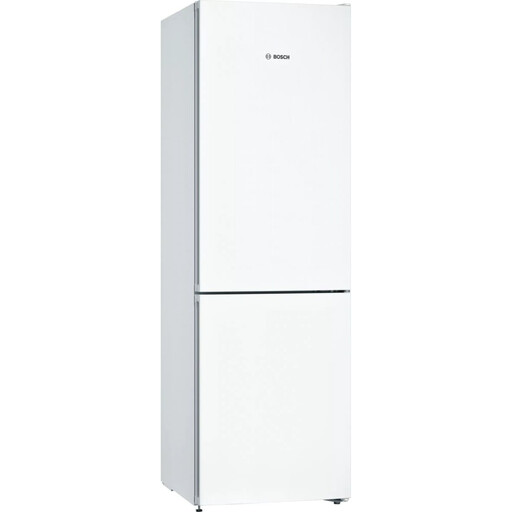 No image available
For storing chilled and frozen portions separately; the stated freezing capacity can help when planning to freeze several fresh portions.
237 l of fridge capacity and 87 l of freezer capacity; freezes 10 kg in 24 hours.
NoFrost; dimensions: 176 × 60 × 66 cm; energy class E.
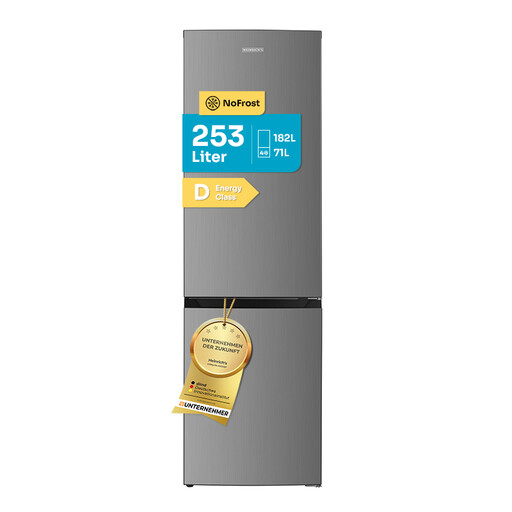 No image available
An option if you need fridge and freezer space for separate portions; check the compartment capacities against your actual needs.
182 l of fridge capacity and 71 l of freezer capacity; No-Frost; 39 dB; 181 cm high.
 No image available
A compact option for keeping chilled and frozen food separately; check that the freezer compartment is big enough for the portions you plan to store.
121 l of fridge capacity and 52 l of freezer capacity; four-star freezer compartment.
Annual energy consumption: 124 kWh; dimensions: 49,5 × 142,5 cm.
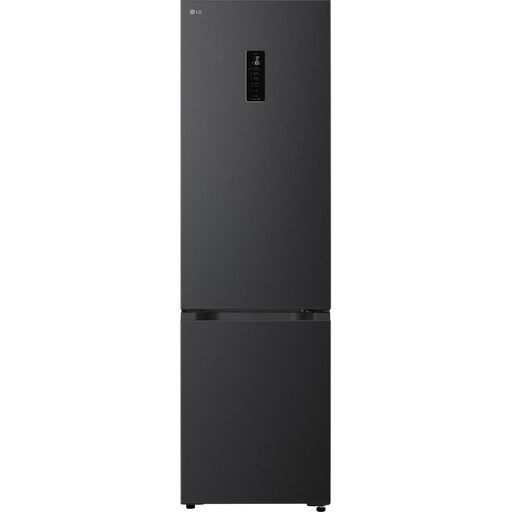 No image available
For storing chilled and frozen food separately; freezer capacity matters if you’re planning to keep several portions for later.
262 l of fridge capacity and 113 l of freezer capacity; Express Freeze.
Dimensions: 59,7 × 203 × 67,5 cm; energy class A.
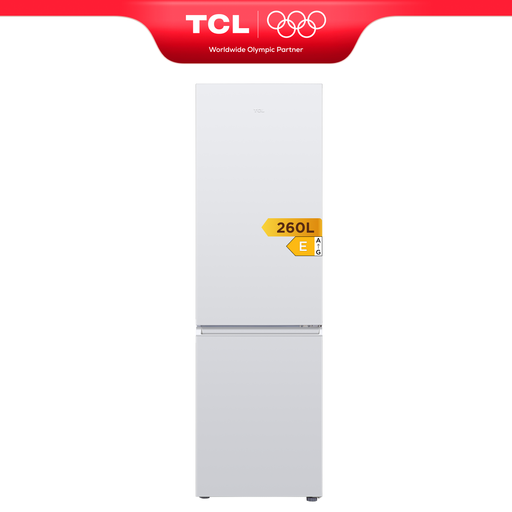 No image available
If you want to store chilled food and frozen portions separately, check the compartment layout and whether the shelves suit your containers.
187 l of fridge capacity and 73 l of freezer capacity; adjustable shelves.
55 cm wide; energy class E.
No, not just because you cooked it before the meal. For storing hot food for longer, the German Federal Institute for Risk Assessment recommends cooling it quickly to below 7 °C and keeping it covered. The Institute recommends reheating all parts of the food to at least 70 °C for two minutes before eating.
The EU energy label shows, among other things, annual consumption in kWh and the capacities of the chilled and frozen compartments. Since 1 March 2021, the European Commission has used an A to G scale for fridges and freezers; more detailed model information is available through EPREL.
No. NoFrost relates to defrosting and ice build-up in the appliance; it doesn’t replace safe handling of hot food. The German Federal Institute for Risk Assessment recommends cooling hot food quickly if you plan to store it for longer.
Your statutory rights against the retailer are separate from a voluntary manufacturer’s guarantee. The Verbraucherzentrale notes that, since 31 July 2026, a right to repair against manufacturers may also cover refrigeration appliances; the conditions and costs depend on the specific case.