Those who heat soup one portion at a time
You want to heat cooked vegetable soup in a bowl without taking up your only hob. Even heating and a suitable container are important.


If you mainly heat individual bowls of cooked vegetable soup, a solo microwave with adjustable power is a sensible place to start. If you’d also like to bake or brown food in the same appliance, a combination model could suit you – but allow for more worktop space and check that your bowl and accessories will fit. Whichever type you choose, use microwave-safe cookware and heat your soup evenly and carefully.
You want to heat cooked vegetable soup in a bowl without taking up your only hob. Even heating and a suitable container are important.
You need to leave room for the appliance alongside your only hob, so you compare its external dimensions and space for your bowl rather than looking at the capacity in litres alone.
You’d like to bake or brown food as well as heat soup, so you’re checking whether a combination model suits your available space and cooking needs.
This overview sets out the main priorities for people who want to heat vegetable soup when they have only one hob.
| Buying priority | What to check before buying | Who this matters most to |
|---|---|---|
| Even heating | Power and time settings; use a suitable container and stir the soup. | When I heat a bowl, I don’t want the edges to get hot while the middle stays cool. Around 36% of consumers say even, careful heating is their top priority. |
| Space for the appliance and bowl | Compare the external dimensions, usable cavity height and turntable with the space available and the size of your bowl. | With limited worktop space, I want to know whether the appliance will fit and whether my bowl will fit inside it. Around 29% of consumers have this space-related priority. |
| Additional cooking options | Check whether you’ll actually use convection or the grill, and which modes the specific model offers. | If I want to bake or brown food as well, without a separate oven, additional cooking modes matter. Around 14% of consumers prioritise these options. |
| Ease of use | Check the controls and power settings; refer to the manufacturer’s information on standby power consumption. | If I usually heat just one portion, I want to set the time and power without having to choose from unnecessary programmes. Around 21% of consumers particularly value straightforward controls. |
The stated capacity doesn’t tell you whether a tall or wide soup bowl will fit in the cavity or turn on the turntable.
Measure your bowl and compare its dimensions with the cavity and turntable of the specific model.
Depending on the bowl, you may need a smaller one or an additional bowl that fits.
Convection and the grill are designed for other cooking methods; a solo microwave also provides microwave heating.
Choose the extra features only if you’ll actually use them as well as heating food.
A combination model may take up more worktop space and include features you won’t use.
Different model codes can indicate different appliances. The controls and features should also match the full model code.
Check the full model code and the features that matter to you against the manufacturer’s information.
The solo MW 7770 is a useful example of an appliance with rotary controls for heating soup.
The freestanding FFL020MW0 is a useful reference for comparing the dimensions and features of a solo model.
The NN-CD575M is an example of a combination model with microwave, convection and grill functions.
The MWOS 201 B is a solo alternative with electronic controls.
This selection includes solo microwaves for heating individual portions and combination models with additional cooking options. For the specific appliance, check the applicable EU product requirements and the required CE marking in the product documentation. The marking is a declaration by the manufacturer, not an independent quality mark.
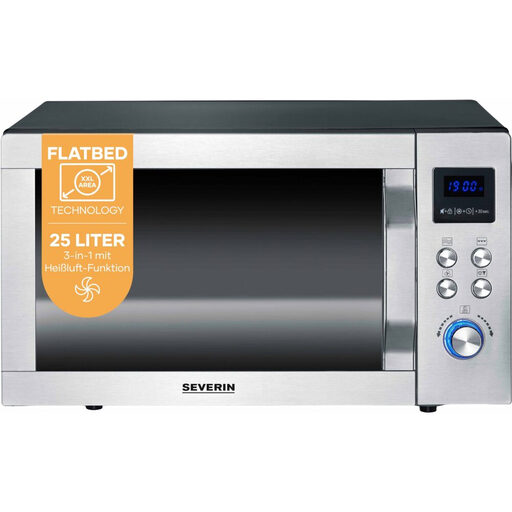 Image unavailable
If you’d like to bake or grill as well as heat soup, this combination model offers those additional cooking modes.
The product title lists microwave, grill, convection and a glass base. Handle hot containers, racks and trays carefully, using oven gloves to remove them.
 Image unavailable
This solo model could suit you if you mainly want to heat individual portions and adjust the power.
The product title lists a 19 l capacity, 700 W, six power levels and inverter technology. It also lists a 24.5 cm turntable and two rotary controls. Don’t run the microwave empty, and don’t use metal containers or utensils.
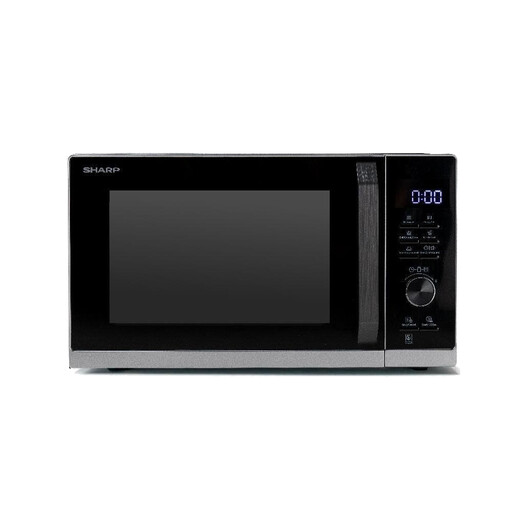 Image unavailable
If you’d like to grill or cook with convection as well as heat soup, this combination model is one option.
The product title lists a 27 l capacity and 900 W microwave power, as well as 1,000 W grill power and 2,100 W convection power. Use only microwave-safe cookware in microwave mode, and check the soup’s temperature before serving.
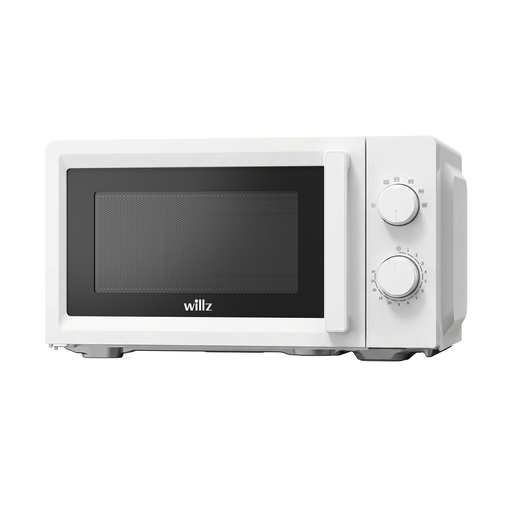 Image unavailable
This compact model could be a good option for heating individual portions, provided you check the space available for the appliance and your bowl first.
The product title lists a 20 l capacity and six power levels. Don’t use metal utensils, and remove hot containers with heat-resistant gloves.
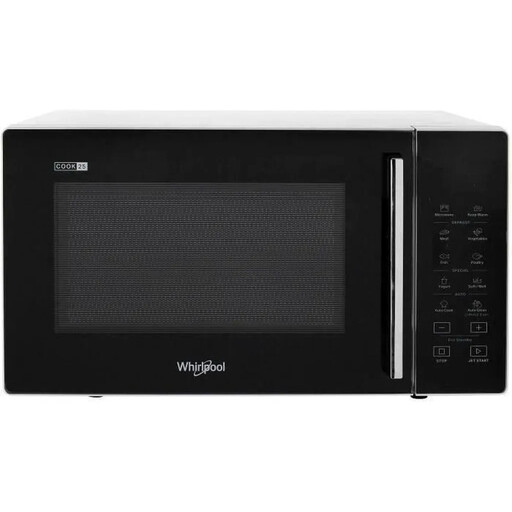 Image unavailable
This solo microwave is suited to heating soup and other dishes, without the need for additional oven functions.
The product title lists a 25 l capacity, 900 W, Jet Start and a keep-warm function. Use only microwave-safe cookware and remove liquids carefully.
Capacity alone won’t tell you. Measure the height and width of your bowl, then compare them with the cavity and turntable dimensions of the specific model.
Use a container that is specifically labelled as microwave-safe. The Verbraucherzentrale recommends following the instructions for use and checking the temperature and wattage limits for the cookware in question.
Stir the soup while it’s heating and check that it’s hot enough throughout. The German Federal Institute for Risk Assessment recommends heating food to at least 70 °C for two minutes in all areas. A microwave programme won’t necessarily achieve this temperature automatically.
Electrical appliances must meet the applicable EU product requirements and carry the required CE marking. According to the European Union, the manufacturer is responsible for meeting the applicable requirements; the CE mark is not an independent quality mark. Check the marking and product documentation for the specific appliance.
If there is visible mechanical damage to the door, the German Federal Office for Radiation Protection recommends having the appliance checked by the service department. Ask a qualified professional to assess the specific appliance.