Occasional stock freezers
If you only want to save a few portions for meals later on, first check whether they’ll fit in your existing freezer compartment that’s suitable for freezing.


If you’re serving stock that evening, there’s no need to freeze it. For meals later on, start by checking whether your existing four-star freezer compartment has room for the containers. A separate appliance is worth considering if you regularly have more portions to store: compare freezing capacity, usable volume, space requirements and annual energy consumption rather than looking only at the appliance’s size. The German Federal Centre for Nutrition classifies a four-star compartment as suitable for freezing food. For cooked stock that will be stored for longer, the German Federal Institute for Risk Assessment recommends cooling it quickly to below 7 °C.
If you only want to save a few portions for meals later on, first check whether they’ll fit in your existing freezer compartment that’s suitable for freezing.
If you regularly freeze several labelled portions, extra well-organised storage can come in handy. Make sure the appliance will fit in its intended spot, including with the door open.
If you store other food alongside your stock, compare the easy access offered by a freezer cabinet’s drawers with the floor space and lid clearance needed for a chest freezer.
Right for you if: You only freeze stock occasionally for meals later on, and there’s room for the containers alongside your existing food.
Consider: You won’t need to run an additional appliance, but you’ll be limited by the capacity and freezing performance of your existing compartment.
Right for you if: You regularly want to store several portions separately and within easy reach, but have limited floor space.
Consider: Drawers make it easier to access food, but you’ll still need to check that the door can open fully and there’s enough clearance from the wall.
Right for you if: You regularly need room for other food as well as stock, and want drawers or a NoFrost function listed for the specific model.
Consider: More capacity takes up more space, and an appliance that’s larger than you need could use more electricity than necessary.
Right for you if: You regularly have large quantities to store and enough floor space, with room to open the lid.
Consider: The German consumer advice centre says chest freezers use less energy than upright models. However, containers stacked deep inside may be less convenient to reach. Compare the annual figures for the specific appliances you’re considering.
| What matters | What to check before buying | Who is this particularly important to? |
|---|---|---|
| Space and freezing capacity | Check the number and size of your portions against the available usable space. If you’re freezing a larger amount of fresh food, also check the kg/24 h rating. | If I regularly add several portions of stock, I need to know they’ll fit and can all be frozen at once. Around 33% of consumers are likely to put space at the top of their list. |
| Positioning and clearance | Measure the appliance, the route it needs to be carried along, the wall clearance and the space required with the door or lid open. | If my kitchen is short on space, the door or chest freezer lid still needs to open freely. Around 27% of consumers are likely to put available space first. |
| Running costs | Compare annual energy consumption in kWh across models with enough capacity for your needs, then check it against your electricity tariff. | If I add another appliance, I only want to run as much freezer space as I’ll actually use. Around 20% of consumers are likely to consider energy costs their top priority. |
| Access and defrosting | Check whether it has drawers or baskets, and what defrosting method is specified for the exact model. | If I often take out individual portions, I want to find them easily and factor in the effort involved in defrosting. Around 20% of consumers are likely to put easy access first. |
If you only need to freeze a small amount, an existing freezer compartment that’s suitable for the job may be enough. An additional appliance will also add to your ongoing electricity use.
First, check whether your portioned containers will fit in your four-star freezer compartment for meals later on.
Litres tell you how much food an appliance can store; kg/24 h tells you how much fresh food it can freeze in a day. They answer different questions.
If you’re freezing a larger batch of stock, compare both figures for the specific model.
The two styles differ in how much space they need and how easy they are to access. An oversized appliance could also use more electricity than necessary.
Consider the size of your portion containers and how often you’ll take them out, alongside the available floor space, clearance and annual energy consumption.
Unused space or food stacked deep inside can make it harder to find and retrieve what you need.
Liquid expands as it freezes, so a full container could split.
Use freezer-safe containers and fill them only three-quarters full when freezing stock. This is the German consumer advice centre’s recommendation for liquid foods such as soup.
The GS81-040C weiss is a compact model with drawers for storing portioned food.
The FNd 4224 Plus is a mid-sized upright freezer with a NoFrost function listed for this specific model.
The HCE200C is a chest freezer with a 196 l capacity, designed for households that want to store more food.
The range includes upright freezers in various sizes; the B7RFNE315XP is listed with a capacity of 286 l.
The range includes upright and chest freezers for individual portions of stock and other food, from compact models to larger appliances.
 No image available
The drawers can help you keep individual portions of stock neatly organised and easy to retrieve.
161 l usable capacity; three freezer drawers; No-Frost; Fast Freeze; temperature range −14 °C to −22 °C; energy class C.
 No image available
The four-star rating indicates that the compartment is suitable for freezing food. Its compact design may suit you if you only need space for a few portions.
35 l; dimensions 47.5 × 44.2 × 48.8 cm; 41 dB; reversible door; removable inner compartment.
 No image available
The larger capacity and drawers are designed for storing several portions of stock alongside other food.
204 l usable capacity; six drawers; NoFrost; Super Freeze; 39 dB; energy class E.
 No image available
A chest freezer could suit you if you can reach your food from above and have enough space to position it.
95 l; four-star freezer rating; removable basket; 165 kWh/year; dimensions 550 × 475 × 848 mm; energy class E.
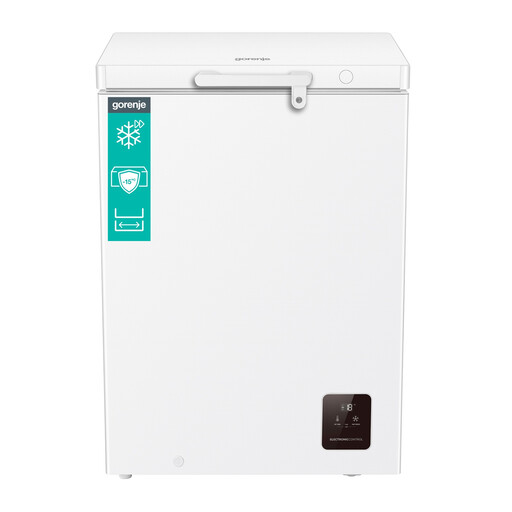 No image available
The stated freezing capacity is useful to compare if you want to freeze a larger batch of fresh stock all at once.
141 l usable capacity; freezing capacity 8 kg/24 h; 182 kWh/year; Fast Freeze; flexible wire basket; FreezeProtect down to −15 °C.
Yes. For food that will be stored for longer, the German Federal Institute for Risk Assessment recommends cooling hot food quickly to below 7 °C. This is a step in preparing and storing food, not a feature of the appliance.
Use freezer-safe containers and don’t fill them right to the top. For liquids such as soup, the German consumer advice centre recommends filling containers to only three-quarters full to prevent them from splitting as the contents freeze.
To freeze food, use a four-star freezer compartment or a freezer with a suitable freezing function. The German Federal Centre for Nutrition explains that a four-star compartment can freeze food as well as store it.
The German consumer advice centre recommends −18 °C as the optimum temperature for upright and chest freezers. When freezing food for the first time, also make sure the compartment is suitable for the job.
Compare the stated annual energy consumption in kWh for appliances with a capacity that suits your needs. To estimate your own costs, multiply the annual consumption by your electricity price per kWh. Actual consumption also depends on how and where the appliance is used.