If you need a built-in hob anyway and your stock pot is induction-compatible, a fixed induction hob could be a good option. For an extra cooking zone, consider a portable hob, while a radiant hob can heat pots that are not induction-compatible. A keep-warm function on its own is not enough if you plan to serve later: the German Federal Institute for Risk Assessment recommends keeping food at 60 °C or above throughout, or cooling it quickly to below 7 °C for longer storage.
Who is this guide for?
Households with staggered mealtimes
If you prepare vegetable stock in advance and serve it later, it’s important to distinguish between simmering, keeping food hot safely and chilled storage. The German Federal Institute for Risk Assessment recommends keeping food at 60 °C or above throughout when holding it hot.
Buyers who already own a stock pot
Before switching to induction, check that the base of your pot is compatible and suits the cooking zone. A radiant hob can be an alternative if your existing pot is not induction-compatible.
Cooks who need an extra hob
If you need an extra cooking zone alongside your existing cooker, make sure the portable hob’s footprint, the size of your pot and the power connection are all suitable.
What should you look for when buying?
Built-in induction hob
A good fit if: you need a built-in hob and your stock pot is induction-compatible.
Things to consider: Check the installation dimensions and connection. A keep-warm function does not confirm that the stock reaches a particular temperature.
Portable induction hob
A good fit if: you occasionally need an extra cooking zone and your pot is induction-compatible.
Things to consider: Check that the available space, pot diameter and power connection are suitable. A timer is no substitute for checking the temperature.
Portable radiant hob
A good fit if: you want a portable cooking zone but your existing pot is not induction-compatible.
Things to consider: The hob retains heat after use. According to the German Environment Agency, the difference in efficiency between hob types is greatest when heating up and decreases during longer periods of keeping food warm.
| What you need |
What to check before buying |
Who is it important to? |
| Simmering and serving later |
Check the settings on the specific model and plan how you’ll monitor the temperature. |
If the stock won’t be served straight away, I want to be able to simmer it and check its actual temperature. Around 33% of consumers put this need first. |
| Pot and installation space |
Check that the pot is suitable for induction and matches the cooking zone. For built-in models, check the dimensions and connection too. |
If I want to keep using my existing stock pot, I need a suitable heating technology and cooking zone. Around 27% of consumers prioritise this compatibility. |
| Extra cooking zone |
Check the appliance dimensions, number of cooking zones, pot size and power connection against the space where you plan to use it. |
If I need to use my existing cooker for something else, I want to make stock on a separate portable hob. Around 20% of consumers prioritise an extra cooking zone. |
| Energy use and running costs |
When choosing, consider how often you’ll bring food to the boil or keep it warm for longer, as well as the pot and lid. |
If I’m weighing up the purchase price and energy use together, I should consider how I’ll actually cook. Around 20% of consumers put these ongoing costs first. |
Common misconceptions
-
Assuming “Ceran” means induction
Glass ceramic describes the surface. According to the manufacturer, the Rommelsbacher CT 2200/E uses HiLight radiant heating, not induction.
Check the heating technology in the model description. If you’re choosing induction, also check that the base of your pot is compatible.
-
Assuming a keep-warm programme guarantees food safety
A preset function does not prove that the stock reaches at least 60 °C throughout. The German Federal Institute for Risk Assessment recommends this temperature when keeping food hot.
Check the temperature of the food. For longer storage, the German Federal Institute for Risk Assessment recommends cooling hot food quickly to below 7 °C.
-
Considering only the appliance when planning a built-in installation
Induction requires compatible cookware. For the Siemens EX675JYW1E, the manufacturer also states that it is supplied “without a plug” and must be connected by a qualified electrician.
Check your pot, installation dimensions and connection requirements before choosing a model.
Key brands at a glance
Siemens
Built-in induction; for the EX675JYW1E, the manufacturer lists cooking, simmering and keep-warm zones.
- The manufacturer describes flexible zones for the EX675JYW1E model.
- According to the manufacturer, the cooking sensor is available as an optional extra. The model is supplied without a plug and must be connected by a qualified electrician; the keep-warm function does not confirm a particular stock temperature.
Severin
Portable induction hobs; the DK 1033 is a model with two cooking zones.
- The manufacturer lists automatic pan detection and a timer with automatic shut-off for the DK 1033.
- You’ll need induction-compatible cookware and enough space for the hob.
Rommelsbacher
Portable hobs with different heating technologies; the CT 2200/E is a glass ceramic hob with radiant heating.
- For the CT 2200/E, the manufacturer lists a switchable 140/210 mm heating zone, infinitely variable controls and a residual heat indicator.
- The cooking surface may remain hot after the hob is switched off.
Bauknecht
Built-in induction with preset cooking functions on the BB 8760C AL model.
- The manufacturer lists functions including simmering and keeping food warm.
- An automatic function does not prove that the stock reaches a particular temperature throughout.
Electrolux
Built-in induction; the EIV634I is a model with four cooking zones and a Bridge function.
- According to the manufacturer, two zones can be joined on the EIV634I.
- The manufacturer does not list a mains plug; a keep-warm function is not specified for this model.
Hobs at Joybuy
This selection includes built-in induction and glass ceramic hobs for different cooking needs. Before buying, check that the heating technology, pot and installation or placement location are right for you.
 No image available
Bosch PIE61RBB5E Series 4 built-in induction hob
An option if you’re looking for a fixed induction hob; your stock pot must be induction-compatible.
Joybuy
 No image available
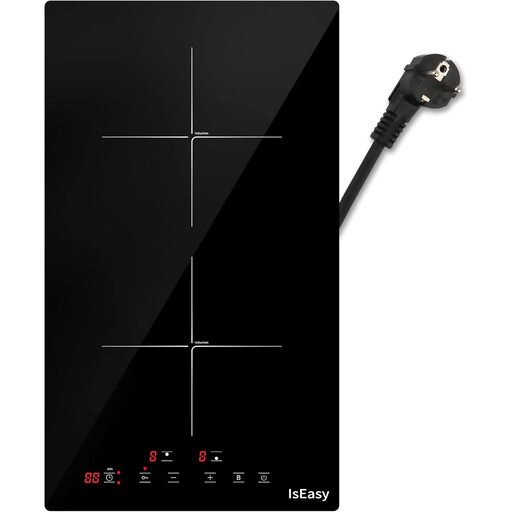
IsEasy Domino induction hob, 2 zones, 3400 W
Could suit a cooking setup with two zones. Check that your existing pot is induction-compatible.
2 zones; 3400 W; 29,5 cm; built-in and plug-in according to the product name.
Joybuy
 No image available
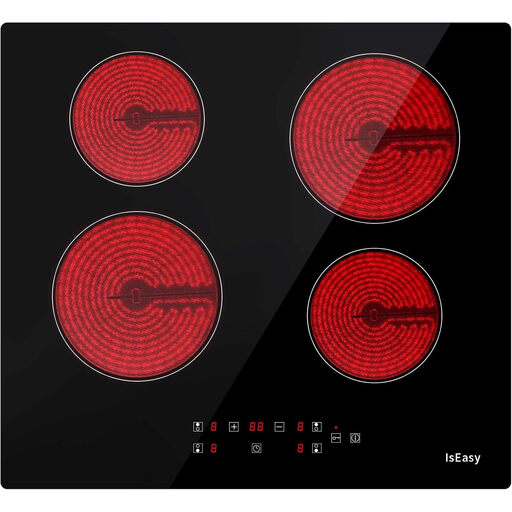
IsEasy glass ceramic hob, 59 cm, 4 zones, 6000 W
An option if you’re considering a glass ceramic hob with several zones. Check the heating technology and that it’s suitable for your pot.
4 zones; 9 heat settings; touch controls; built-in according to the product name.
Joybuy
 No image available
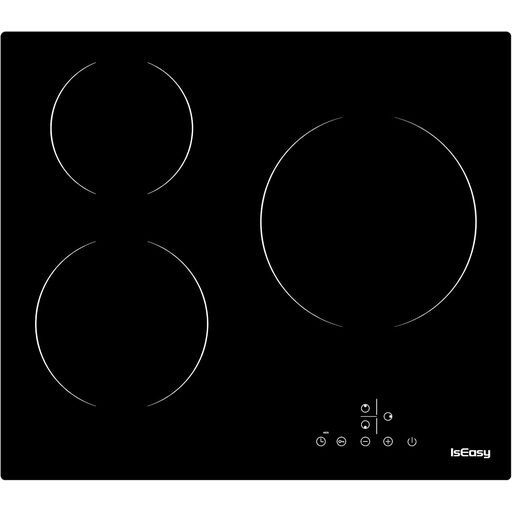
IsEasy glass ceramic hob, 3 zones, 60 cm, 5500 W
Could be a good fit if you’re looking for a hob with three zones. Check that the dimensions and intended use suit the space where you plan to install it.
3 zones; 9 heat settings; timer; plug and play according to the product name.
Joybuy
 No image available
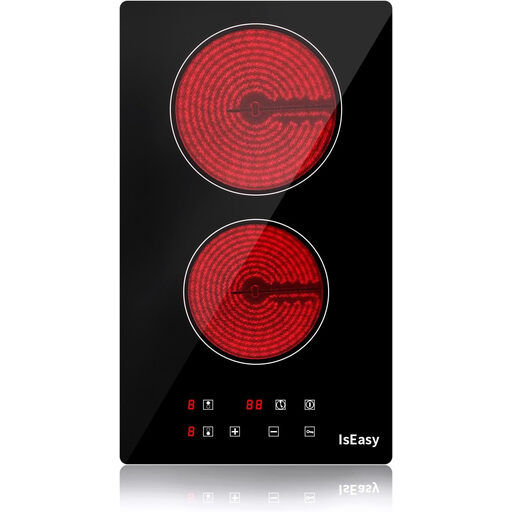
IsEasy double glass ceramic hob, 29,5 cm, 3000 W
A compact double hob option if you need two cooking zones. Check that the dimensions suit the planned installation space.
2 zones; 9 heat settings; timer from 1 to 99 minutes; touch controls.
Joybuy
Frequently asked questions
Can I leave vegetable stock on “Keep warm” until the next meal?
Only if the stock reaches at least 60 °C throughout while being kept hot. The German Federal Institute for Risk Assessment recommends this temperature; a hob function’s name does not guarantee it. For longer storage, hot food should be cooled quickly to below 7 °C.
Do I need a new stock pot for induction?
Not necessarily. Check that the base of your existing pot is induction-compatible and suits the cooking zone. Induction requires cookware with a suitable magnetic base.
Who can connect a built-in hob to the electricity supply?
It depends on the type of connection and the work required. Siemens explicitly states that the EX675JYW1E is supplied without a plug and must be connected by a qualified electrician. Under § 13 NAV, work on the electrical installation may only be carried out by the network operator or an installation company registered in a network operator’s installer directory; this is not the same as plugging in a portable hob.
What should I bear in mind as a glass ceramic hob cools down?
Follow the instructions for your specific appliance and don’t assume the hob is cool just because it has been switched off. According to the manufacturer, the Rommelsbacher CT 2200/E has a residual heat indicator; its radiant heating surface may still be hot after switching off.


