If you only have one hob
You want to prepare the vegetables in the appliance and then cook the stock in it, rather than needing a second pan for sautéing.


If you want to sauté your vegetables and then cook them in the same appliance, a multi-cooker with a sauté function is a good option; pressure cooking isn’t essential. For small batches without pressure, an appliance with a soup or slow-cook programme may be enough. The key things to check are the usable capacity for vegetables and liquid, and, for pressure cookers, how to release the pressure safely according to the instructions.
You want to prepare the vegetables in the appliance and then cook the stock in it, rather than needing a second pan for sautéing.
You want to make a larger batch of stock in one go, so you’re comparing usable pot capacity rather than just the stated capacity.
You want to make a small amount of stock and don’t necessarily need pressure cooking; a compact multi-cooker with a soup or slow-cook programme could be a good option.
A good fit if: You want to sauté vegetables and spices in the inner pot, then pressure-cook them. Rommelsbacher and Tefal list these functions for the models mentioned.
Things to bear in mind: Building up and releasing pressure are part of the process. The Rommelsbacher MD 1000 instructions warn about hot steam and advise against forcing the lid open while the appliance is under pressure.
A good fit if: You want to simmer small quantities without pressure and a soup or slow-cook programme is enough. The Rommelsbacher MRK 650 is one example, with a usable capacity of 2 l.
Things to bear in mind: According to the manufacturer, this model has soup and slow-cooking programmes, but no documented pressure-cooking function. Its usable capacity is smaller than that of the pressure cookers mentioned.
| Criteria | What to check | Who it matters most to |
|---|---|---|
| Every step in one place | Check that the specific model has a sauté function followed by a suitable cooking or pressure-cooking mode. | If I want to sauté vegetables and spices, then cook the stock in the same pot, a seamless process matters to me. Around 31% of consumers put this first. |
| Room for vegetables and liquid | Compare the recipe quantity with the model’s usable capacity and fill markings. | For a batch of stock, I want to know whether the vegetables and water will both fit in the pot. Around 25% of consumers prioritise sufficient usable capacity. |
| Pressure cooking or simmering | For the exact model, compare the pressure, soup and slow-cook settings, as well as any manual programmes, with your intended method. | If a particular cooking method matters more to me than having lots of programmes, I want to weigh up pressure cooking and cooking without pressure. Around 25% of consumers prioritise this decision. |
| Ease of use and cleaning | Check the pressure-release instructions, removable parts and availability of compatible replacement seals for the exact model version. | I want to release the pressure safely and know how to clean the pot, lid and seal. Around 19% of consumers pay particular attention to these points. |
The stated and usable capacities differ between the models mentioned. According to the manufacturer, the Tefal Turbo Cuisine CY754830 has a capacity of 5,0 l and a usable capacity of 3,2 l.
Plan the amount of vegetables and water according to the usable capacity and fill markings of the model you choose.
Using a pressure cooker also involves building up and releasing pressure. The pressure function alone doesn’t mean your stock recipe will take less time overall.
Compare the complete recipe process and follow the instructions for your specific model when releasing the pressure.
Building up and safely releasing the pressure takes extra time.
The Rommelsbacher MRK 650 is described as having soup and slow-cooking programmes; the MD 1000 is listed with programmes both with and without pressure.
First decide whether you want to pressure-cook, then check the functions of the exact model you’re considering.
The MD 1000 and MRK 650 differ in usable capacity and pressure-cooking function.
According to the manufacturer, the Turbo Cuisine CY754830 combines sautéing, pressure cooking and slow cooking.
The Cook4Me+ CZ710110 may appeal if you want on-screen, step-by-step guidance as well as pressure cooking and sautéing.
The instructions for the 5,7-l multi-cooker described list pressure cooking, sautéing and slow cooking.
This selection is aimed at small batches of soup and stock, as well as cooking in kitchens where space is limited.
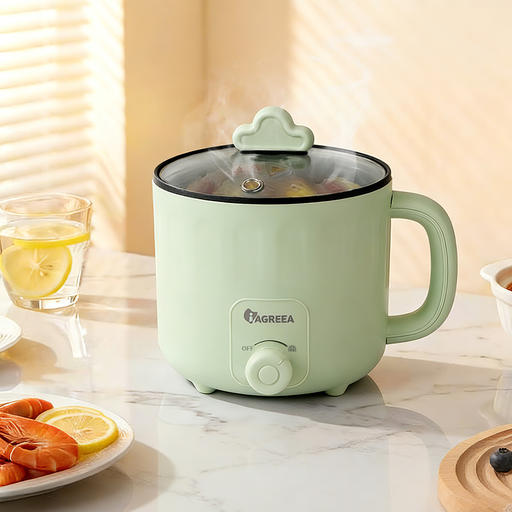 No image available
For small batches of soup or stock, when you’re looking for a compact appliance for soups and stews.
The stated capacity is 1,6 l.
No. A multi-cooker with a soup or slow-cook programme may be suitable for making stock without pressure. Pressure cooking is an extra option if it fits the way you want to cook.
Follow the instructions for your specific model. The Rommelsbacher MD 1000 instructions warn that hot steam or water may escape when opening the appliance, and advise against forcing the lid open while it’s under pressure.
The Federal Centre for Nutrition recommends cooling cooked food quickly and then refrigerating it. Its guidance also says vegetable stock can be frozen in portions.
Check whether compatible seals and other wear parts are available for the exact model version. For example, Instant Pot sells replacement seals for a 5,7-l model; that doesn’t mean they’re compatible with every model of this size.
According to the European Commission, the manufacturer uses the CE marking to declare that the product meets the relevant EU requirements. It isn’t a quality mark awarded by a central EU body; check the marking and accompanying product documents for the appliance you’re considering.