Holiday cooks short on time
If you want to make vegetable stock between other activities, check whether a pressure-cooking programme suits your available time and whether you’re happy to allow for the operation and cleaning of a pressure cooker.


If you have a limited window for cooking vegetable stock, a multicooker with a pressure-cooking programme is worth considering. If you’d rather keep things simple and let your stock simmer, look for a model with a non-pressure simmer or slow-cook function. The key considerations are the usable capacity for vegetables and water, and the filling, lid and pressure-release instructions for the specific model.
If you want to make vegetable stock between other activities, check whether a pressure-cooking programme suits your available time and whether you’re happy to allow for the operation and cleaning of a pressure cooker.
If you’re making stock for several meals or people, compare the usable pot capacity with the quantity you plan to make, and consider whether the holiday home has enough fridge space.
If you want to simmer or slow-cook without using an extra hob, check the functions you need, where you’ll put the appliance and how much cleaning it requires.
A good choice if: you want to make stock in a limited time or use the appliance for other pressure-cooked dishes too.
Trade-off: pressure cooking involves model-specific filling and pressure-release steps. Don’t assume it will save time or energy when making vegetable stock.
A good choice if: you’d rather make vegetable stock using a simmer or slow-cook function and don’t need a pressure programme.
Trade-off: slow cooking is not a pressure-cooking programme and won’t replace pressure cooking if you’re short on time.
| What you need | What to look for when buying | Who it matters most to |
|---|---|---|
| Cooking method and time | Check whether the appliance has a clearly specified pressure-cooking programme, rather than non-pressure simmering or slow cooking. Check the filling limit and pressure-release instructions in the manual. | If I’m making stock between holiday activities and don’t have much time, I look specifically for a pressure-cooking programme. Around 40% of consumers choosing a multicooker for vegetable stock in a holiday home put a limited cooking window first. |
| Usable capacity for stock | Compare the planned quantity of vegetables and water with the usable capacity and filling limit of the specific model. ROMMELSBACHER lists a 6-l pot with a usable capacity of 4 l for the MD 1000; Tefal lists a 5,0 l capacity and a usable capacity of 3,2 l for the CY754830. | If I’m making stock for several meals, I need enough usable capacity for the vegetables and water. Around 30% of consumers put making a suitably large batch of stock first. |
| Use in a small kitchen | Check the steps you need, such as sautéing and simmering, as well as the need for a stable, level, non-combustible surface. The Instant Pot manual specifies these requirements for positioning the appliance. | If the holiday-home kitchen has limited worktop space and equipment, I look for an appliance that will fit and can handle the cooking steps I need. Around 20% of consumers prioritise ease of use in a small kitchen. |
| Cleaning before you leave | Check the cleaning instructions for the pot, lid and valves. Russell Hobbs says the removable control panel on the Good to Go 28270-56 makes the pot easier to clean. | If I don’t have much time for washing up before I leave, I check how to clean the pot, lid and valves. Around 10% of consumers put easy cleaning first. |
The pot’s stated capacity doesn’t automatically tell you how much room you have for vegetables and water. ROMMELSBACHER lists a 6 l pot capacity and a usable capacity of 4 l for the MD 1000; Tefal lists a 5,0 l capacity and a usable capacity of 3,2 l for the CY754830.
Allow for both the vegetables and water, and check the usable capacity and filling limit for your chosen cooking mode in the manual.
Slow cooking and simmering are non-pressure cooking methods. The Russell Hobbs Good to Go 28270-56 offers these functions, but it doesn’t have a pressure-cooking programme.
If you’re short on time, look specifically for a pressure-cooking programme. Otherwise, consider non-pressure simmering as a separate option.
Hot food that’s going to be stored for later should be cooled quickly. The German Federal Institute for Risk Assessment recommends cooling it to below 7 °C.
Before making a large batch, check that the holiday home has suitable containers and enough fridge space. If not, plan to eat the stock straight away.
The MD 1000 MeinHans combines pressure cooking and slow cooking. ROMMELSBACHER lists a 6-l pot with a usable capacity of 4 l, so plan your batch of stock around the usable capacity.
According to the manufacturer, the Turbo Cuisine CY754830 combines fast cooking, slow cooking and a soup programme, and is operated using a dial.
The documented Duo range combines pressure cooking with other cooking methods. For vegetable stock, follow the filling and safety instructions for the specific model.
The Good to Go 28270-56 is a non-pressure option that combines cooking and simmering, slow cooking and sautéing in one appliance.
COSORI offers an electric pressure cooker with a 5,7 l capacity as another pressure-cooking option.
The Joybuy products below include pressure multicookers and a non-pressure slow cooker. For vegetable stock, the key considerations are the cooking method, filling instructions and the quantity you actually need.
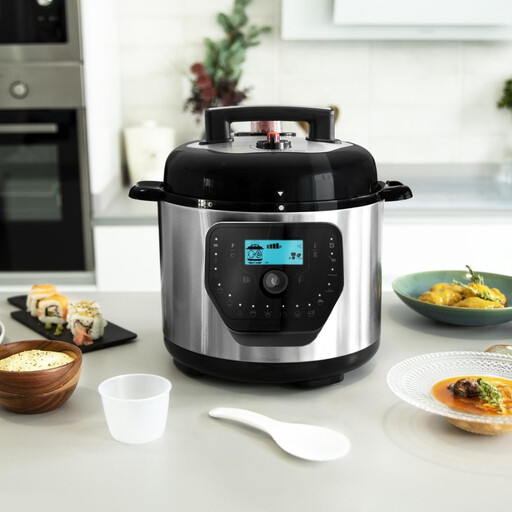 No image available
An option if you want to pressure-cook stock and use other cooking methods in the same appliance.
The product name lists 6 l, an air-fryer lid and integrated scales.
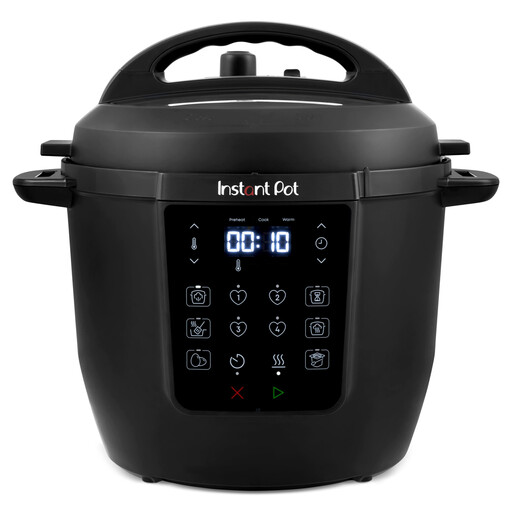 No image available
An option if you want to pressure-cook vegetable stock, as well as slow-cook or sauté.
Listed in the product name: 5.7L and model 112-2000-01-EU.
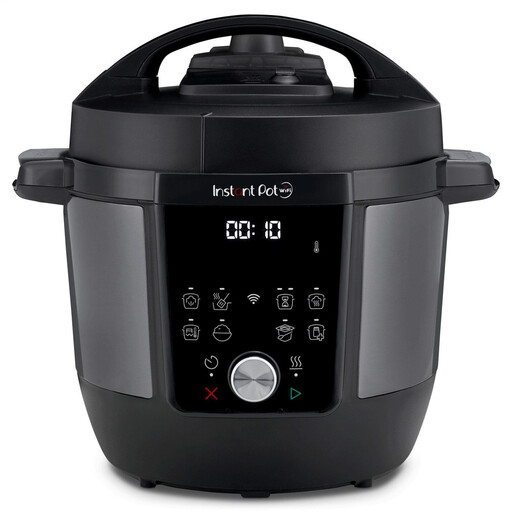 No image available
A good fit if you want to pressure-cook stock and also use the slow-cook, sauté or steam functions.
Listed in the product name: 5.7L and model 112-2001-01-EU.
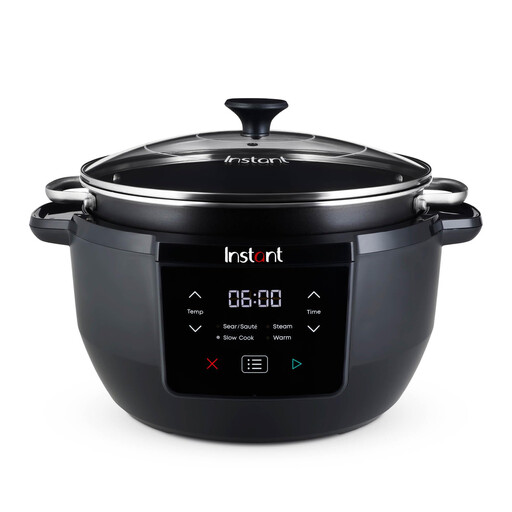 No image available
A non-pressure option if you want to slow-cook vegetable stock. Slow cooking isn’t a substitute for a pressure-cooking programme.
Listed in the product name: 7 L and model 140-6128-01-EU.
 No image available
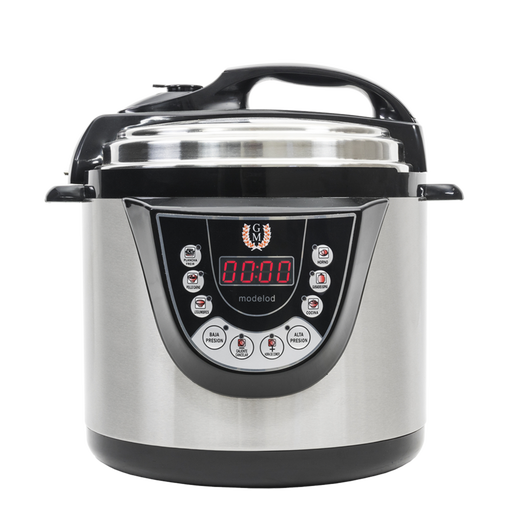
An option if you want to pressure-cook stock and take account of the specific appliance’s filling instructions when planning quantities.
The product name lists a 6 l capacity, 9 cooking menus, 2 pressure settings and a 24-hour timer function.
No. Follow the fill line and the instructions for your specific model. The German-language Instant Pot Duo manual states that the pot should be filled to no more than two-thirds of its capacity, or half full when using ingredients that expand. These limits don’t apply automatically to other models.
Place the appliance on a suitable, level surface in accordance with its manual, and only open a pressure cooker once the pressure has been released. The Instant Pot manual requires a stable, level, non-combustible work surface; ROMMELSBACHER warns of hot steam and liquids when opening the appliance. Always follow the instructions for the specific model.
If you’re keeping hot food for later, cool it quickly to below 7 °C and store it in a cool place. For larger quantities, the German Federal Institute for Risk Assessment recommends using several shallow containers. If there’s no suitable way to keep it cool, plan to eat the stock straight away.
Electrical equipment rated at 50 to 1.000 V AC and placed on the EU market is subject to the applicable safety requirements, including CE marking; EUR-Lex explains this in its reference to the Low Voltage Directive. Check the marking on the specific version being offered. It’s a legal conformity requirement, not an independent quality mark.
For a faulty product, contact the seller about your statutory rights. These are separate from any voluntary guarantee. The Verbraucherzentrale explains that purchases from business sellers are generally covered by a minimum two-year statutory warranty, and that the first step may be to request a repair or replacement.