Batch cooks making large quantities
If you want to make as much vegetable stock as possible in one go, compare the stated capacity, usable capacity and maximum fill mark. Remember to factor in space for cooling and portioning, too.


Choose a multicooker based on its usable capacity for the amount of stock you plan to make, rather than relying on the litre figure in the product name alone. Pressure cooking gives you another way to prepare it, while simmer and slow-cook programmes let you cook without pressure. Either way, allow time and space for cooling and portioning.
If you want to make as much vegetable stock as possible in one go, compare the stated capacity, usable capacity and maximum fill mark. Remember to factor in space for cooling and portioning, too.
If you want to use a pressure-cooking function, remember to allow time for the pressure to release fully before opening the cooker, as well as for the stock to cool afterwards.
If you’d rather simmer or slow-cook your stock without pressure, check that the specific model has a suitable setting and that its longer cooking time fits your routine.
First compare usable capacity and fill limits, then consider your preferred cooking method and the work involved in cooling, cleaning and portioning.
| What matters | What to check before buying | Who is it most important for? |
|---|---|---|
| Usable capacity for batch cooking | Check the usable capacity and fill mark for the specific model; don’t assume the amount of stock you’ll make is the same as the stated capacity. | If I want to make as much stock as possible in one go, I need enough room for both the vegetables and the liquid. Around 36% of consumers put batch size first. |
| Pressure cooking and time | Check for a pressure-cooking programme and the model-specific instructions for releasing pressure; cooking time isn’t the same as the total time until your stock is portioned and ready to store. | If I make stock often and want to pressure cook it, I also allow time for the pressure to release and for the stock to cool. Around 29% of consumers prioritise time and the pressure-cooking option. |
| Simmering or slow cooking without pressure | Check the feature list and instructions for the exact model to see whether it has a simmer or slow-cook setting. | If I prefer to make stock without pressure and can fit the longer cooking time into my routine, a suitable non-pressure setting is important. Around 21% of consumers prioritise this cooking method. |
| Cleaning and portioning | Check the cleaning instructions for the pot, lid and seal, and make sure you have space for suitable freezer containers. | If I want to strain, clean up and portion the stock as easily as possible after cooking, I take these steps into account too. Around 14% of consumers place the greatest importance on the work involved afterwards. |
When making stock, you need room for both the vegetables and the liquid. Krups gives the Cook4Me+ CZ7101 a stated capacity of 6.0 l and a usable capacity of 4.0 l; Rommelsbacher also gives the MD 1000 a usable capacity of 4 l for its 6-l pot. These figures don’t guarantee how much strained stock you’ll get.
Compare the usable capacity and fill limits for the specific model before planning your batch.
If you underestimate the capacity you need, you may have to cook in multiple batches and allow extra time for cooling.
A cooker with simmer or slow-cook programmes doesn’t automatically have a pressure-cooking function. For example, Joybuy’s product description for the Ninja Foodi PossibleCooker MC1001EU lists simmering and slow cooking, but not pressure cooking.
Decide whether you want to pressure cook, then check the features of the exact model variant.
For longer-term storage, the Federal Institute for Risk Assessment recommends cooling hot food quickly to below 7 °C. The Federal Centre for Nutrition advises measuring out the quantities you need and freezing them in individual portions.
Plan to strain the stock, cool it quickly and transfer it into manageable portions from the outset.
You’ll need suitable freezer containers and enough space to store the portions.
The Turbo Cuisine CY7548 is a pressure multicooker with a slow-cook option.
The Cook4Me+ CZ7101 is aimed at buyers who want guided programmes in a pressure multicooker.
The MD 1000 MeinHans combines pressure and non-pressure programmes and is designed for larger batches.
Duo models are an option for buyers who want to use pressure cooking and slow cooking in one appliance.
The Foodi PossibleCooker MC1001EU is a non-pressure alternative for buyers who prefer simmering or slow cooking.
This selection includes pressure cookers and appliances for slow cooking, boiling or braising without pressure.
 No image available
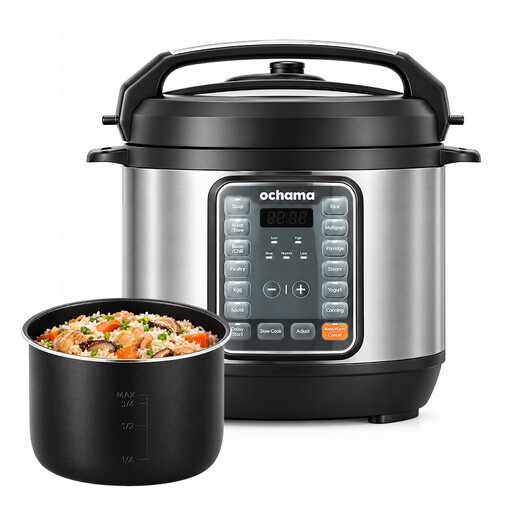
A good choice if you want to pressure cook stock and also use a slow-cook setting.
6 L; 1000 W; ceramic non-stick inner pot; slow-cook mode. When pressure cooking, observe the fill mark and release the pressure fully before opening.
 No image available
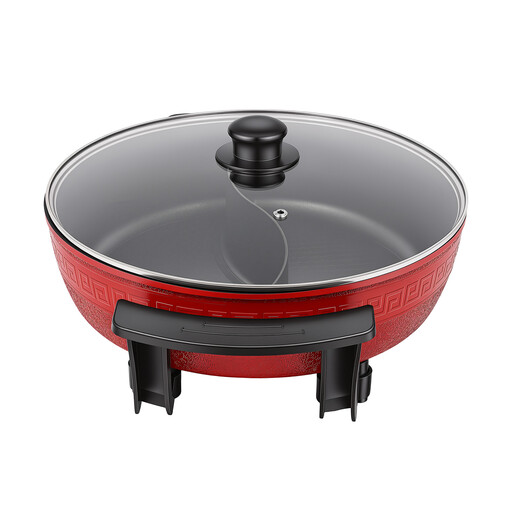
A non-pressure option if you want to simmer or braise stock and adjust the heat manually.
6 L; 1360 W; five heat settings; removable inner pot and glass lid. Don’t exceed the stated water level mark.
 No image available
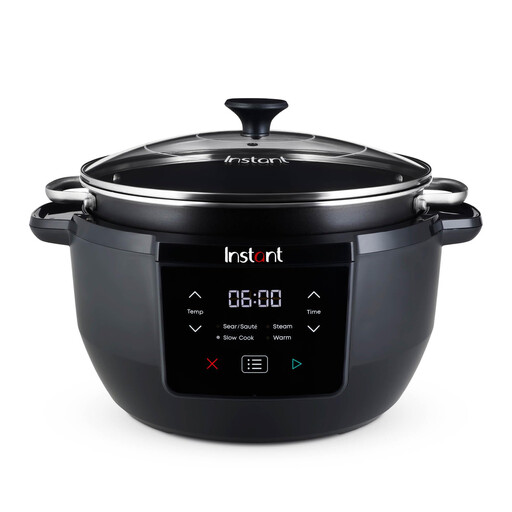
A good choice if you want to slow-cook stock without pressure and aren’t looking for a pressure cooker.
7 L; adjustable time and temperature settings. The product description states that the inner pot isn’t suitable for use in an oven or on a hob; temperatures above 175 °C may damage the coating.
 No image available
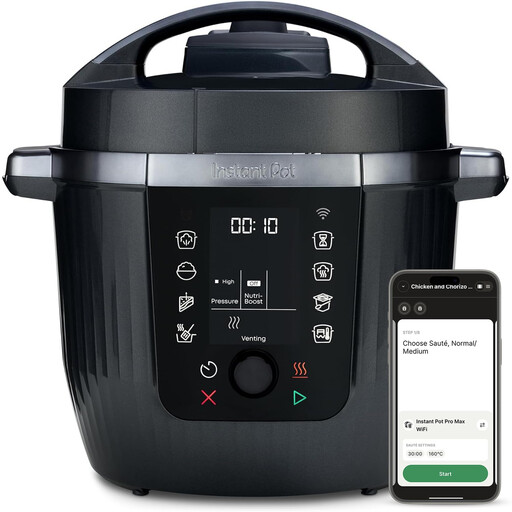
A good choice if you want to pressure cook and also have a slow-cook function.
5.7 L; 1200 W; the product description states that the inner pot is dishwasher-safe. Don’t open the lid until the pressure has fully released, and observe the fill marks.
 No image available
A good choice if you want to pressure cook stock and are looking for a soup or stock programme.
8 L; 1200 W; the product description lists 12 pre-set programmes and a slow-cook function. When pressure cooking, observe the fill limit and release the pressure before opening.
No. Krups gives the Cook4Me+ CZ7101 a stated capacity of 6.0 l and a usable capacity of 4.0 l; Rommelsbacher also gives the MD 1000 a usable capacity of 4 l for its 6-l pot. Neither figure guarantees how much strained stock you’ll get.
Only open it once the pressure has fully released. The German-language Instant Pot Duo manual warns against forcing the lid open; follow the instructions for your specific model variant.
Strain the stock and cool it quickly for longer-term storage. The Federal Institute for Risk Assessment recommends cooling hot food quickly to below 7 °C. The Federal Centre for Nutrition advises measuring out the quantities you need, freezing them in individual portions and labelling the containers.
Check availability and compatibility using the full model number. Instant Pot specifies compatible appliance identifiers for one sealing ring; this doesn’t mean it fits every multicooker from the brand.
The European Commission’s Low Voltage Directive applies to electrical equipment within its scope that operates at 50 to 1000 V AC or 75 to 1500 V DC. Products subject to relevant EU regulations requiring conformity marking must carry the CE mark. The German federal portal explains that the mark is based on the manufacturer’s declaration of conformity; it isn’t evidence of independent testing of the stock’s quality.