
Lieferung heute & morgen

Qualitätsgarantie

Willkommens-Angebote freischalten: KOSTENLOSE Lieferung | Bis zu 80 % RABATT | Kostenlose 30-Tage-JoyPlus-Testphase
App herunterladen
A savoury snack with a chewy texture, Asian spices and handy packaging is ideal for the office, travelling or popping in your rucksack. But not every vegetarian jerky lives up to expectations when it comes to texture, flavour and nutritional value. Terms such as ‘beef’, ‘meat’ or ‘jerky’ often describe the shape and seasoning of plant-based products, not what they’re made from.
If you want to choose carefully, watch out for three common pitfalls before buying: low protein content despite meat-like packaging, high salt levels from intense seasoning, and allergens that are easy to miss on the front of the pack.
A vegan meat alternative snack may be made from soya, wheat gluten, pea protein, konjac or a blend of ingredients. These vary considerably in their protein content, texture and how filling they are. A konjac product, for example, may have a chewy consistency, but the stated nutritional information lists just 1.2 g of protein per 100 g. By contrast, soya jerky can contain more than 20 g of protein per 100 g, depending on the recipe.
Chilli, Sichuan pepper, barbecue, black pepper and five-spice give Chinese vegetarian snacks plenty of flavour. At the same time, salt and fat levels can be higher. For comparison, Wuxianzhai Sichuan Style Vegetarian Meat contains 1.050 mg of sodium per 100 g, according to the product information. Wuxianzhai Spicy Vegetarian Beef 108 g contains 6,75 g of salt per 100 g. These figures are worth taking into account when planning your daily diet.
Many vegan beef strips are made with textured soya or wheat protein. Soy sauce often contains wheat, too. For anyone with coeliac disease, a wheat allergy or a soya allergy, it’s essential to check the full ingredients and allergen list. Labels such as ‘vegan’ or ‘plant-based’ are no substitute for checking the product information.
For a plant-based protein snack, two details are particularly useful:
According to the product information, Vegan Jerky Classic Black Pepper Flavor provides 22 g of protein per 100 g. Wuxianzhai Vegetarian Steak with western-style cumin seasoning contains 28,3 g of protein per 100 g. A konjac snack may appeal more for its texture and lower energy content, rather than as a high-protein alternative.
Textured soya protein, puffed soya beans or wheat gluten are often used to create a chewy bite. Puffed soya products can have a fibrous or compact texture. Wheat gluten often gives a product an elastic texture, but it isn’t suitable for a gluten-free diet.
Konjac products have a different texture. They’re usually soft, smooth or elastic, and don’t necessarily resemble traditional fibrous jerky strips. So if you’re looking for a snack to take with you, it’s worth distinguishing between a ‘meat-like bite’ and a ‘lower-calorie, firm texture’.
Always compare products on a per 100 g basis. The actual portion size matters, too: you might eat a 50-g pack in one go, while a 200-g pack could contain several portions.
Check the following:
‘Spicy snack’ isn’t a nutritional claim. Flavour and nutritional quality should be assessed separately.
The recommendations below group products by specific everyday situations and the product information provided.
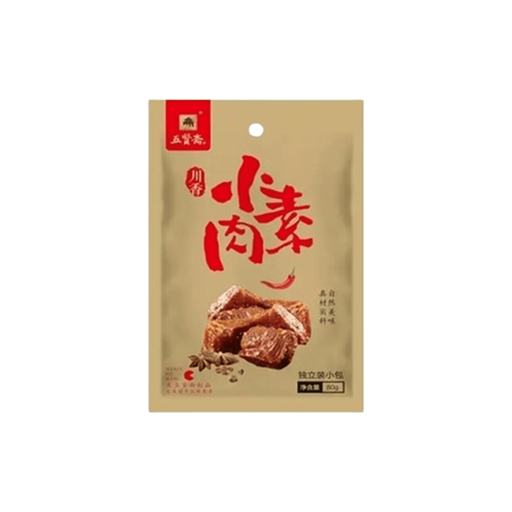
Why it suits this profile: The 80-g pack is a manageable size and brings Sichuan seasoning with chilli and Sichuan pepper. According to the product information, it contains 24,8 g of protein per 100 g.
The ingredients list clearly identifies wheat and soya beans as allergens. This makes it easier to check whether the snack fits your diet before you buy.
Sichuan-style seasoning, ready-to-eat strips and 172 kcal per 100 g, according to the product information.
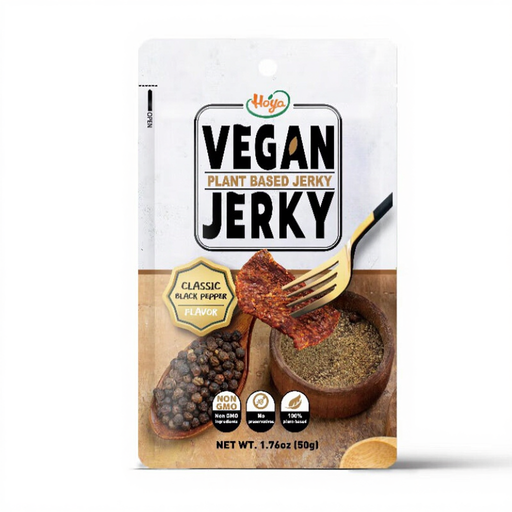
Why it suits this profile: The 50-g pack is ideal for a single snack break. According to the product description, the focus is on textured plant protein and black pepper.
The product information lists 22 g of protein and 3,2 g of salt per 100 g. This lets you assess the snack using measurable figures, rather than relying on its jerky-style packaging alone.
Classic pepper flavour, 342 kcal and 22 g of protein per 100 g, according to the product information.
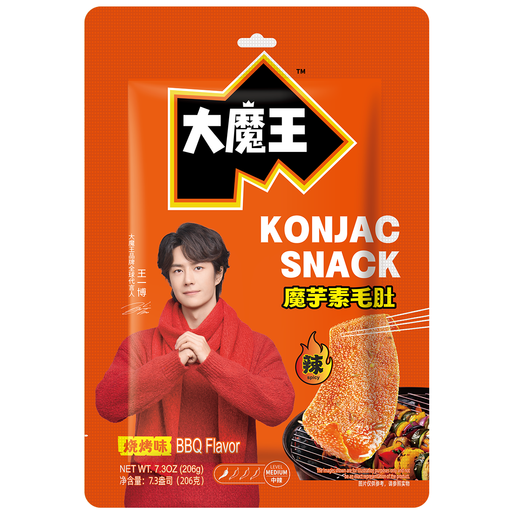
Why it suits this profile: According to the product information, the 206-g pack contains around 23 individual portions of approximately 9 g each, making it handy for the office, travelling or several snack breaks.
The main ingredient is clearly listed as konjac paste. This helps buyers understand what to expect from its different texture and low protein content of 1,2 g per 100 g.
206 g in total, individual portions and 111 kcal per 100 g, according to the product description.
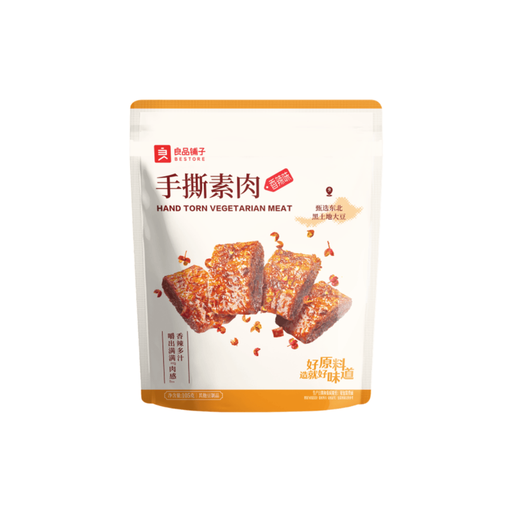
Why it suits this profile: According to the product description, the pack contains seven small portions seasoned with chilli and cumin. This makes it easy to share or enjoy a little at a time.
The product information lists soya and wheat as allergens, along with 2,2 g of salt and 20 g of protein per 100 g. This makes the seasoning and ingredients clear.
Seven small packs, a fibrous texture according to the product description, and 234 kcal per 100 g according to the product information.
We’ve put together a complete, regularly updated list of products that meet these strict selection criteria and fully comply with the safety regulations in force in the EU.
No. Some products contain no animal ingredients, but you should always check the specific product information. For products described as ‘vegetarian meat’ or ‘vegetarian beef’, the ingredients list is the key. You should also look out for allergens such as soya, wheat and sesame.
It depends on the product. Unopened packs are often stored in a cool, dry place away from direct sunlight. After opening, the product information may recommend eating it promptly, sealing it tightly again or storing it in the fridge, depending on the variety. Always follow the instructions on the packaging.
A ready-to-eat snack in a compact pack can be handy when you’re out and about. Compare protein, energy, salt, portion size and allergens when choosing one. According to the nutritional information, soya jerky may contain more protein, while a konjac snack provides less energy. The right choice depends on how you plan to use it and what else you eat.