
Lieferung heute & morgen

Qualitätsgarantie

Willkommens-Angebote freischalten: KOSTENLOSE Lieferung | Bis zu 80 % RABATT | Kostenlose 30-Tage-JoyPlus-Testphase
App herunterladen
Vehicle toys for children range from simple toy cars to detailed tractors, fire engines and electric ride-on vehicles. The choice may look straightforward at first, but product images and marketing claims don’t always make it clear whether a model is right for your child’s age, play space and preferred way to play.
Three common buying misconceptions are worth looking out for:
When choosing vehicles for children aged 3 and over, check that the age guidance on the product is suitable for your child’s stage of development. A toy with a screw-together system might be suitable for a three-year-old, but they may need help with assembly. LEGO Speed Champions sets with lots of pieces, for example, are generally aimed at children aged 9 or 10, depending on the model.
Look out for:
The CE marking is a legally required declaration by the manufacturer for certain product groups in the European Economic Area. However, it doesn’t replace checking the age guidance, instructions and specific features of the product.
For children’s toy cars, features such as sturdy plastic bodies, metal components and robust wheels are worth considering. Look at them in the context of how the toy is intended to be played with, rather than in isolation. A compact SIKU model, for example, has a metal body and plastic tyres. A BRUDER tractor, by contrast, has several moving parts, such as a front loader, doors and towing attachments.
Before buying, check:
A battery-free racing car toy, tractor or flexible race track is ready to use straight away, with no need to charge it. For a remote-controlled stunt car, however, check the battery type, charging time, range and remote control. An electric ride-on vehicle also needs a suitable place to charge, regular battery charging and a safe, flat surface to drive on.
When choosing an electric ride-on vehicle for children, these details are especially important:
Actual running time depends on your child’s weight, the surface, temperature and driving style. Treat the manufacturer’s figures as a guide rather than a guaranteed real-world running time.
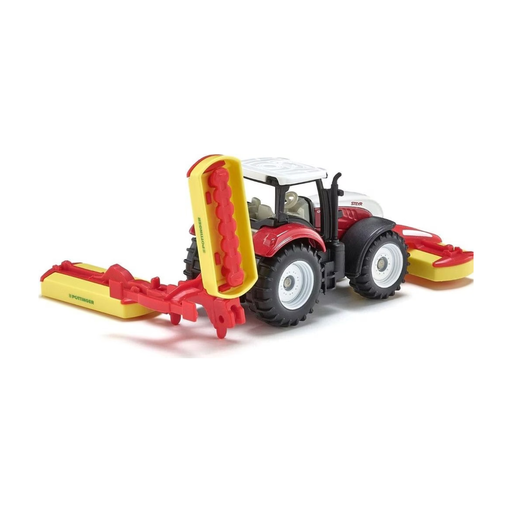
Why it suits this buyer: This compact model, suitable for ages 3 and over, takes up little space and combines a metal body with detachable mowers.
Its straightforward design means less unnecessary electronics, and less upkeep and charging as a result.
Detachable mowers, a folding rear mower and compact dimensions of approximately 11.3 × 11.8 × 4.3 cm.
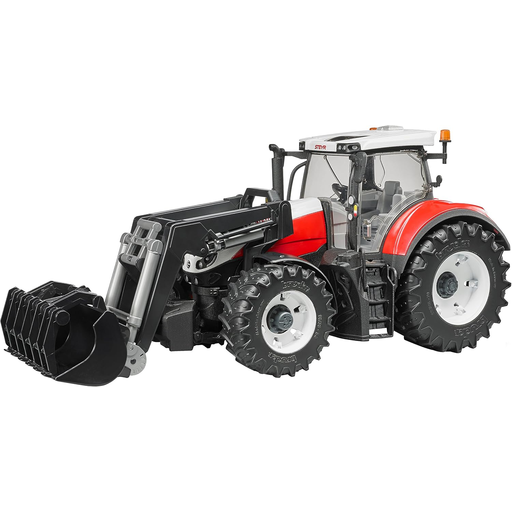
Why it suits this buyer: Its 1:16 scale, moving front loader and compatibility with BRUDER attachments make it ideal for detailed farm play scenarios.
The product description lists specific moving parts and add-ons, rather than relying on vague claims about its features.
Opening doors and bonnet, height-adjustable three-point linkage and detachable front loader.
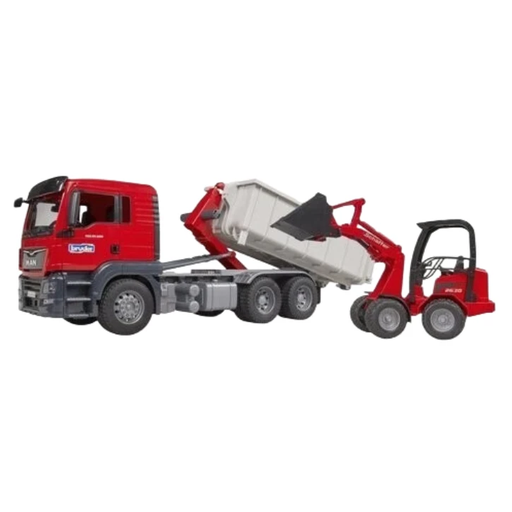
Why it suits this buyer: This set is aimed at children aged 4 and over who want to combine construction site, transport and loading scenarios.
Its many features are clearly described: container, crane arm, rotating cab, bucket and adjustable blade.
1:16 scale, cab that rotates 360° and compatibility with BRUDER vehicles and optional light and sound modules.
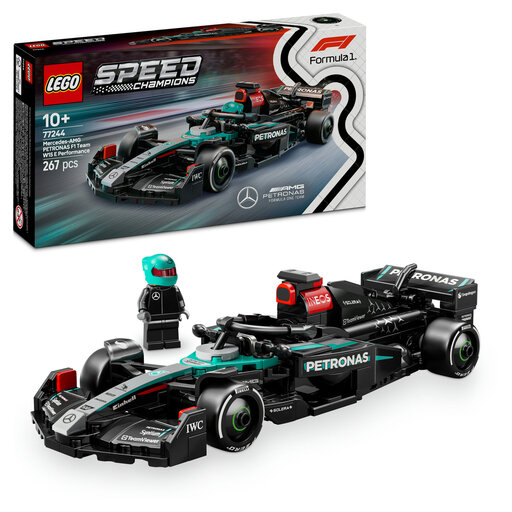
Why it suits this buyer: This 267-piece set is designed for fans aged 10 and over, combining building and racing with a model to display.
The piece count and age guidance make the assembly involved clear and help you plan a gift realistically.
Cockpit with halo safety device, front and rear wings, and a driver minifigure.
We’ve put together a complete, regularly updated list of products that meet these strict selection criteria and the safety regulations in force across the EU.
For fire engine fans, a toy fire engine or a set with a transport vehicle, ladder truck and ambulance could be a good choice. If your child wants to play with different vehicles together, you could add a play mat or a flexible race track. A remote-controlled stunt car is better suited to children who can use a remote control safely and have plenty of clear space to play.
A toy tractor with a front loader is ideal for role-play based on farming and construction. For older children, LEGO Speed Champions models such as the Bugatti Vision GT, Bugatti Centodieci or Dodge Challenger SRT Hellcat offer extra building and display possibilities. Check the recommended age, small parts and space needed before ordering any model.
Simple models without complicated assembly are worth considering for children aged 3 and over, such as compact tractors, basic toy cars or fire engine sets. The key things to check are the manufacturer’s specific age guidance, warnings and whether supervision is needed around small or detachable parts.
Lifespan depends on the materials, moving parts, where the toy is used and how well it is cared for. Check vehicles for loose parts after play, and store electric models somewhere dry. If the toy will be used outdoors, the surface, damp conditions and weight limit are especially important.
As well as the purchase price, the main costs are electricity for charging and, where needed, replacement batteries. How long the vehicle runs on a single charge depends on factors including battery capacity, speed, your child’s weight and the surface. Before buying, compare the manufacturer’s figures with how you plan to use it.