
Lieferung heute & morgen

Qualitätsgarantie

Willkommens-Angebote freischalten: KOSTENLOSE Lieferung | Bis zu 80 % RABATT | Kostenlose 30-Tage-JoyPlus-Testphase
App herunterladen
Vehicle toys for children range from simple toy cars to detailed vehicle building sets for older children and adult collectors. The wide choice can make it difficult to decide: eye-catching packaging says little about how practical a toy is for everyday play, and a model with lots of features won’t necessarily suit your child’s age or play style.
Three common buying pitfalls are worth looking out for:
The manufacturer’s age recommendation is an important factor when choosing a toy. A gift for children aged 3 and over should not only look suitable; the warning label and the actual size of the individual parts should also be appropriate. Manufacturers clearly flag small parts in LEGO Speed Champions sets, model cars and vehicle building sets.
Look out for:
A model designed for adults or collectors is not automatically suitable as an unsupervised toy for children.
ABS plastic, metal bodies and plastic wheels are common in toy cars. Metal model cars feel realistic thanks to their weight, while plastic models often allow for more moving features. The key is to choose materials and construction that suit how the toy will be used.
For younger children, larger vehicles without loose small parts may be a good choice. Older children may enjoy LEGO cars, LEGO City vehicles or LEGO Speed Champions sets with lots of building pieces. A scale such as 1:16 for Bruder models offers visible features and plenty of scope for imaginative play, but it also takes up more storage space.
Before you buy, think about whether the vehicle will be used on the carpet, in a bedroom, outdoors or mainly displayed on a shelf. A flexible race track can be rolled up to save space, while a tractor with a trailer or a tow truck needs considerably more room.
Useful features include:
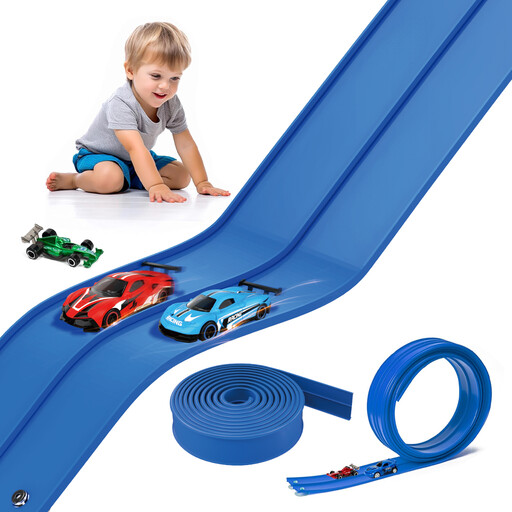
Why it suits this profile: The 4.5 m flexible dual-lane track can be set up as straight sections, bends and loops. It comes with four small vehicles and doesn’t require batteries.
The track can be rearranged and rolled up for storage. However, be sure to check the warning about small parts before buying.
Flexible track layouts, four friction-powered cars and use indoors or outdoors.
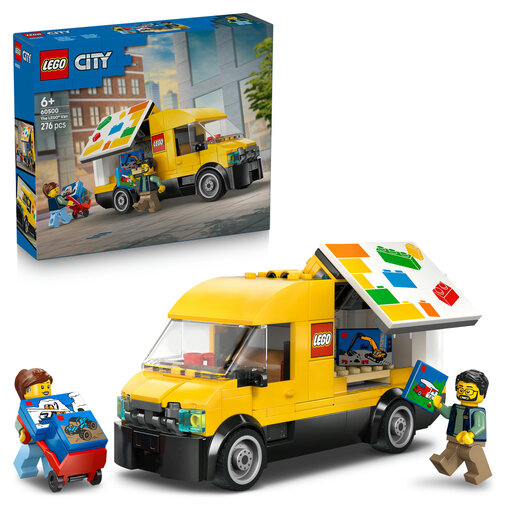
Why it suits this profile: Designed for children aged 6 and over, this delivery van combines building with everyday scenes involving deliveries and city traffic.
The recommended age, piece count of 276 and dimensions of the completed vehicle are clearly stated. This makes it easier to plan for play and storage space.
Opening side panels, rear doors and bonnet, plus two minifigures and accessories for a variety of play scenes.

Why it suits this profile: With its 1:16 scale and mechanical features, this model is designed for children aged 4 and over who enjoy realistic recovery and towing scenes.
The features are mechanical rather than battery-powered, so there are no ongoing battery costs. Follow the manufacturer’s guidance on small parts and use.
Tilting driver’s cab, swivelling crane, removable recovery equipment and an additional off-road vehicle.
We’ve put together a complete, regularly updated list of products that meet these strict selection criteria and the safety requirements in force across the EU.
Depending on your child’s interests, different categories may be worth considering:
Choose products explicitly marked as suitable for children aged 3 and over, with clear safety information. Small accessories, detachable wheels and building pieces should only be used under supervision. Always follow the manufacturer’s specific age recommendation.
Lifespan depends on the materials, mechanisms, how often the toy is played with and how it is stored. Metal bodies can be hard-wearing with normal use; moving plastic parts should be checked regularly for cracks or looseness. Damaged parts should no longer be used for play.
Battery-free toy cars, LEGO building sets and many Bruder vehicles don’t incur battery costs during normal use. Remote-controlled vehicles may need batteries, rechargeable batteries or replacement parts. Before you buy, check the power source, charger and any potential ongoing costs.