
Lieferung heute & morgen

Qualitätsgarantie

Willkommens-Angebote freischalten: KOSTENLOSE Lieferung | Bis zu 80 % RABATT | Kostenlose 30-Tage-JoyPlus-Testphase
App herunterladen
Vehicle toys for children range from simple toy cars to battery-powered ride-on vehicles. This can make it difficult for parents, grandparents and other family members to know what to choose. Rather than focusing on lots of extra features, look for the right combination of age suitability, play environment, material, size and supervision.
Lights, music, remote controls and moving parts may look appealing at first. But they can soon prove impractical in everyday use: batteries need replacing, noise can be disruptive indoors, or younger children may find the controls too complicated. For a toy for children aged 3 and over, the basic play function should be easy to understand even without electronic effects.
The ‘3 years and over’ label is not just a marketing claim. Small accessories, detachable parts and moving mechanisms may pose a risk to younger children. Check the warnings, CE marking, manufacturer’s information and recommendation for supervised use before buying.
A large electric ride-on vehicle for children needs a suitable, level surface and somewhere to charge it. A detailed tractor or construction vehicle with lots of attachments, on the other hand, needs storage space. For a small home, compact toy cars, a toy car transporter or a foldable race track may be more practical.
Check the recommended age range and how the vehicle is controlled. A push-along vehicle is often well suited to simple role play. An RC car for children also requires an understanding of the remote control, direction and speed. An adult should supervise children the first time they use remote-controlled or motorised models.
For toys that get plenty of use, sturdy plastic parts, rounded edges and durable wheels are important considerations. Models made from metal and plastic, such as a Siku tipper truck, can be suitable for both collecting and play. For moving arms, trailers, tipping bodies or doors, check whether fingers could get trapped and whether any small parts can be detached.
For motorised ride-on vehicles, consider maximum speed, charging time, battery type, load capacity and remote control. Make sure the specifications suit where the vehicle will be used. A vehicle that travels at 3 to 8 km/h also needs plenty of space away from furniture, stairs, roads and other people. Battery-free models don’t require ongoing battery purchases, but may not have lights or sound effects.
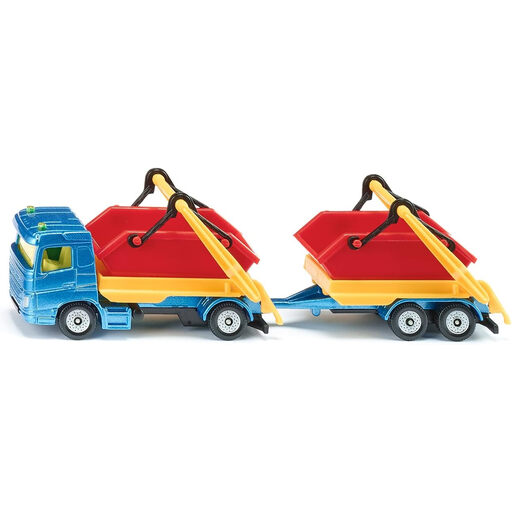
Why this product suits this profile: This compact vehicle model is suitable for children aged 3 and over, and for households with limited storage space. Its tipping function makes simple construction-site and transport role play easy.
According to the product information, it doesn’t need batteries and has a manual tipping function instead of electronics that can be difficult to maintain.
Metal body, plastic tyres, movable tipping unit and a length of approximately 15.2 cm.
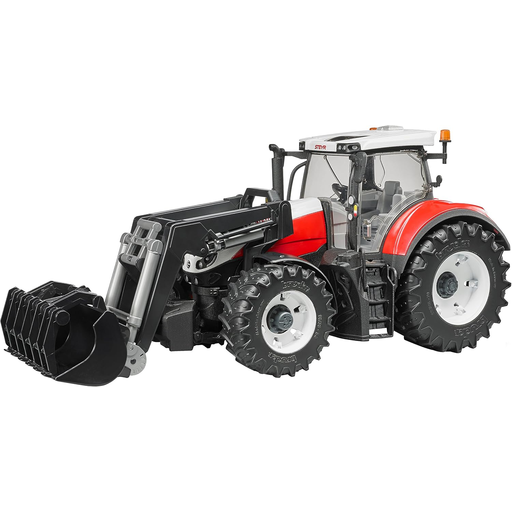
Why this product suits this profile: This 1:16 scale model is designed for children aged 3 and over who enjoy detailed tractor toys and expandable farm play scenarios.
Play isn’t limited to sound effects: the front loader, doors, bonnet and three-point hitch all have manual functions.
Detachable front loader, adjustable rear hitch, compatible with other BRUDER attachments and requires no batteries.
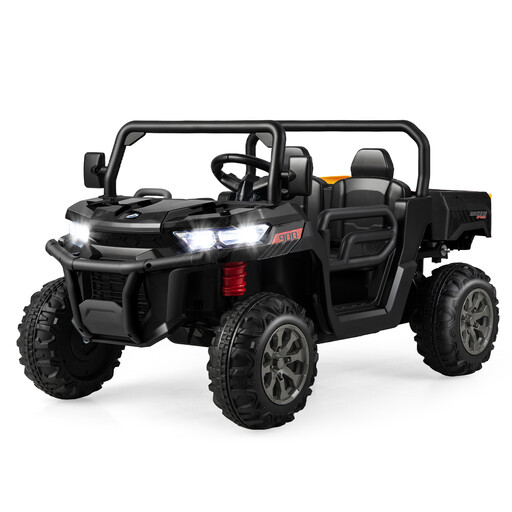
Why this product suits this profile: For families with a suitable outdoor space, this model offers two seats, a remote control and a recommended age range of 3 to 8 years.
The product information lists a soft-start function, seat belt, emergency braking via the remote control and a limited speed of 3 to 8 km/h.
Two seats, stated load capacity of 50 kg, 12 V battery, suspension and parental control via a 2.4 GHz remote control.
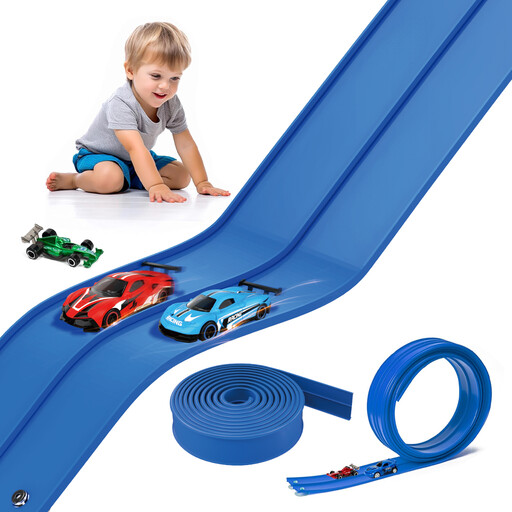
Why this product suits this profile: The 4.5 m double-lane track can be set up in different layouts for children aged 3 and over, then rolled away neatly after play.
According to the product information, the track doesn’t need a power supply. That means no charging time or regular battery purchases.
Double-lane track, four friction-powered cars, flexible layouts and suction cups for glass, tiled or metal surfaces.
We’ve put together a complete, regularly updated list of products that meet these strict selection criteria and the safety regulations in force in the EU.
There are different categories to suit different play interests:
Choose models with straightforward manual controls, sturdy parts and clear age guidance. Keep small parts out of reach of younger children. For RC cars or vehicles with lots of features, it’s a good idea for an adult to show children how to use them.
Lifespan depends on the materials, how often the toy is used, how it’s stored and how well it’s cared for. Toy cars without batteries can last a long time if treated properly. For electric vehicles, charge the battery according to the instructions, store it in a dry place and check it before long periods of non-use. Check moving parts regularly for loose connections or damage.
As well as the purchase price, the main costs are electricity for charging and, if needed, replacement batteries or remote-control batteries. The actual cost depends on battery capacity, how often it’s charged and how long the vehicle is used. Before buying, check the charging time, battery voltage and what’s included.