Lieferung heute & morgen

Qualitätsgarantie

Willkommens-Angebote freischalten: KOSTENLOSE Lieferung | Bis zu 80 % RABATT | Kostenlose 30-Tage-JoyPlus-Testphase
App herunterladen
The relationship between interior spaces and nature is increasingly defined by the deliberate arrangement of objects. In urban dwellings, where every square foot counts, the cultivation of plants is evolving from a simple collection of pots into a thoughtful curatorial practice. A windowsill fills up quickly, and the floor becomes cluttered. The challenge lies not in a lack of greenery, but in its organisation. It's about creating a structure that does justice to both the plants and the space itself.
The solution to spatial constraints often lies in the vertical. A plant shelf is more than just a piece of furniture; it is a tool for shaping space and light. It allows a collection of plants to be staged as a unified, living tableau, rather than being left as separate, disconnected elements. The philosophy is simple: by building upwards, we not only create more floor space but also draw the eye upward, altering the perception of the room's proportions.
Such a system allows for precise control over the environment for each plant. On a tiered plant stand, light-loving species can be placed on the upper levels, while shade-tolerant plants find shelter in the lower sections. This staggering creates a visual depth reminiscent of a terraced garden. A flower shelf for the balcony uses this effect to create a lush oasis within a small footprint. The choice of material plays a crucial role. A metal plant stand, often powder-coated, offers a sleek, industrial aesthetic and high weather resistance. It forms a sharp contrast to the organic shapes of the leaves. Wood, on the other hand, radiates warmth and integrates seamlessly into interiors with natural materials. For climbing plants like ivy or jasmine, an integrated trellis can turn the wall itself into a canvas, creating a green, vertical surface.
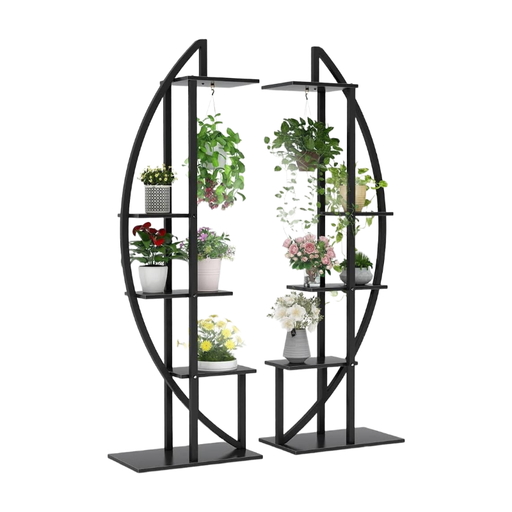
The selection of a shelving system should be guided by the room's architecture and the needs of the plant collection. For a comprehensive display in a living room or on a covered terrace, tall, multi-level structures are ideal. A model like the Tribesigns 5-Tier Flower Stand, with its 180 cm height, utilises the full vertical axis of a room. Its construction of E1 particleboard and a metal frame provides a stable base for numerous pots, while the included S-hooks open up additional possibilities for hanging plants. The combination of a wood-look finish and black metal creates a balanced material presence.
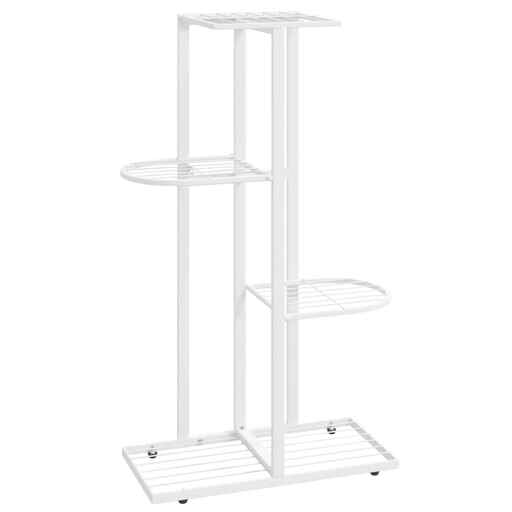
In more minimalist environments or on narrow balconies, slimmer silhouettes are often required. Here, delicate metal frames that allow the plants to take centre stage are a fitting choice. The MINGHOU 5-Tier 6-Pot Plant Stand in white or the black version are examples of such an understated design. Crafted from powder-coated steel, they are designed for both indoor and outdoor use and have a small footprint of only about 22 x 43 cm. Their ladder-like shape ensures that each plant receives sufficient light, while the structure remains airy.
For more dynamic arrangements that bring together plants of different sizes and growth habits, asymmetrical designs are an interesting option. The Tribesigns Multi-Tiered Plant Stand combines high and low shelving across nine tiers, enabling a varied composition. An alternative to the freestanding solution is to utilise wall space. The MyGift Wall-Mounted Garden Trellis transforms an empty wall into a vertical garden. The two powder-coated steel panels serve as a sturdy trellis, creating a flat yet impactful green installation that leaves the floor entirely clear.
For those who wish to explore an expanded selection of objects designed to these material standards, the complete directory of Outdoor Plant Stands offers further inspiration.