What should you look for when buying?
Start by comparing your hand size and preferred hand, then check click noise and connection options for a shared desk. A vertical shape alone tells you nothing about personal fit or whether the connection will be suitable.
| What matters |
What to check before buying |
Who it matters most to |
| Fit and hand position |
Hand size and preferred hand; how easily you can reach the buttons in your usual grip. |
If I’m spending longer writing a proposal, the mouse needs to suit my hand size and preferred hand. Around 28% of consumers put fit first. |
| Click noise |
Check whether this specific version is explicitly described as having quiet buttons. |
If you work at a shared desk, you’ll want to avoid disturbing others with clicks while editing. Around 22% of consumers prioritise quiet clicks. |
| Connection and switching between computers |
Check that Bluetooth, a receiver or a cable suits the ports and rules on the computer you plan to use. |
If I use the mouse with different computers, its connection needs to be practical for each one. Around 22% of consumers prioritise connectivity. |
| Left-handed use |
Check that the version is specifically designed for left-handed use and confirm its connection type. |
If you use a mouse with your left hand, you need a suitable shape, not just a different button layout. Around 17% of consumers put left-handed use first. |
| Everyday use |
Power supply and what’s included; for wired models, cable length and connection type. |
If I change desks often, I want the receiver and power supply to be easy to manage; at a fixed desk, a wired mouse means one less thing to carry. Around 11% of consumers prioritise these practical considerations. |
Vertical mice at Joybuy
This selection includes wireless vertical mice for working on documents at your desk, including versions with different connection options.
 No image available
Wireless vertical mouse with 6 buttons
Clicks described specifically as quiet may be a useful feature at a shared desk.
Features listed include Bluetooth and 2.4 GHz wireless connectivity, three DPI settings between 800 and 1600 DPI, and USB-C charging. Check which receiver and port you need for your chosen connection.
View at Joybuy
 No image available
Wireless vertical mouse with Bluetooth and USB-C charging
The connection options may come in handy when switching between computers, provided the relevant ports are available.
Features listed include Bluetooth and a 2.4 GHz USB receiver, six programmable buttons and three DPI settings: 800, 1200 and 1600. The receiver requires a compatible USB port.
View at Joybuy
 No image available
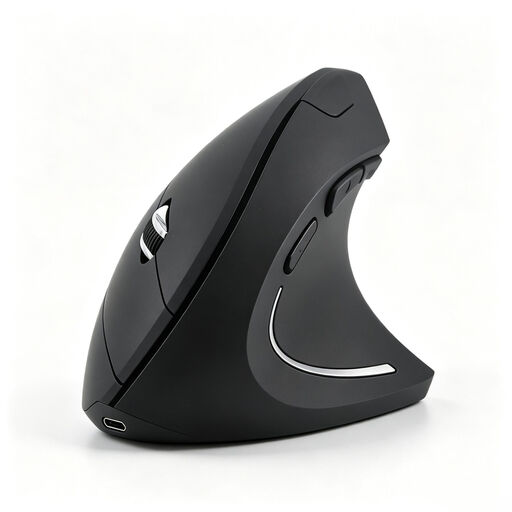
KINSI wireless vertical mouse with 5 buttons
Clicks described as quiet may be a useful feature when working alongside others.
Features listed include a 2.4 GHz USB receiver, five programmable buttons and adjustable DPI settings from 800 to 4800. The receiver requires a compatible USB port.
View at Joybuy
 No image available
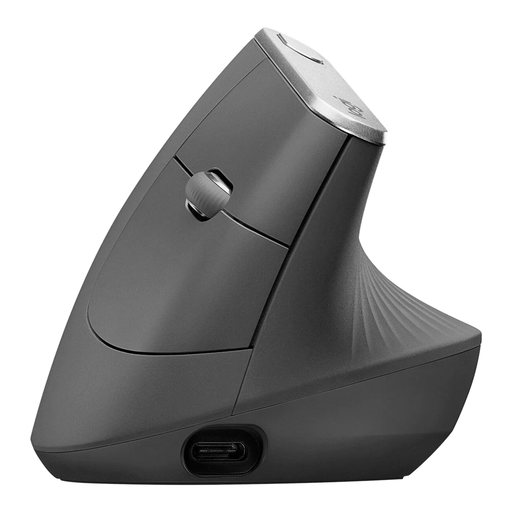
Logitech MX Vertical
Bluetooth and a USB receiver offer different ways to connect, so check which one suits the shared computer.
The model is described as having a 57° vertical design and a 4000 DPI sensor; USB-C charging and the ability to switch between multiple devices are also listed. The USB receiver requires a compatible port. The grip angle alone does not establish whether it will suit your hand.
View at Joybuy
Frequently asked questions
How should I position the mouse at a shared workstation?
Position the mouse so you can reach it without holding yourself in a forced position for long periods, and take breaks from one-sided static strain. The Federal Institute for Occupational Safety and Health treats the mouse as part of the overall computer workstation; its shape alone can’t guarantee that you’ll avoid discomfort.
Do I need Bluetooth for a wireless vertical mouse?
No, not necessarily. According to the F.A.Z. Kaufkompass, the Logitech Lift offers Bluetooth and a USB receiver; the CHERRY MW 4500 and Trust Verto wireless mouse are described as using USB receivers. Check which connection you can actually use with the computer in question.
What ongoing costs or service issues should I consider?
For a wireless mouse, check the power supply and what’s included, as well as the delivery and returns terms for the specific purchase. The Verbraucherzentrale distinguishes the statutory warranty against the seller from a voluntary manufacturer’s guarantee.
Can I return a mouse bought online if it doesn’t feel comfortable in my hand?
In Germany, consumers who buy online generally have the right to cancel their purchase, usually within 14 days of receiving the goods; you must notify the retailer that you wish to cancel. The Verbraucherzentrale explains this rule. Cancelling because you’ve changed your mind is different from exercising your statutory rights if the goods are faulty, so check the terms of your specific purchase.
What rules apply to a wireless mouse sold in Germany?
For radio equipment, the EU Radio Equipment Directive sets requirements covering areas such as safety, electromagnetic compatibility and use of the radio spectrum. According to the European Union, when a product is covered by the relevant rules, the manufacturer uses the CE marking to declare that it complies with them; it is not an ergonomics quality mark. Check the information for the specific model.


