Newsletter editors who move between workstations
You edit copy and switch between devices or workstations. Look for a shape that suits your hand, a connection method permitted on the computer you’ll be using, and straightforward set-up.


For newsletter work at a shared desk, first make sure the vertical mouse suits your writing hand and hand size. Then check whether you can use Bluetooth, a USB receiver or a cable with the shared computer. Quiet buttons and easy-to-reach navigation controls can help when proofreading, but they’re no substitute for checking workplace rules or arranging your mouse, keyboard and armrest to suit you.
You edit copy and switch between devices or workstations. Look for a shape that suits your hand, a connection method permitted on the computer you’ll be using, and straightforward set-up.
If you’re proofreading and navigating alongside other people, click noise may matter. Check the specific button design rather than assuming that a vertical shape means quiet clicking.
You’ll need a mouse with a genuinely left-handed shape; changing the button settings won’t turn a right-handed mouse into a left-handed one. Left-handed versions are available from brands including Logitech, CHERRY and Perixx.
A good fit if: You’re looking for a compact shape and quiet operation, and can use Bluetooth or a USB receiver at your workstation.
Keep in mind: The specific version must suit your writing hand and hand size, and use a connection method you’re allowed to use.
A good fit if: A USB port is available and you want to use the browser’s back and forward functions without setting up custom button assignments.
Keep in mind: You’ll need to be able to use the receiver with the computer. Custom button assignments may require additional software.
A good fit if: You’d rather not manage a wireless connection or receiver, and there’s a suitable USB port available.
Keep in mind: The cable length and routing need to work for your shared workstation.
| What matters | What to check before buying | Who should consider it? |
|---|---|---|
| Shape and fit | Check your writing hand, whether left- or right-handed versions are available, the recommended hand size and whether you can reach the buttons comfortably. | If I work with my left hand or have larger hands, the shape needs to suit both my writing hand and hand size. Around 31 % of consumers who put fit first say this is their main priority. |
| Quiet operation | Check whether quiet clicks and a quiet scroll wheel are specifically listed for the exact model variant. | If I proofread alongside other people, I want to keep repeated clicking as quiet as possible. Around 25 % of consumers who put quiet operation first say this is their main priority. |
| Connection and switching | Check Bluetooth, USB ports, receiver rules and, if relevant, software permissions on the device you’ll be using. | If I use the mouse with a shared computer or move between computers, the connection needs to be practical for that set-up. Around 25 % of consumers prioritise how the mouse connects to their device. |
| Navigation and buttons | Check which buttons work straight away and which functions require custom software assignments. | If I frequently switch between views while editing, I want the navigation buttons to be easy to reach. Around 19 % of consumers who prioritise text navigation say this is their main concern. |
The Logitech Lift is described as suitable for small to medium-sized hands. For left-handed use, you’ll also need the left-handed version; changing the mouse buttons alone won’t change its shape.
First check your writing hand and hand size, then compare the shape of the mouse and its extra features. Choosing a mouse that doesn’t fit could mean extra hassle arranging a return or replacement.
A receiver needs a usable port. CHERRY describes software for custom button assignments, but installing it may be restricted on a shared computer. With wired models, the port and cable routing need to work for your set-up.
Before buying, check which connections and installations are permitted at your workstation. If you’d rather not use a wireless connection, compare wired models and their cable lengths with the space available.
Checking port and software permissions can mean extra set-up on a shared computer.
Manufacturers’ claims about potential relief don’t prove that a mouse will treat a condition or suit you personally. The Federal Institute for Occupational Safety and Health also highlights posture and the set-up of the entire workstation.
Choose a mouse that fits and works with your actual set-up. Arrange your mouse, keyboard and armrest to suit your workstation, rather than expecting a particular benefit from buying a mouse alone.
The Lift range includes wireless vertical mice for small to medium-sized hands, as well as a left-handed version.
The wireless MW 4500 and MW 4500 LEFT are designed for the corresponding writing hand and connect via a USB nano receiver.
The wired Verto is an option if you have access to a usable USB port.
The wired PERIMICE-513L is specifically shaped for left-handed users.
Depending on the model, these wireless vertical mice offer a receiver, quiet clicks, navigation buttons or multiple connection options for a shared workstation.
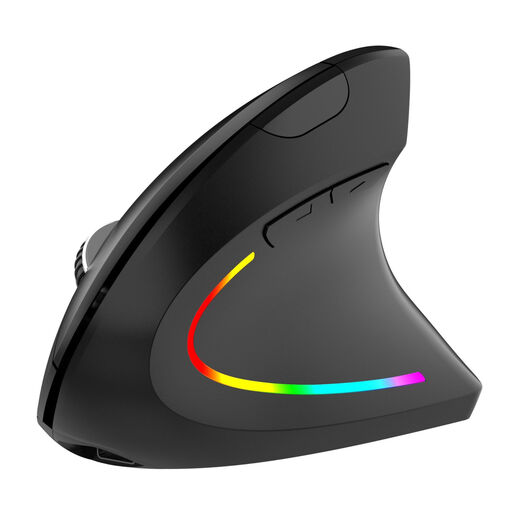 No image available
For a shared workstation, the wireless connection via receiver may be useful; the mouse is described as having quiet clicks and back and forward buttons.
Six buttons, four DPI settings, 2.4 GHz connection via receiver and USB-C charging.
 No image available
The wireless connection via USB receiver may be a good fit if a suitable port is available on the shared computer.
Six buttons, four-way scroll wheel, DPI settings of 800, 1200 and 1600, plus 2.4 GHz wireless connectivity via receiver and a USB-C battery.
 No image available
If you switch between devices, the listed connection options give you a choice; check which ones are permitted at each workstation.
Bluetooth and 2.4 GHz connection via USB receiver, six programmable buttons, three DPI settings (800, 1200 and 1600), plus USB-C charging.
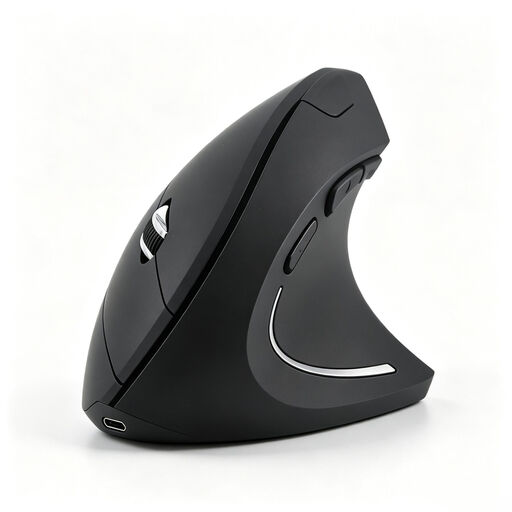 No image available
The wireless connection via USB receiver may be useful at a shared desk, provided you can use the port.
Five buttons, adjustable DPI from 800 to 4800, 2.4 GHz connection via USB receiver and USB-C charging; the clicks are described as quiet.
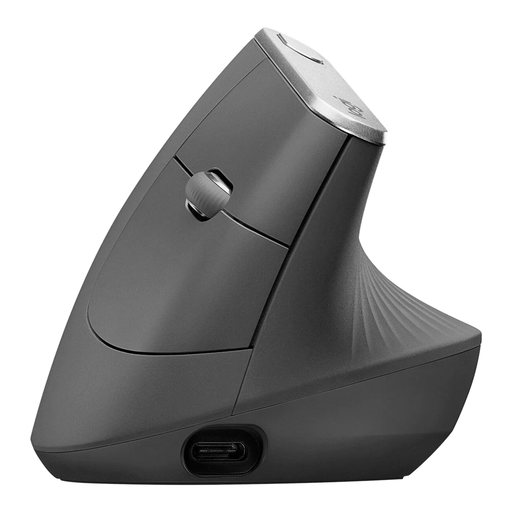 No image available
If you want to use Bluetooth or a USB receiver, this model offers both connection options. The ability to connect to up to three devices may be useful if you switch between them.
57° shape, 4000 DPI sensor, four customisable buttons and rechargeable battery.
The shape of a mouse can’t guarantee a particular result for an individual. The Federal Institute for Occupational Safety and Health also highlights hand size, joint angles, static posture and having enough room for your mouse and armrest. So make sure your entire workstation is set up to suit you.
Check whether you have an available USB port or Bluetooth, whether a wireless receiver is allowed, and whether you’re permitted to install software. CHERRY’s side buttons handle the browser’s back and forward functions; the manufacturer says that custom copy and paste assignments require CHERRY KEYS.
Position the mouse so there’s room for your hand and arm, and so you can arrange the mouse and keyboard as needed. If you use a model with a receiver, take it with you when you move desks or store it according to your workplace rules.
As the Verbraucherzentrale explains, consumers generally have a 14-day right to cancel an online purchase, starting from delivery. If the product is faulty, you may also have statutory rights against the seller; these are separate from any voluntary guarantee. Check the applicable returns information before placing your order.
Official regulations don’t generally require a specific vertical mouse model. Workstation design requirements apply to screen-based workstations in workplaces; ASR A6, issued by the Committee for Workplaces, sets out more specific guidance within its scope. This isn’t a general product approval or a certificate of suitability for an individual.