Report reviewers unsure about fit
If you spend a long time working with a mouse, check that its grip, size and shape suit the hand you use. The word ‘ergonomic’ alone doesn’t tell you whether a mouse will feel right for you.


Start by choosing a vertical mouse for the hand you use, then check whether its shape suits your hand size. Next, make sure Bluetooth, a USB receiver or a cable will work with the shared computers. For quiet reading and commenting, consider whether the controls are easy to reach and, where relevant, whether the clicks are quiet. A vertical grip does not guarantee freedom from discomfort: a laboratory study in Ergonomics examined biomechanical differences, while a review in the Cochrane Database of Systematic Reviews found the evidence on preventing discomfort with alternative mouse designs to be inconsistent.
If you spend a long time working with a mouse, check that its grip, size and shape suit the hand you use. The word ‘ergonomic’ alone doesn’t tell you whether a mouse will feel right for you.
If you use different computers at a shared desk, make sure the mouse connection works with each device and is permitted there.
If you read, scroll and add comments alongside other people, easy-to-reach controls and clicks specifically described as quiet may be important.
First compare the shape and fit for your hand, then check which connection types work with the computers you use. For reviewing reports, it’s also worth considering click noise, scrolling and the effort involved in managing the power supply and receiver.
| Buying criterion | What to look for | Who is it important to? |
|---|---|---|
| Fit and handedness | Check which hand you use, whether the model comes in the right version, the recommended hand size and how easy the buttons are to reach. | If I spend a long time working with a mouse, I want a shape that suits my hand and its size. Consumers who put fit and handedness first are likely to account for around 29%. |
| Connection at a shared workstation | For every computer you use, check whether Bluetooth, a receiver or a cable is permitted and will work. | If I switch between shared computers, I need a connection that works with each device. Consumers who put a reliable workstation connection first are likely to account for around 23%. |
| Quiet operation | Look for noise information about the exact model. A claim about quiet clicks does not automatically apply to every button or model. | If I add comments while sitting alongside other people, I want to keep clicking noise to a minimum. Consumers who put quiet operation first are likely to account for around 18%. |
| Moving around a report | Check how easy it is to reach the scroll wheel and forward or back buttons. If the buttons are programmable, check whether they require specific software. | If I often scroll through a report and return to particular sections, I want the functions I need to be easy to reach. Consumers who put document navigation first are likely to account for around 18%. |
| Batteries, charging and receiver | Check the power supply and what comes with the exact model, and decide where to keep the receiver at a shared desk. | If I share the mouse with other people, I want to plan reliably for battery changes, charging and handling the receiver. Consumers who put this ongoing upkeep first are likely to account for around 12%. |
A product label or biomechanical finding does not prove that everyone will be free from discomfort. A review in the Cochrane Database of Systematic Reviews found the evidence on preventing discomfort with alternative mouse designs to be inconsistent.
Choose a mouse that suits your individual fit and workstation set-up. Allow time to get used to it, and don’t assume that persistent discomfort is caused by the mouse alone.
Models specifically shaped for left-handed use have a different body shape; changing the button configuration is not a substitute.
Before buying, check the full model name and make sure the shape is designed for the hand you use to operate the mouse.
Bluetooth, a USB receiver and a cable each have different requirements. If a connection isn’t available or permitted, that option won’t be suitable.
Check the ports and pairing rules on every computer you use, as well as the power supply and what comes with the exact model.
The Lift and MX Vertical are different wireless vertical mice. The Lift is available for small to medium-sized hands, while model comparisons tend to place the MX Vertical in the larger-hand category.
The MW 4500 and separate MW 4500 LEFT are wireless models with an angled shape for the corresponding hand.
The Verto 22885 is a wired vertical mouse; the Bayo II is a wireless alternative with a USB receiver.
According to the manufacturer, the PERIMICE-719 L is a compact wireless mouse with a shape designed specifically for left-handed use.
The Evoluent D Wireless is available in three sizes.
This selection includes vertical mice for reviewing reports at a shared desk, including wireless models with different connection and navigation options, as well as a larger wireless vertical mouse.
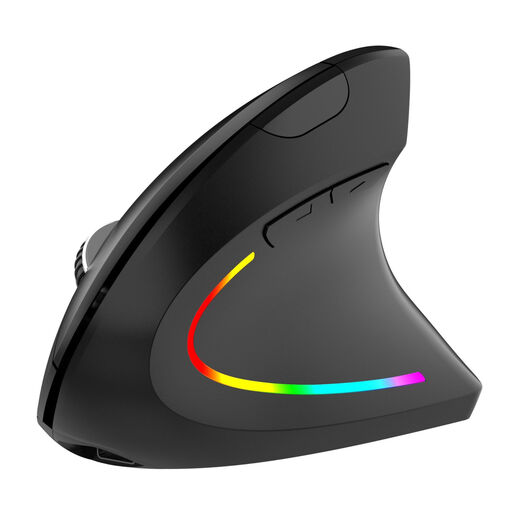 No image available
An option if you’re looking for a wireless mouse with quiet clicks and forward and back buttons for navigating documents.
The description lists USB-C charging, 2.4 GHz wireless, six buttons and four DPI settings from 800 to 2400. The wireless connection must be available on the shared computer.
 No image available
An option if you’re looking for quiet clicks and extra scrolling and navigation features when reviewing documents.
The description lists 2.4 GHz wireless, a 4-way scroll wheel, forward and back buttons, three DPI settings from 800 to 1600, and a USB-C rechargeable battery. The connection must be available on the computer you’re using.
 No image available
An option if you want to switch between Bluetooth and 2.4 GHz wireless on different computers and need extra navigation buttons.
The title lists three DPI settings of 800/1200/1600 and USB-C charging; the description lists six programmable buttons. The connection you choose must be available on the computer you’re using.
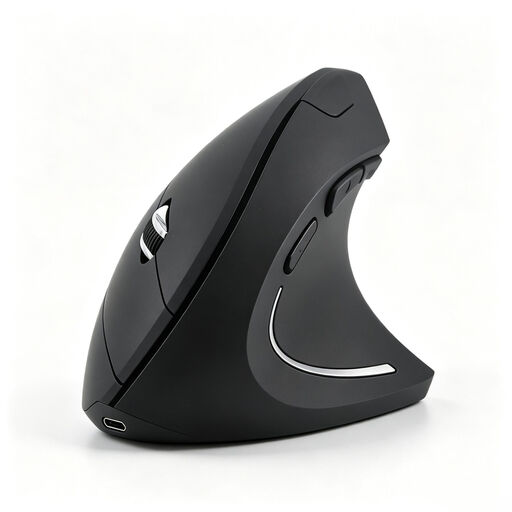 No image available
An option if you’re looking for a mouse described as quiet, with a wireless receiver and several buttons for navigating documents.
The description lists 2.4 GHz wireless via a USB receiver, five programmable buttons, adjustable 800–4800 DPI and a rechargeable USB-C battery. An approved USB port must be available on the shared computer.
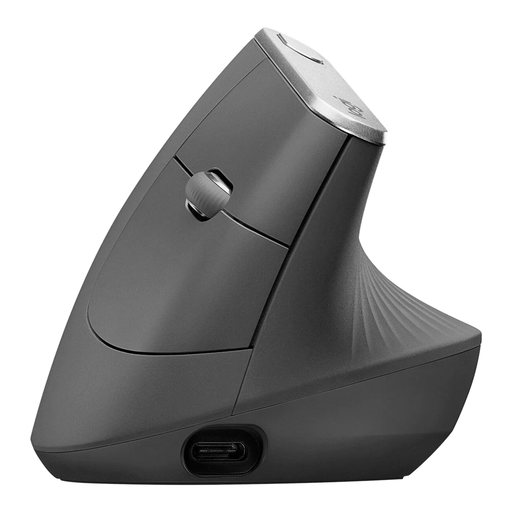 No image available
A wireless vertical mouse worth considering if you’re looking for a larger shape; RTINGS places the MX Vertical in the larger-hand category in its model comparison.
The product description lists Bluetooth and a USB receiver, switching between up to three devices, four customisable buttons and USB-C charging. The connection must be available on the shared computer.
It depends on the model and the computer you’re using. According to Trust, the Verto 22885 connects via a USB cable, while the CHERRY MW 4500 uses a Nano receiver. The Logitech Lift can connect via Bluetooth or a compatible Logi Bolt receiver. Before buying, check which ports and pairing methods are permitted on the computers you use. Any extra software needed to customise the button settings should also be checked separately.
No, pain relief is not guaranteed. A laboratory study in Ergonomics involving 16 people examined a vertical mouse and a standard mouse. The vertical mouse tested showed differences in certain arm postures and muscle activity, while target movements took longer. A review in the Cochrane Database of Systematic Reviews found the evidence on preventing discomfort with alternative mouse designs to be inconsistent. If you experience discomfort, your individual workstation set-up should also be assessed.
Check the power supply and what comes with the exact model. The Perixx PERIMICE-719 L requires an AA battery, which the manufacturer says is not included. According to RTINGS, the Logitech MX Vertical charges via USB-C, while the Lift uses an AA battery.
For a standard online purchase from a trader, European Union consumer information generally provides a 14-day right to cancel from the date of delivery, subject to legal exceptions. You may have to pay the return costs if the trader has properly informed you of this and doesn’t cover them voluntarily. The right to cancel because you’ve changed your mind is separate from your rights if a product is faulty.
For a purchase from a trader, your statutory rights if the product is faulty are separate from your right to cancel and any voluntary manufacturer’s guarantee. Information from the Council of the European Union describes a minimum two-year legal guarantee for goods; the remedies available for a fault depend on the applicable legal requirements.