What should you look for when buying?
First, establish who will use the mouse and which hand they’ll use. Then check that its connection and power supply suit the computers you share.
| Consideration |
What to check before buying |
Who does this matter most to? |
| Fit and handedness |
Take account of the preferred hand and hand size of everyone who’ll use it regularly; don’t confuse left- and right-handed versions. |
If I share the desk with people who use different hands or have different hand sizes, the mouse needs to suit each person. Fit and handedness are the main concern for around 33% of consumers. |
| Connection to the computer |
Check for Bluetooth, a compatible USB receiver or an available USB port on every computer you plan to use. |
If I switch between computers, the mouse should work with the ports and pairing options available on each one. Connection is the main concern for around 27% of consumers. |
| Quiet, easy-to-reach controls |
Check the click noise and how easy the buttons are to reach. If needed, find out whether you’ll need software to customise the button assignments. |
When working through lists repeatedly at a shared desk, I want controls that are easy to reach and quiet enough for the people around me. Around 20% of consumers prioritise these features. |
| Power and device management |
Consider whether a cable would be practical, or who’ll manage the battery or batteries and receiver for a wireless model. |
If several people use the same mouse, I want to know how it’ll stay ready to use and where the receiver will be kept. Power and device management are the main concern for around 20% of consumers. |
Vertical mice at Joybuy
The wireless vertical mice below may suit regular work at a shared desk. For each model, check that its handedness, connection and shape work for the users and computers.
 No image available
Wireless vertical mouse with 6 buttons
An option for regular list work, provided its shape and handedness suit the people sharing the desk.
Listed features include six buttons, a 2.4 GHz wireless connection and a DPI range of 800 to 1600.
View at Joybuy
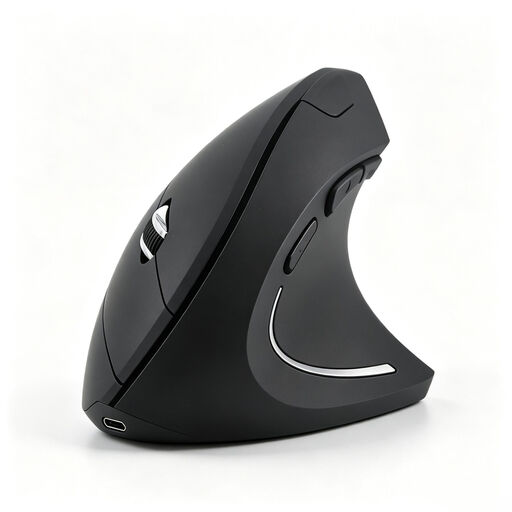 No image available
KINSI ergonomic vertical mouse
A wireless option for repetitive office work, provided its shape and handedness suit regular users.
The product name lists five buttons, a rechargeable battery with a USB-C connection and adjustable DPI from 800 to 4800.
View at Joybuy
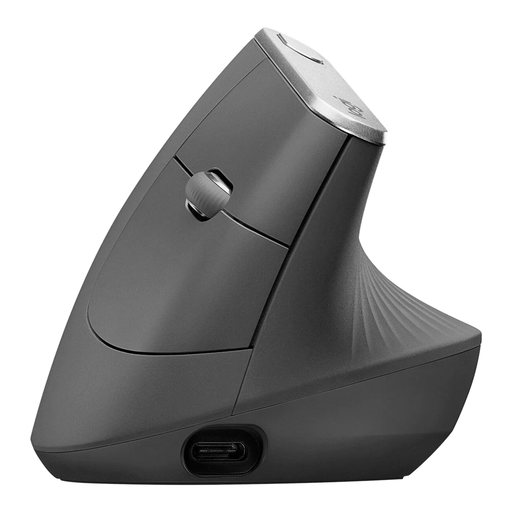 No image available
Logitech MX Vertical
A vertical mouse for regular work, provided its shape and intended operating hand suit the users.
Listed features include Bluetooth and a USB receiver, a 4000 DPI sensor and a rechargeable battery. The product name lists Windows, macOS and iPadOS as compatible systems.
View at Joybuy
Frequently asked questions
Is a vertical mouse compulsory at a shared workplace in Germany?
No. ASR A6 doesn’t require you to buy a vertical mouse. For employees’ screen-based workstations that fall within its scope, the entire workstation must be ergonomically designed; a suitable mouse doesn’t replace this. ASR A6 doesn’t apply to purely private use.
What should I check before connecting the mouse?
On every computer you plan to use, check that the required port or Bluetooth pairing is available. A USB-A wired model such as the PERIMICE-513 L needs a suitable port; according to the F.A.Z. buying guide, the Logitech Lift can connect via Bluetooth or a USB receiver.
Can a vertical mouse replace breaks and a properly adjusted desk?
No. The Federal Institute for Occupational Safety and Health highlights the strain caused by static posture and repetitive movements. Its recommendations include a workstation that can be adjusted to the individual, with enough room to position the mouse and keyboard flexibly. No particular mouse shape guarantees that it will prevent discomfort.
What rights do I have if the mouse develops a fault?
For consumer purchases in Germany, statutory rights against the seller are separate from a voluntary manufacturer’s guarantee. The scenario described doesn’t establish whether a purchase for an association or another organisation counts as a consumer purchase, so don’t assume that consumer rights apply to an organisational purchase without checking.


