
Lieferung heute & morgen

Qualitätsgarantie

Willkommens-Angebote freischalten: KOSTENLOSE Lieferung | Bis zu 80 % RABATT | Kostenlose 30-Tage-JoyPlus-Testphase
App herunterladen
An up-down LED wall light is more than just a source of light. It's a design element that lends modern structure and depth to fa?ades, hallways, and living spaces. However, the selection is vast, and not every model lives up to its promise. Before you make a decision, it's important to understand the common pitfalls that often only become apparent after installation.
As your Joybuy Product Recommendation Officer, I'll help you separate the wheat from the chaff. We'll focus on the facts so you can find a light that not only looks great but also performs its function reliably over the long term.
Many lights look convincing in the online shop but turn out to be a poor investment in practice. Pay special attention to these three points:
To avoid the problems mentioned above, you should carefully check three technical features before buying. These determine the longevity and functionality of your new wall light.
The IP (Ingress Protection) rating indicates how well a light is protected against the ingress of foreign objects and water. The code consists of two digits.
Practical Application:
A durable modern wall lamp should ideally be made of robust materials. For outdoor use, die-cast aluminium has proven its worth. Unlike thin aluminium sheet, it is more dimensionally stable and resistant.
Also, look for a high-quality powder coating. This reliably protects the metal from corrosion and UV radiation, ensuring that a black indoor wall light remains deep black even after years, and an outdoor light does not fade or rust.
The lighting ambience is largely determined by the colour temperature, measured in Kelvin (K).
The brightness is specified in lumens (lm). As a rough guideline:
Here are three models tailored to specific use cases that meet the quality criteria mentioned.
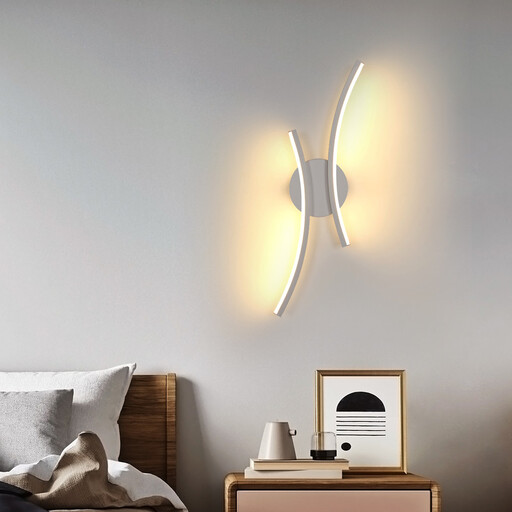
Why it's a match: Ideal for anyone looking to add an artistic accent to their living room, hallway, or staircase. The curved design is an eye-catcher and creates soft, indirect illumination.
The light colour of 3000K (warm white) ensures a cosy atmosphere and avoids the problem of unsuitable, cool lighting indoors.
The slim profile with a depth of only 5 cm is space-saving. Flicker-free LED chips with a high colour rendering index are easy on the eyes.
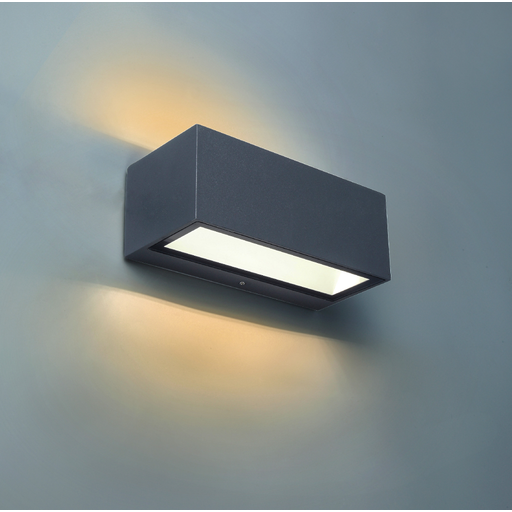
Why it's a match: Designed for demanding fa?ade lighting. This light combines high functionality with a robust, weather-resistant housing for a long service life outdoors.
The housing made of die-cast aluminium and the IP54 rating effectively prevent corrosion and damage from the elements – the most common causes of failure in outdoor lights.
With 1300 lumens, this outdoor up-down spotlight provides a powerful light output that reliably illuminates even larger wall surfaces or entrance areas.
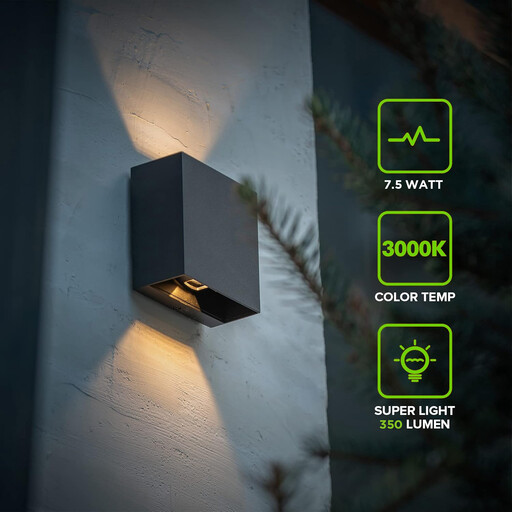
Why it's a match: Perfect for creative lighting designers who want to precisely adapt the lighting effect to the architecture. Whether a wide beam of light or a narrow accent strip – you decide.
This model solves the problem of an unsuitable light cone. Instead of a rigid preset, you can flexibly adjust the beam angle and redefine the lighting effect at any time.
The beam angle is infinitely adjustable from 0 to 106 degrees. The robust, waterproof construction of powder-coated aluminium allows for use both indoors and outdoors.
We have compiled a complete, up-to-date list of products that fully meet these strict selection criteria and German safety regulations.
For safety reasons and to comply with regulations, the installation of lights that connect directly to the 230-volt mains supply should always be carried out by a qualified electrician. This ensures correct and safe installation, especially outdoors and in damp areas.
The required brightness depends on the location. For subtle accent lighting in a hallway or as indirect wall lighting in the living room, 300 to 500 lumens per light is often sufficient. For the functional illumination of a house fa?ade or an entrance area, models with 800 to 1500 lumens are a good choice to ensure sufficient visibility and safety.