
Lieferung heute & morgen

Qualitätsgarantie

Willkommens-Angebote freischalten: KOSTENLOSE Lieferung | Bis zu 80 % RABATT | Kostenlose 30-Tage-JoyPlus-Testphase
App herunterladen
A vessel sink is a central design element in any modern bathroom. Choosing the right faucet is crucial, as it must not only harmonise visually but also deliver on functionality. A faucet that is too low or has too short a reach can quickly become a daily annoyance, causing water to splash everywhere. This guide offers the insights you need to make an informed decision for your bathroom. We'll introduce you to various models and explain the most important criteria to consider when selecting a faucet for a vessel sink.
Before you decide on a model, several technical and design aspects should be taken into account. These three points will help you narrow down your options.
The most important characteristic of a faucet for a vessel sink is its height. A tall bathroom faucet is necessary to ensure there is enough space between the spout and the rim of the basin to wash your hands comfortably.
The material determines not only the durability but also the aesthetic of the faucet. Common options each have specific properties.
Modern faucets offer more than just controlling water temperature and flow.
Here is a selection of models that cater to different requirements in terms of design, function, and application.
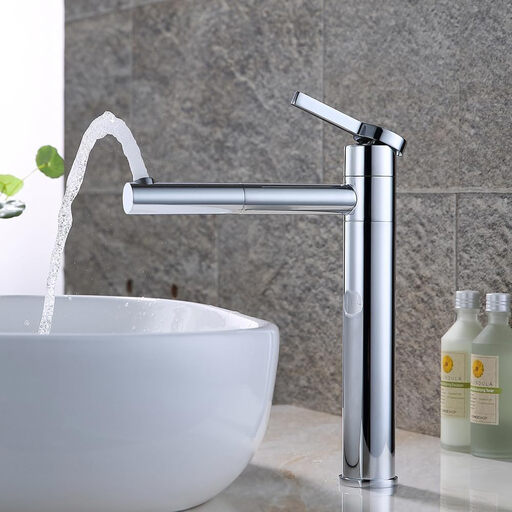
Why it stands out: This model combines maximum flexibility with a durable material. Both the spout and the entire faucet body can be rotated 360°.
Advantages:
Who is it for? For households looking for an extremely flexible and robust stainless steel bathroom faucet for a modern family bathroom. Its high functionality makes it perfect for high-traffic bathrooms.
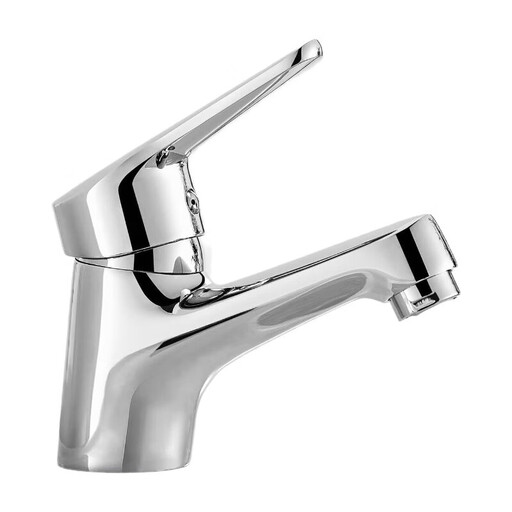
Why it stands out: A classic single-lever mixer in chrome with a solid brass construction and certified quality, suitable for standard installations.
Advantages:
Who is it for? This model is a great choice for standard basins or very shallow vessel sinks. With a spout height of 6 cm, it is not designed as a tall faucet but impresses with its proven technology and classic design for budget-conscious buyers.
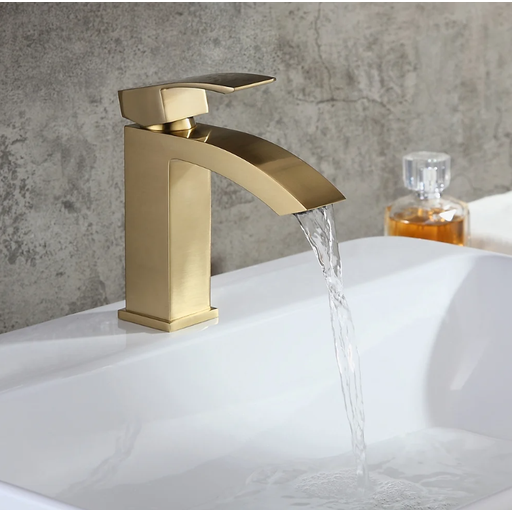
Why it stands out: The design takes centre stage here. The combination of clean lines, the brushed gold finish, and the open spout makes this faucet a true eye-catcher.
Advantages:
Who is it for? For design enthusiasts who want to make a statement and are looking for a faucet that is more than just a functional object. It is ideal for adding an exclusive touch to an otherwise simple bathroom.
The selection of faucets is vast, and the final decision depends heavily on your personal taste and the specific conditions of your bathroom. If you haven't found the right fit among the models presented, there are many more alternatives to discover.
? Explore our full range of basin faucets here
1. How tall should a faucet for a vessel sink be? As a rule of thumb, the distance between the faucet's spout and the top rim of the sink should be about 10 to 15 cm. This provides enough space for your hands while preventing water from splashing excessively when it hits the basin. Therefore, measure the height of your sink before purchasing.
2. What is the difference between stainless steel and chrome-plated brass? Stainless steel is a solid material that is naturally rust-proof. Its surface is usually brushed, making it less prone to fingerprints. Chrome-plated brass consists of a brass core coated with a thin layer of chrome. This layer provides the typical shine and protects the brass from corrosion. Both materials are very durable if they are of good quality.
3. Can I install a basin faucet myself? For experienced DIY enthusiasts, installing a basin faucet is generally manageable. Most faucets come with standard connections (usually 3/8 inch) and the necessary mounting hardware. It is important to shut off the main water supply before starting and to follow the manufacturer's instructions carefully. However, if you are unsure, it is always advisable to hire a professional plumber.