
Lieferung heute & morgen

Qualitätsgarantie

Willkommens-Angebote freischalten: KOSTENLOSE Lieferung | Bis zu 80 % RABATT | Kostenlose 30-Tage-JoyPlus-Testphase
App herunterladen
A high-quality kitchen knife isn't a luxury; it's the foundation for efficient and safe work in the kitchen. Victorinox, renowned for the Swiss Army Knife, also offers a wide range of kitchen knives prized for their durability and precision. However, the sheer number of options can be overwhelming and lead to poor purchasing decisions. This guide will help you understand the key features and find the right Victorinox knife for your needs.
Before deciding on a model, it's helpful to know the typical mistakes that often lead to disappointment and unnecessary expense.
To make an informed decision, you should focus on the objective characteristics that determine a knife's performance and longevity.
Victorinox uses a proprietary stainless steel for its blades, which offers a carefully calibrated balance between edge retention (how long a knife stays sharp) and ease of sharpening. The blades are stamped from a steel strip, precisely hardened, and then ground. This process ensures consistently high quality and a very sharp cutting edge. Pay attention to the blade length and blade shape to ensure the knife is suitable for its intended purpose. A Victorinox chef's knife with a 20 cm blade is an all-rounder, while a short paring knife is designed for detail work.
The choice of handle is crucial for comfort and hygiene. Victorinox primarily offers two lines that differ in their handle material:
The term "Swiss Army kitchen knife" represents a variety of specialised blades. Instead of buying an entire Victorinox knife set, it's often more sensible to start with the basics:
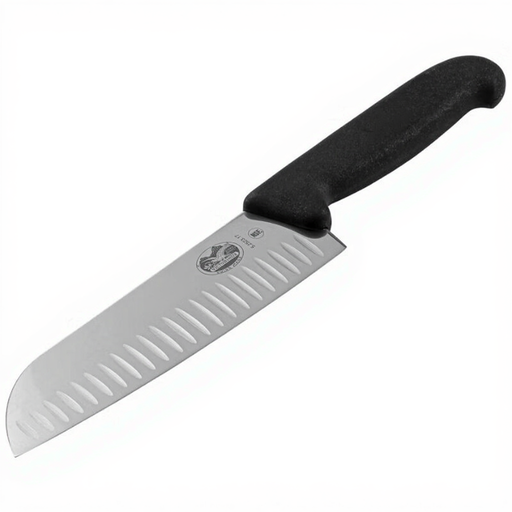
Why it's a great fit: Ideal for home cooks looking for a single, versatile knife for daily preparation of vegetables, meat, and fish. The Santoku's blade shape is particularly suited for precise, rapid cuts.
Avoids the purchase of an unnecessary knife block, as this single knife can handle 80% of all cutting tasks.
The Granton edge reduces food from sticking to the blade. The non-slip Fibrox handle offers maximum safety.
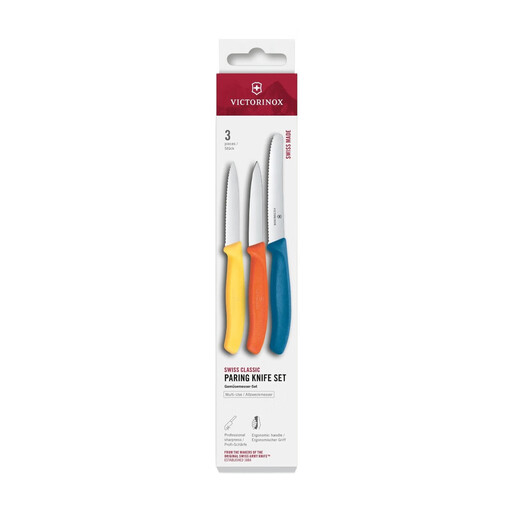
Why it's a great fit: Perfect for anyone who processes a lot of fruit and vegetables. This set provides the right tool for every small task—from peeling apples to slicing tomatoes.
Instead of using a clumsy chef's knife for fine work, this set offers specialised, agile blades that make the job easier and safer.
Includes both straight-edge and serrated-edge blades for maximum versatility. The lightweight handles allow for fatigue-free handling.
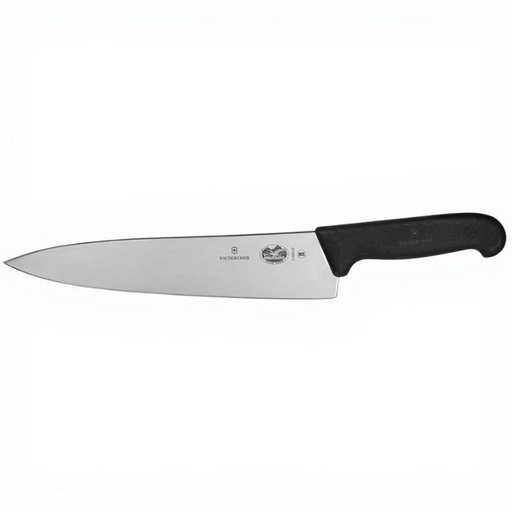
Why it's a great fit: For professional users or very ambitious home cooks who process large quantities. The long blade and extremely non-slip handle are designed for hours of safe use.
Directly addresses the pitfall of an unsuitable handle. The Fibrox grip provides uncompromising safety even in hectic and wet environments.
The 25 cm blade allows for efficient portioning of large cuts of meat or heads of cabbage. The stamped blade is lightweight, reducing wrist fatigue.
We have compiled a complete, up-to-date list of products that fully meet these strict selection criteria and UK safety regulations.
Although many Victorinox knives are declared dishwasher-safe, hand washing is recommended. Harsh detergents and high temperatures in the dishwasher can dull the blade's sharpness over time. It's best to clean the knife immediately after use with warm water and a mild detergent, then dry it right away. For storage, knife blocks, magnetic strips, or blade guards are suitable for protecting the cutting edge.
The main difference lies in the handle material and the primary application. The Fibrox series, with its extremely non-slip thermoplastic elastomer handles, is aimed at users of professional chef's knives and safety-conscious cooks. The Swiss Classic series uses lighter polypropylene handles, which are available in many colours and are excellent for everyday household use. The blade quality is at a comparably high level for both series.
Yes, Victorinox knives are known for their excellent out-of-the-box sharpness. To keep these sharp kitchen knives in good condition long-term, regular honing with a honing steel is necessary. This realigns the fine burr on the cutting edge. If the knife loses its sharpness after some time, it can be resharpened with a suitable knife sharpener or by a professional. Avoid cutting on hard surfaces like glass, stone, or ceramic, as this will quickly dull the blade.