
Lieferung heute & morgen

Qualitätsgarantie

Willkommens-Angebote freischalten: KOSTENLOSE Lieferung | Bis zu 80 % RABATT | Kostenlose 30-Tage-JoyPlus-Testphase
App herunterladen
A Victorinox kitchen knife can be suited to very different tasks depending on its blade shape, length and handle material. So whether you’re a home cook, run a restaurant or work in catering, the brand name alone shouldn’t determine your choice. The product details matter more: blade length, edge, material, handle and care instructions.
A long knife isn’t automatically right for every task. A Victorinox kitchen knife with a 25 cm blade offers a long cutting edge and can be useful for carving larger foods. However, it may feel less manageable when preparing smaller ingredients or working on a limited surface. A Victorinox kitchen knife with a 22 cm blade, by contrast, sits between compact all-purpose knives and long carving blades.
For fruit, herbs and smaller amounts of vegetables, a 12 cm blade may be more suitable. The right length depends on the food you’re preparing, your cutting technique and the space available.
A serrated kitchen knife cuts through firm surfaces such as bread crusts, pizza and certain cuts of meat without relying solely on pressure. However, a straight edge is often easier to control for very precise, clean cuts through vegetables or meat.
A Victorinox pizza knife or steak knife with an 11 cm serrated edge is therefore a useful addition for the table or for specific foods, but it isn’t automatically a substitute for a chef’s knife.
Several of the models listed here are described as dishwasher-safe in the product details. This makes cleaning easier, but repeated dishwasher use can put more strain on the cutting performance and the appearance of the handle and blade. For gentler care, washing by hand with a damp cloth and mild washing-up liquid is often recommended.
Whatever the model, don’t leave knives loose in a drawer. A knife block, drawer insert, magnetic strip or blade guard reduces the risk of injury and prevents contact with other kitchen utensils.
The models listed have blades made from stainless steel. This doesn’t mean they’re completely resistant to damage from improper care. Don’t leave acidic foods on the blade for long periods, and avoid abrasive or corrosive cleaning products.
The properties of plastic handles vary depending on the material. The product details list TPE, Fibrox and polypropylene as handle materials. What matters is a secure grip, a shape that suits your hand and the cleaning instructions.
A non-slip or ergonomically shaped handle can make a knife easier to use during longer periods of cutting. However, comfort is a personal matter. Before buying, consider the handle material, the knife’s weight and how long you’ll use it for.
Stone, glass and ceramic chopping boards can blunt blades more quickly. For regular use, suitable wooden or plastic boards are usually the more practical choice.
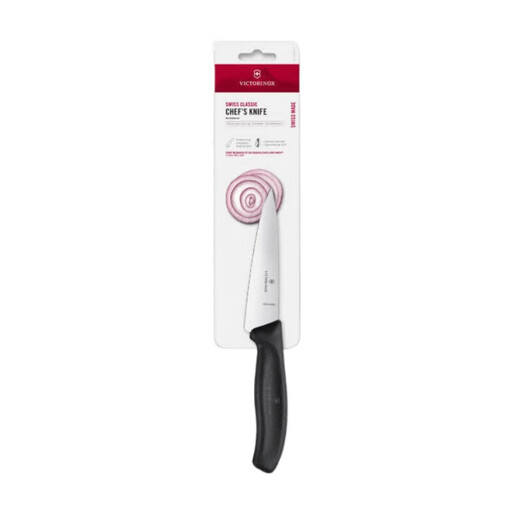
Why this product suits this profile: The compact 12 cm blade is ideal for smaller cutting tasks, such as preparing herbs, fruit, vegetables and individual portions of meat.
The straight blade avoids the limitations of a serrated edge when making fine, controlled cuts. The product details list a stainless-steel blade, TPE handle and dishwasher-safe design.
12 cm blade, straight edge, 61 g weight according to the product details and an ergonomic TPE handle.
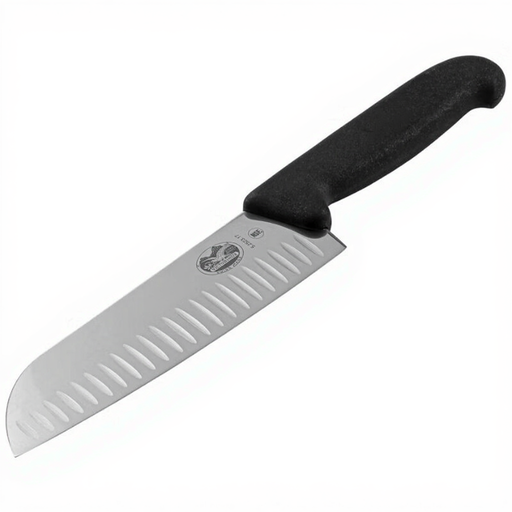
Why this product suits this profile: This 17 cm Santoku knife combines a versatile blade length with a listed Granton edge and a plastic handle, making it suitable for everyday kitchen tasks.
Its medium-length blade avoids the unnecessary limitations of a very long knife. The blade indentations are listed as a specific feature, rather than relying on a vague promise of sharpness.
17 cm blade, stainless steel, Granton edge and dishwasher-safe according to the product details.
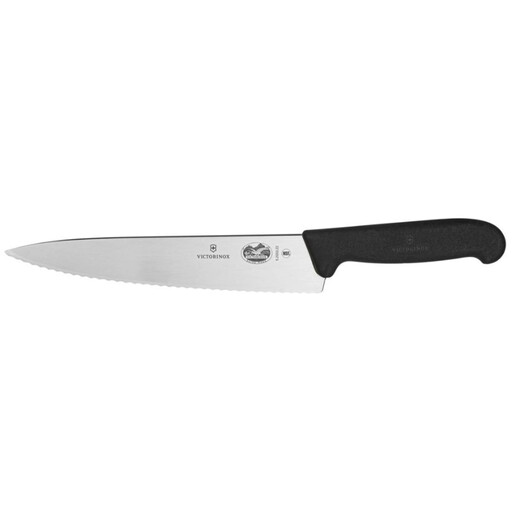
Why this product suits this profile: The 22 cm serrated edge is designed for carving roasts and other cuts of meat, and is well suited to larger portions.
The product description clearly states the blade length, serrated edge and intended use. This makes it easier to distinguish from a straight-edged carving knife or chef’s knife.
22 cm blade, serrated edge, stainless steel and a non-slip plastic handle; dishwasher-safe according to the product details.
We’ve put together a complete, regularly updated list of products that meet these strict selection criteria and the safety regulations in force in the EU.
Several Victorinox steak knives with 11 cm serrated edges are available for pizza and steak. The models with red, yellow, orange or purple polypropylene handles differ mainly in colour; their listed core features include a stainless-steel blade, serrated edge and dishwasher-safe design.
If you prefer a longer, straight blade, consider a Victorinox carving knife with a 22 cm blade or a model with a 25 cm blade. The 25 cm model is described as having a straight edge, weighing 200 g, with a plastic handle and stainless-steel blade. Its length can be useful for larger cuts of meat, provided you have enough space to work.
For a range of tasks, consider a straight-edged chef’s knife, a Santoku knife of around 17 cm or a compact 12 cm model. The right choice depends on whether you mainly prepare vegetables, herbs, fruit or meat.
The product details for the variants listed state that they are dishwasher-safe. However, hand washing is still recommended to treat the blade as gently as possible. Knives with wooden handles should never be put in the dishwasher or left to soak for long periods.
There’s no reliable way to give a fixed lifespan. It depends on the chopping board, cutting technique, volume of food and care. Hard surfaces made from stone, glass or ceramic can put more strain on the blade. Safe storage and regular professional sharpening help keep the knife in good working order.