
Lieferung heute & morgen

Qualitätsgarantie

Willkommens-Angebote freischalten: KOSTENLOSE Lieferung | Bis zu 80 % RABATT | Kostenlose 30-Tage-JoyPlus-Testphase
App herunterladen
A Victorinox kitchen knife can be designed for very different tasks depending on its blade shape, length and handle material. If you only focus on the brand name or a flashy colour, you could easily end up with a knife that doesn't suit your cutting style. That's why home cooks, professional kitchens and culinary students should check a few objective features before buying.
A 25 cm blade works well for large roasts or joints of ham, but can feel unwieldy for smaller cutting jobs. For vegetables, herbs and everyday prep, 17 to 19 cm is often more practical. What matters is whether the blade length matches the size of your ingredients and the workspace you have available.
A finely honed blade can cut precisely, but it will lose its edge faster if you use it on unsuitable chopping boards or store it loose in a drawer. Stone, glass and ceramic boards can put extra strain on the edge. Wood or suitable plastic boards are a better choice for most kitchen knives.
Several Victorinox models are listed as dishwasher-safe. However, for consistent cutting performance and to protect both blade and handle, hand washing with a mild detergent is still advisable. Acidic foods shouldn't be left on the blade for long periods. After washing, dry the knife straight away.
The blade shape determines how the knife moves on the chopping board:
The blades used in the featured products are made from stain-resistant stainless steel. This makes daily care easier, but it doesn't mean the knife can go without cleaning indefinitely. Even a stainless steel kitchen knife should be rinsed, dried and stored safely after use.
Victorinox Swiss Classic models also feature ice-hardening using the FRIODUR process. This refers to the blade's treatment. For practical use, your chopping board, cleaning routine and regular sharpening remain the most important factors.
An ergonomic knife handle should sit securely in your hand and not slip during longer tasks. The Swiss Classic models use plastic or thermoplastic elastomers. The Victorinox Fibrox range has a textured plastic handle designed for a non-slip grip.
Also look out for:
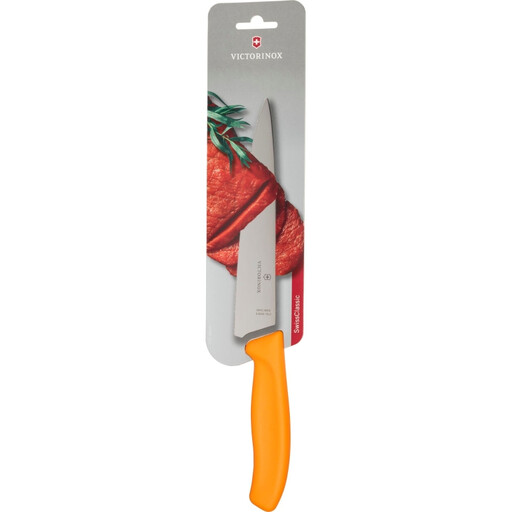
Why this product fits the profile: The 19 cm blade is designed for everyday cutting tasks on meat, fruit and vegetables. The coloured plastic handle makes it easy to identify in households or training kitchens.
The medium blade length avoids the unnecessary limitation of a very long carving knife. The manufacturer specifies stainless steel, a plastic handle and dishwasher suitability.
19 cm blade length, straight edge, ergonomic plastic handle and made in Switzerland.
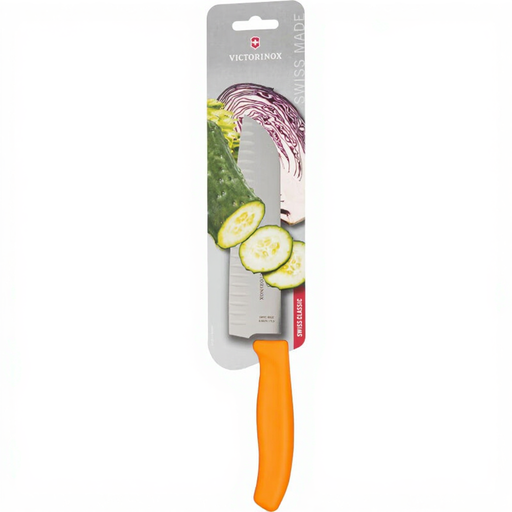
Why this product fits the profile: The 17 cm Santoku shape combines compact dimensions with the versatility to slice, chop and mince.
The Granton blade is specifically stated, rather than just being described with a general claim about sharpness. The compact length supports controlled cuts.
17 cm blade, 103 g weight, stain-resistant stainless steel, thermoplastic handle and stated dishwasher suitability.
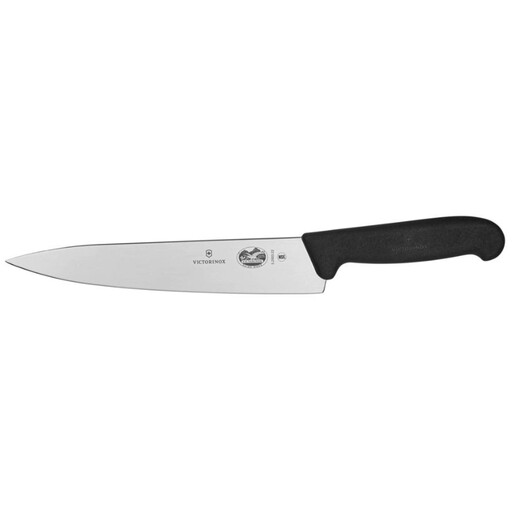
Why this product fits the profile: The straight 22 cm blade is designed for longer cutting tasks on meat, fish, fruit and vegetables, making it ideal for heavy users in the kitchen, catering or hospitality.
The product details state the blade length, straight grind, stainless steel and a non-slip Fibrox handle. This makes it easier to assess its intended use before buying.
22 cm straight stainless steel blade, Fibrox plastic handle and designed for repeated cutting tasks.
We've put together a complete, regularly updated list of products that fully meet these strict selection criteria and the safety regulations in force in the EU.
Several Swiss Classic and Fibrox models are listed as dishwasher-safe. However, to preserve the edge and handle, hand washing followed by drying is still the gentler method.
For most daily tasks, 17 to 19 cm offers a good balance. A 22 cm or 25 cm knife is better suited to larger ingredients, roasts or long, even cuts. The right length depends on what you're cutting, your work surface and your personal handling style.
It's not possible to give a reliable lifespan. Your chopping board, cutting technique, cleaning method and how often you use the knife all affect its cutting performance. Regular sharpening and proper storage can help maintain its usability for longer.