
Lieferung heute & morgen

Qualitätsgarantie

Willkommens-Angebote freischalten: KOSTENLOSE Lieferung | Bis zu 80 % RABATT | Kostenlose 30-Tage-JoyPlus-Testphase
App herunterladen
A Victorinox kitchen knife can perform very different tasks depending on the blade shape, length and handle material. If you only look out for terms like “extra sharp”, “Swiss Quality” or “dishwasher safe”, you won’t automatically buy the right model. What really matters is whether the knife suits the food you’re cutting, your working style and how you store it.
A bread knife with a serrated edge is ideal for crusts and soft baked goods, but it’s not designed for finely dicing onions. A Santoku knife can cut vegetables, meat and fish, but it won’t replace a long bread knife. Before you buy, you should be clear about whether you need a bread knife, Santoku knife, carving knife, vegetable knife, tomato knife or cheese knife.
Several Victorinox models can be cleaned in the dishwasher according to the product specifications. That doesn’t mean it’s the gentlest method for every blade and handle. Heat, detergent and contact with other crockery can put more strain on the cutting edge. A quick hand wash and immediate drying is often the more material-friendly option.
An ergonomic handle must suit your hand size and cutting technique. Blade length also affects control: a 17 cm Santoku knife is nimble, while a 25 or 26 cm blade offers more working surface when cutting large roasts or bread. Colour and design are personal criteria, but they shouldn’t replace the technical specifications.
The models mentioned use stainless steel. This is more corrosion-resistant than unprotected steel, but still needs care. Acidic foods such as citrus fruits or tomatoes should not be left on the blade for long periods.
The cutting edge shape determines the use:
A bread knife should not be used on stone or ceramic boards, as these can damage the cutting edge. For most kitchen knives, suitable boards made of wood or plastic are a better choice.
Depending on the series, the product data lists plastic, polypropylene or thermoplastic elastomers. These materials are lightweight and can provide a secure grip. Especially during longer cutting tasks, the handle should sit comfortably in your hand without causing pressure points.
Also pay attention to:
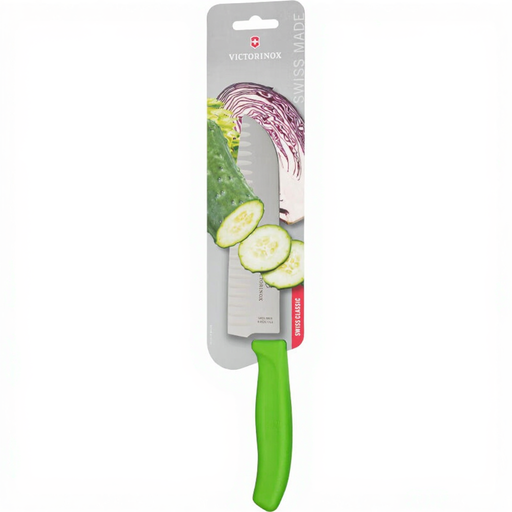
Why this product suits the profile: The 17 cm Santoku knife covers typical tasks such as slicing, chopping and mincing, making it a good all-round everyday knife.
The specific blade length and Granton edge are clearly stated. This makes it easier to assess its everyday suitability than with a purely marketing claim.
17 cm blade, stainless steel, plastic handle and dishwasher safe according to product data; weight: 103 g.
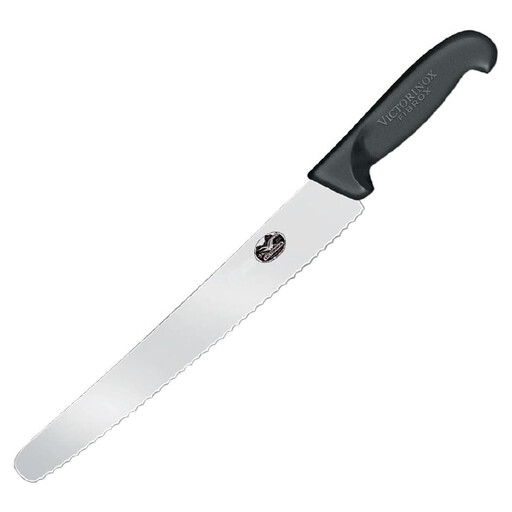
Why this product suits the profile: For households that regularly eat bread, cakes and pastries, the long, curved blade offers a clearly defined purpose.
The 26 cm serrated edge is not marketed as a universal blade, but is described for bread, cakes and pastries. This prevents false expectations about its versatility.
26 cm serrated blade, curved blade design and ergonomic, slip-resistant plastic handle; dishwasher safe according to product data.
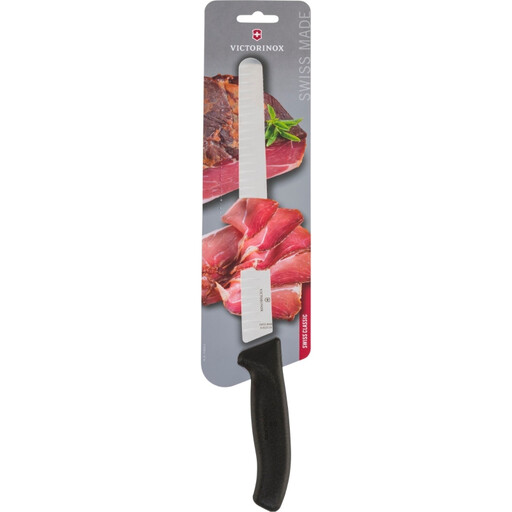
Why this product suits the profile: The long blade is aimed at people who regularly slice ham, roasts and other large cuts of meat.
The 25 cm length and serrated edge are clearly stated. This makes it clear that the knife is intended for long, even cuts and not for small preparation tasks.
25 cm blade made from stainless steel, ergonomic slip-resistant handle and dishwasher safe according to product data; weight: 115 g.
A knife set is not automatically better value than buying individually. For a small household, a Santoku knife, a vegetable knife and a bread knife may be enough. If you bake, barbecue or plan picnics often, you could also choose a tomato knife or a folding Victorinox Picnic Knife with an 11 cm blade.
Clean knives as soon as possible after use, avoid abrasive cleaners and dry the blade immediately. Do not cut on stone or ceramic. When transporting, especially for outdoor activities, the blade should be fully protected. In Germany, special legal regulations apply to carrying knives in public; check the current rules before travelling.
We have put together a complete, regularly updated list of products that fully meet these strict selection criteria and the safety regulations in force in the EU.
For the models listed here, dishwasher safety is stated in the product data. However, for the gentlest care, hand washing with mild detergent and immediate drying is recommended. Knives with wooden handles should never be put in the dishwasher or soaked for long periods.
A 17 cm Santoku knife is designed for many slicing, chopping and mincing tasks. For bread and pastries, a serrated edge of around 21 to 26 cm is more practical. Small vegetable knives with 10 or 11 cm are a good addition for fruit, vegetables and precision work.
Use suitable cutting boards made of wood or plastic, avoid hard stone and ceramic surfaces, and store knives protected. Cleaning them immediately after use reduces residue on the blade. For straight edges, a suitable sharpening steel can be used for regular maintenance; serrated edges are maintained differently and should not be treated with just any sharpening tool.