
Lieferung heute & morgen

Qualitätsgarantie

Willkommens-Angebote freischalten: KOSTENLOSE Lieferung | Bis zu 80 % RABATT | Kostenlose 30-Tage-JoyPlus-Testphase
App herunterladen
A Victorinox kitchen knife may seem like a straightforward purchase at first: you can quickly compare blade length, handle, colour and price. In practice, though, other details determine whether a knife suits the way you cook. Three common buying mistakes can lead to unnecessary spending.
1. A serrated edge is mistaken for versatility.
A serrated kitchen knife often cuts through soft skins and firm crusts with control, making it a good choice for tomatoes, bread rolls and pizza. For peeling, dicing and very fine cuts, however, a straight blade is usually more suitable. Serrated edges can’t be sharpened with every standard sharpening tool, either.
2. Dishwasher-safe is taken to mean maintenance-free.
According to the product details, many Victorinox models are dishwasher-safe kitchen knives. Even so, high temperatures, detergents and contact with other cutlery can put extra strain on the blade and handle. To keep the knife sharp for as long as possible, wash it by hand straight after use, dry it and store it safely.
3. A long blade is assumed to suit every kitchen.
A 17 or 18 cm knife offers a larger cutting surface, but it also needs a sufficiently large chopping board and a steady hand. An 8 or 11 cm model may be more practical for fruit, garnishes and smaller households. The right size depends on what you’re preparing, your workspace and the way you hold the knife.
A Victorinox vegetable knife or Victorinox paring knife with a straight 8 cm blade is suitable for peeling, coring, dicing and smaller cutting jobs. Its short blade gives you relatively direct control.
A Victorinox tomato knife with a serrated edge is designed for soft foods with firm skins. Its toothed blade can cut tomatoes, fruit and pizza without relying solely on pressure against the surface. For meat and larger quantities of vegetables, a Victorinox Santoku knife or Victorinox chef’s knife with a blade length of 17 to 18 cm is a more practical choice.
The blades on the models listed here are made from rust-resistant stainless steel. This makes everyday cleaning easier, but you should still rinse the knife promptly after cutting acidic foods such as citrus fruit or tomatoes.
Depending on the range, the handles are made from polypropylene or from a plastic used in the Fibrox range. Look for a shape that sits securely in your hand and gives you good control, even when your hands are wet. Coloured handles also make it easier to tell knives apart in a Victorinox knife set.
Stone, glass and ceramic boards can blunt a blade more quickly. Wood or suitable plastic is usually the more practical choice for everyday kitchen tasks. Loose knives in a drawer increase the risk of injury and can damage the blade. A knife block, drawer insert, magnetic rack or blade guard is a better option.
A folding Victorinox picnic knife is especially handy for picnics, camping and walks. In Germany, there are legal restrictions on carrying knives in public. Only carry a knife for its intended purpose, packed safely and in accordance with the regulations in force.
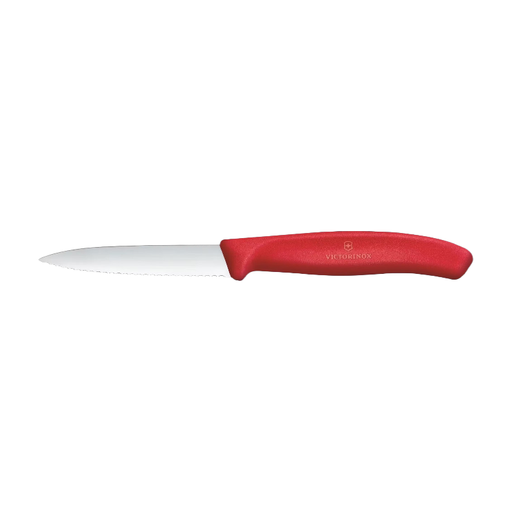
Why this product suits you: The compact 8 cm blade is designed for everyday tasks such as cutting tomatoes, fruit and vegetables, and preparing garnishes. The lightweight polypropylene handle and stated dishwasher-safe design make it a good fit for fuss-free everyday use at home.
The clearly stated blade length helps first-time buyers avoid choosing an unnecessarily large chef’s knife for small cutting jobs. The serrated edge is designed for soft foods with firm skins.
8 cm stainless steel blade, ergonomic PP handle and dishwasher-safe according to the product details.
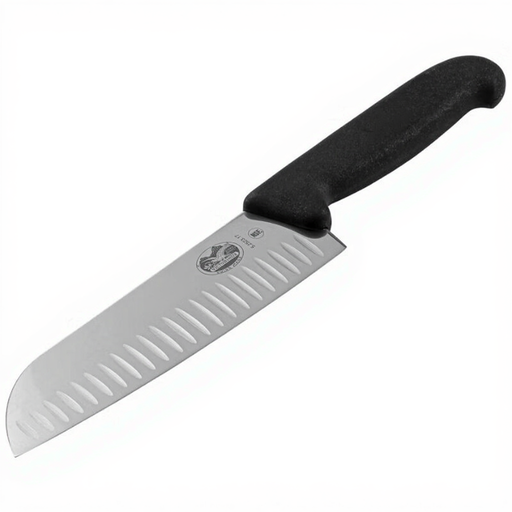
Why this product suits you: The 17 cm Santoku knife is designed for a wide range of tasks involving vegetables, fish, meat and herbs. Its broad blade is useful for portioning food and transferring cut ingredients.
The medium-length blade strikes a balance between control and cutting space. It helps you avoid choosing a knife that’s too small for larger ingredients, without having to reach straight for a very long blade.
17 cm stainless steel blade, plastic handle, and stated dishwasher-safe and rust-resistant design.
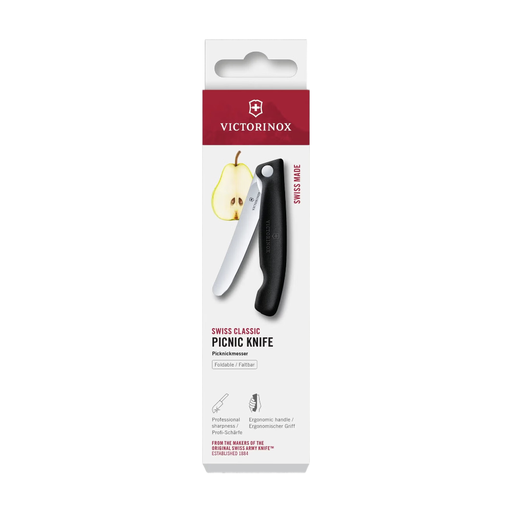
Why this product suits you: This folding knife is designed for picnics, camping, walks and meals on the go. According to the product description, its straight 11 cm blade is suitable for fruit, vegetables, cold meats and cheese.
The folding design protects the blade in transit and reduces the risk of a loose knife in your bag or rucksack. Make sure the blade is fully folded away before carrying it.
Folding design, 11 cm stainless steel blade, weighs 42 g and is dishwasher-safe according to the product details.
We’ve put together a complete, regularly updated list of products that meet these strict selection criteria and fully comply with the safety regulations in force in the EU.
The product details list the models mentioned as dishwasher-safe. For the gentlest care, however, it’s still best to wash them by hand and dry them afterwards. This helps reduce prolonged exposure to heat and moisture, as well as contact with other cutlery.
A Victorinox tomato knife or a small serrated vegetable or paring knife is a good choice for tomatoes. The toothed blade is designed for soft foods with firm skins. For very fine garnishes or removing seeds, a straight 8 cm knife may be more practical.
A Santoku knife often has a compact, broad blade and is used for vegetables, fish and meat. A chef’s knife may be longer, depending on the design, and is well suited to larger cutting movements. The key things to consider are blade length, weight, how the handle feels and how much space you have on your chopping board.