
Lieferung heute & morgen

Qualitätsgarantie

Willkommens-Angebote freischalten: KOSTENLOSE Lieferung | Bis zu 80 % RABATT | Kostenlose 30-Tage-JoyPlus-Testphase
App herunterladen
A sharp, reliable paring knife is the cornerstone of any well-equipped kitchen. But the sheer number of options can be overwhelming. Anyone considering a Victorinox paring knife is looking for quality and durability. However, there are pitfalls that can lead to a bad buy, even with renowned brands. As your Joybuy Product Recommendation Officer, I'm here to help you separate the wheat from the chaff and make an informed decision.
Many buyers invest in knives that are unsuitable for their daily needs. Here are the three most common mistakes to avoid:
To avoid these mistakes, you should focus on the objective features that define a good kitchen knife. With a Swiss kitchen knife from Victorinox, these are primarily the blade edge, blade length, and handle material.
The type of edge determines which foods a knife is best suited for.
The blade length should match the task.
The handle is the interface between you and the blade. The Victorinox Swiss Classic series often uses Polypropylene (PP) or Thermoplastic Elastomers (TPE). These materials are not only lightweight and durable but also provide a secure grip, even with wet hands. Another advantage is that they are generally dishwasher-safe, which significantly simplifies daily cleaning.
Here are some recommendations from the Victorinox Swiss Classic series, tailored to different needs and designed to specifically avoid the pitfalls mentioned.
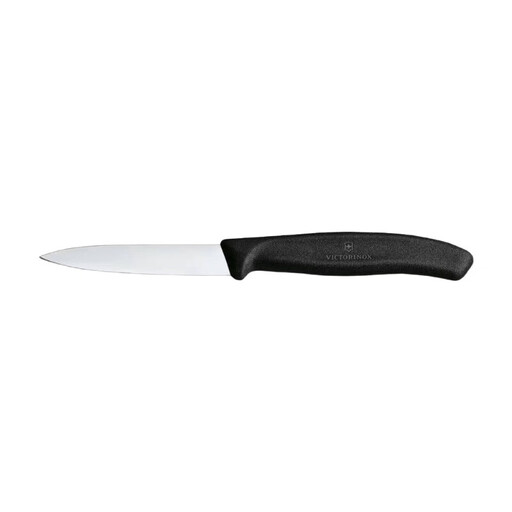
Why This Fits Their Persona: Perfect for daily kitchen tasks like peeling potatoes, mincing garlic, or cleaning mushrooms. A reliable, straightforward tool with no unnecessary extras, designed for quick use.
This knife focuses on the essentials: a sharp, precise blade and an ergonomic handle. You aren't paying for "pro features" that are rarely needed in a home kitchen.
Lightweight, ergonomic polypropylene (PP) handle for fatigue-free work; dishwasher-safe for easy cleaning.
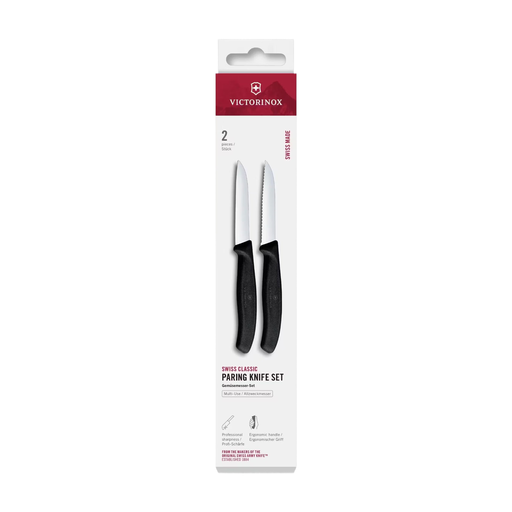
Why This Fits Their Persona: Ideal for home cooks who value having the right tool for the job—whether it's cleanly slicing tomatoes or precisely chopping herbs. This Victorinox kitchen knife set provides the necessary flexibility.
This set solves the "wrong edge" problem by providing both a straight-edge blade for precise cuts and a serrated-edge blade for delicate foods.
Versatility with two different blade types in one set; Swiss manufacturing quality ensures long-lasting sharpness for both knives.
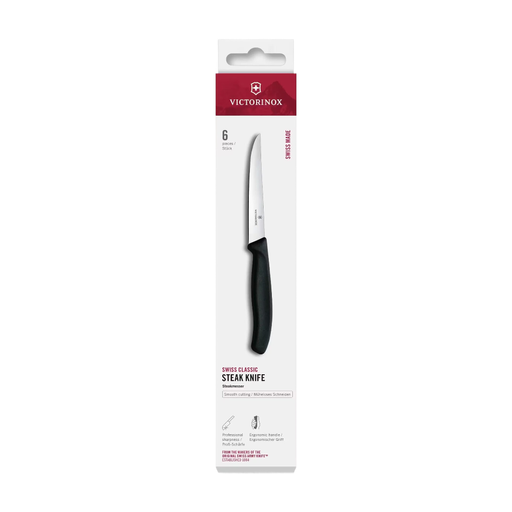
Why This Fits Their Persona: For anyone who loves to entertain guests and wants to ensure that steak can be cut effortlessly. This steak knife set is also excellent for pizza or crispy grilled vegetables.
Instead of a universal knife that fails on steak, this set offers specialised knives designed specifically for this purpose, guaranteeing a clean cutting experience.
A set of 6 knives for a uniform table setting; sharp, straight-edge blades for clean cuts without tearing the meat.
We've compiled a complete, up-to-date list of products that fully meet these strict selection criteria.
Yes, according to the manufacturer, most models in the Swiss Classic series are declared as dishwasher-safe. This simplifies daily cleaning. However, to maintain the blade's optimal sharpness long-term, gentle hand-washing followed by immediate drying is recommended.
A serrated edge knife is ideal for foods with a tough skin and a soft interior, such as tomatoes, bell peppers, or bread rolls. The wavy blade grips the surface without requiring heavy pressure, allowing it to cleanly slice through the skin without crushing the inside.
To maintain sharpness and prevent damage, high-quality knives should not be stored loosely in a drawer with other cutlery. Bumping against other metal objects can dull the blade. Proper storage methods include a knife block, a magnetic wall strip, or a separate blade guard for each knife.