
Lieferung heute & morgen

Qualitätsgarantie

Willkommens-Angebote freischalten: KOSTENLOSE Lieferung | Bis zu 80 % RABATT | Kostenlose 30-Tage-JoyPlus-Testphase
App herunterladen
By the Joybuy Product Recommendation Officer, August 28, 2026
A sharp, reliable paring knife is the cornerstone of any well-equipped kitchen. But the market is saturated with products whose marketing promises often outshine the blades themselves. Many buyers invest in a knife that loses its edge after just a few months, feels uncomfortable in the hand, or proves unsuitable for everyday tasks. Before you make a decision, it's crucial to understand the common pitfalls that can lead to a poor investment.
Common Pitfalls When Buying Knives:
To make an informed decision, you should focus on objective and verifiable product features. Three parameters are crucial for the longevity and functionality of a paring knife.
The quality of the blade is the most important factor. A Swiss kitchen knife from brands like Victorinox typically uses a high-quality, stainless steel. This steel offers a balanced combination of:
Look for precise material specifications from the manufacturer instead of flowery marketing terms.
The choice of the right edge depends directly on your intended use. Not all small kitchen knives are created equal.
The handle determines how securely and comfortably the knife sits in your hand. The Victorinox Swiss Classic series uses handles made of polypropylene (PP). This material offers several practical advantages:
Based on these objective criteria, we have selected a few models from the Victorinox range that suit different user needs.
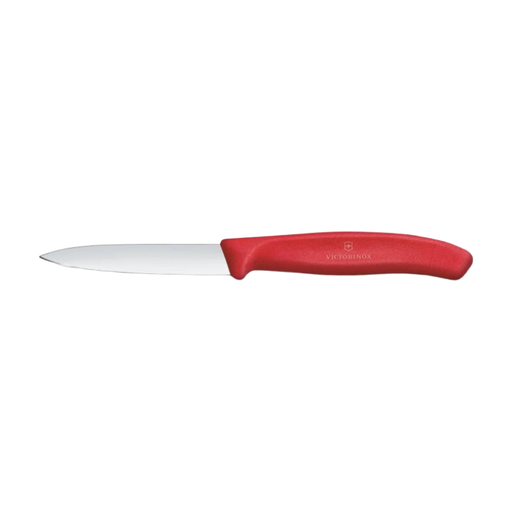
Why it's a match: Ideal for users who want a single, versatile, and reliable knife for 90% of all daily cutting and peeling tasks. It is the epitome of a functional kitchen tool without unnecessary frills.
The precisely defined stainless steel and the lightweight, ergonomic design prevent rapid dulling and fatigue. It relies on proven functionality instead of vague marketing promises.
The 8 cm plain-edge blade with a pointed tip offers maximum control for precision work like deseeding chillies or peeling apples.
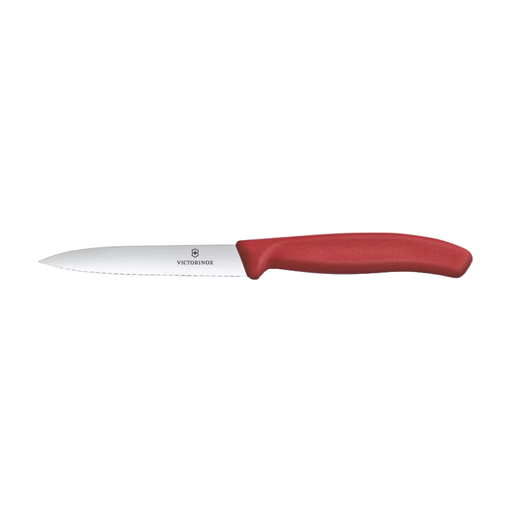
Why it's a match: Perfect for anyone who frequently cuts tomatoes, bell peppers, or other fruits with a firm skin and soft flesh. This knife solves the everyday problem of crushing.
It is a specialised tool that excels at a specific task, rather than being an ill-suited all-rounder. The serrated edge stays sharp for an extremely long time and requires minimal maintenance.
The 10 cm serrated blade glides effortlessly through tomato skins without damaging the flesh, resulting in clean, even slices.
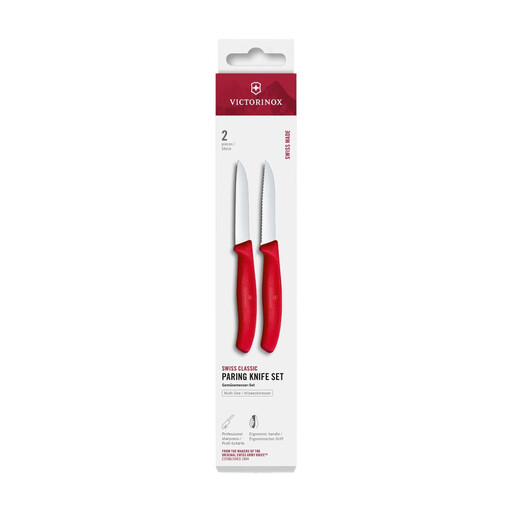
Why it's a match: For users who want to be equipped for every eventuality right from the start. This paring knife set combines the plain-edge all-rounder with the serrated-edge specialist.
Instead of making compromises with a single knife, this set provides the right tool for every job. Both knives feature the same ergonomic and durable handles.
Maximum versatility and excellent value for money. You get two high-quality, Swiss-made knives that perfectly complement each other.
We have compiled a complete, up-to-date list of products that fully meet these strict selection criteria.
Yes, according to the manufacturer, the knives in the Victorinox Swiss Classic series with polypropylene handles are dishwasher-safe. However, to best preserve the blade's sharpness, hand washing with a mild detergent and drying it immediately is recommended. Harsh detergents and high temperatures in the dishwasher can affect the fine edge in the long run.
Sharpening a serrated knife is more complex than sharpening a plain-edge blade and requires a special tool, such as a conical sharpening rod, to hone each individual serration. However, due to the high edge retention of Victorinox steel, this is very rarely necessary. For an optimal result, it may be advisable to have the knife serviced by a professional sharpener.
The Swiss Classic series is designed for maximum functionality and excellent value for money for everyday household use. It is characterised by lightweight, ergonomic synthetic handles. Other lines, such as the Grand Ma?tre series, use forged blades and handles made of different materials (e.g., wood), are aimed more at professional chefs, and are in a higher price range.