
Lieferung heute & morgen

Qualitätsgarantie

Willkommens-Angebote freischalten: KOSTENLOSE Lieferung | Bis zu 80 % RABATT | Kostenlose 30-Tage-JoyPlus-Testphase
App herunterladen
A sharp, handy knife is the cornerstone of every kitchen. The importance of the right tool becomes especially clear during the daily preparation of fruits and vegetables. For many, a Victorinox paring knife represents Swiss precision and durability. But the selection can be overwhelming: different blades, lengths, and handles raise questions. The wrong choice can quickly lead to frustration in the kitchen or unnecessary expense.
This guide will help you understand the key features and avoid the common pitfalls of buying a new knife. We'll show you what truly matters so you can find a knife that will make your kitchen work easier for years to come.
Before deciding on a model, it's helpful to know the most common purchasing errors. Often, it's the small details that make the difference between a useful kitchen helper and an unused drawer-filler.
To avoid these mistakes, you should examine three key parameters. The Victorinox Swiss Classic series offers a wide selection, allowing you to tailor the tool precisely to your needs.
Choosing the blade edge is the most fundamental decision. Both variants have clear advantages for specific tasks.
Victorinox typically offers its paring knives in lengths of 6 cm, 8 cm, and 10 cm. Each size has its optimal area of use.
All knives in the Victorinox Swiss Classic series use a handle made of Polypropylene (PP). This material is lightweight, durable, and provides a secure grip even when wet. A key advantage for the modern household is that it is dishwasher-safe. Although the manufacturer recommends hand washing to preserve the blade's sharpness, the knives can withstand the dishwasher cycle without damage, which significantly simplifies daily use.
To make the selection easier, we have matched several models from the Swiss Classic series to different user profiles.
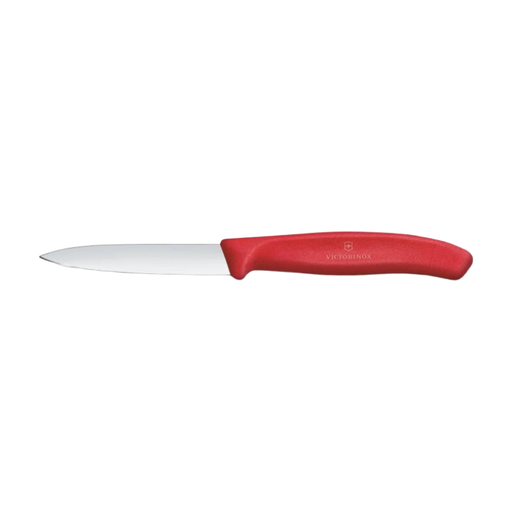
Why This Fits Their Persona: This knife is the epitome of a reliable all-rounder. It's perfect for anyone who wants a single, versatile tool for daily peeling, slicing, and dicing of fruits and vegetables without needing to specialise.
With its 8 cm blade length and straight edge, it bypasses the pitfalls of the wrong size and edge type for general kitchen tasks. It is neither too specialised nor too unwieldy.
The combination of a pointed tip for precision, an ergonomic handle, and dishwasher-safe properties makes it an extremely low-maintenance and efficient kitchen tool.
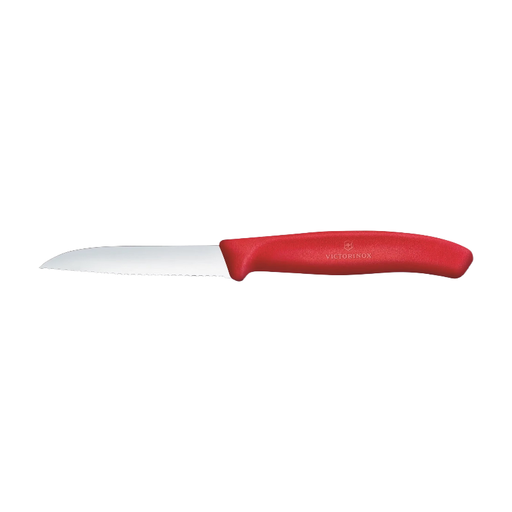
Why This Fits Their Persona: For home cooks who frequently work with tomatoes, kiwis, nectarines, or other soft fruits with tough skins. This knife solves the problem of crushing and ensures clean, appealing slices.
It specifically addresses the "wrong edge" pitfall. The serrated edge is the technically superior solution for cutting foods with high water content and a firm skin.
Effortlessly glides through tough skins without applying pressure. The sharpness of the serrated edge lasts for many years with proper use, without requiring resharpening.
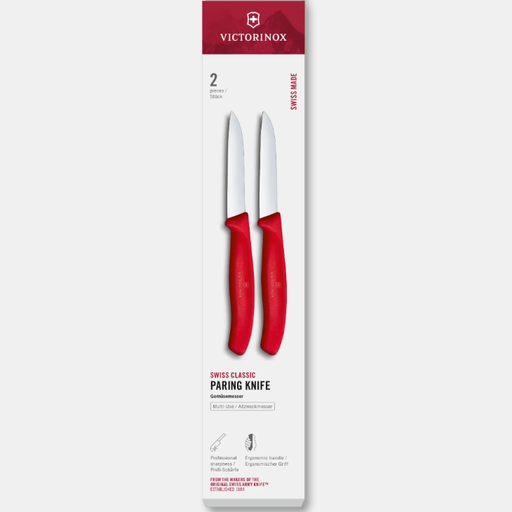
Why This Fits Their Persona: Ideal for families, shared apartments, or anyone who values a smooth workflow. If one knife is in the dishwasher, the other is ready to go.
This set solves the practical problem of availability. It avoids the pitfall of owning a good knife but not using it out of convenience because it's currently dirty.
Two identical, proven all-purpose knives in one package offer excellent value for money and ensure maximum efficiency in the kitchen.
We've compiled a complete, up-to-date list of products that fully meet these strict selection criteria and quality standards.
Yes, the knives from the Victorinox Swiss Classic series with polypropylene handles are suitable for cleaning in the dishwasher. However, the manufacturer, Victorinox, notes that hand washing is gentler on the blade's sharpness. Aggressive detergents and contact with other items in the dishwasher basket can dull the fine edge over time.
The terms are often used interchangeably, but there are functional differences. A classic peeling knife typically has a shorter, often curved blade that conforms to the shape of round fruits or vegetables and is optimised for peeling in hand. A paring knife (or utility knife) usually has a straight, slightly longer blade (8-10 cm) and is more versatile for cutting, dicing, and chopping on a cutting board. The Victorinox models with an 8 cm straight blade serve as a very effective hybrid of the two.
Sharpening a serrated edge is more complex than sharpening a straight edge and requires a special, tapered sharpening rod to hone each individual serration. For home use, however, this is rarely necessary. The serrated edge on Victorinox knives is designed for very long edge retention and remains sharp for years with normal use, as the cutting edges within the serrations are protected from contact with the cutting board.