
Lieferung heute & morgen

Qualitätsgarantie

Willkommens-Angebote freischalten: KOSTENLOSE Lieferung | Bis zu 80 % RABATT | Kostenlose 30-Tage-JoyPlus-Testphase
App herunterladen
A good paring knife is the cornerstone of any kitchen toolkit. It's used for everyday tasks like peeling, slicing, and dicing. Yet, when choosing a Victorinox paring knife, many buyers face a wider selection than expected. The wrong choice often leads to frustration—whether it's an unsuitable blade that crushes tomatoes or an uncomfortable handle that makes kitchen prep a chore.
This guide will help you understand the key features and avoid common purchasing pitfalls. We'll ensure your new Swiss knife for the kitchen is perfectly tailored to your needs.
Before we dive into the details, let's look at three common mistakes that can limit the utility of an otherwise high-quality knife.
To make the right choice, you should carefully examine three technical specifications. These determine how well the knife will perform in your kitchen.
The choice of blade edge is the most critical decision and depends directly on the foods you prepare most often.
The length of the blade affects the knife's handling and efficiency. The Victorinox Swiss Classic series offers several standard sizes for this purpose.
The handle is the interface between you and the blade. The knives in the Victorinox Swiss Classic series use handles made of polypropylene (PP). This material offers several objective advantages:
Here are some configurations tailored to specific use cases.
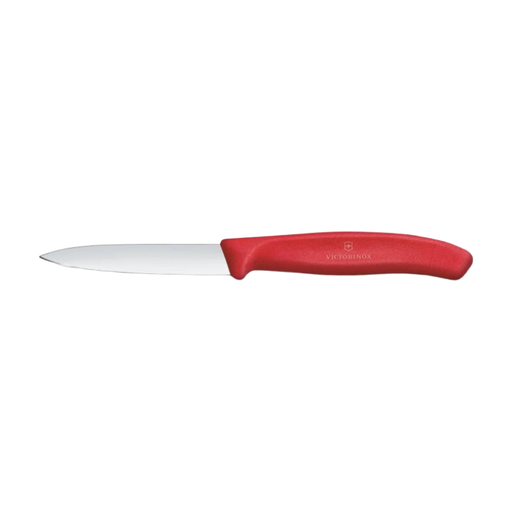
Why this model is a match: This knife is the epitome of a versatile kitchen tool. The 8 cm plain-edge blade is ideal for over 90% of daily cutting tasks, from peeling a carrot to dicing an onion. It's a reliable tool for quick and straightforward meal prep.
The universal 8 cm plain-edge blade is a true all-rounder, preventing the purchase of an overly specialized knife (Pitfall 1). The ergonomic PP handle ensures comfort and safety (Pitfall 2).
The stainless steel blade and polypropylene handle are dishwasher-safe, making them extremely low-maintenance. Its light weight of 20g ensures fatigue-free work.
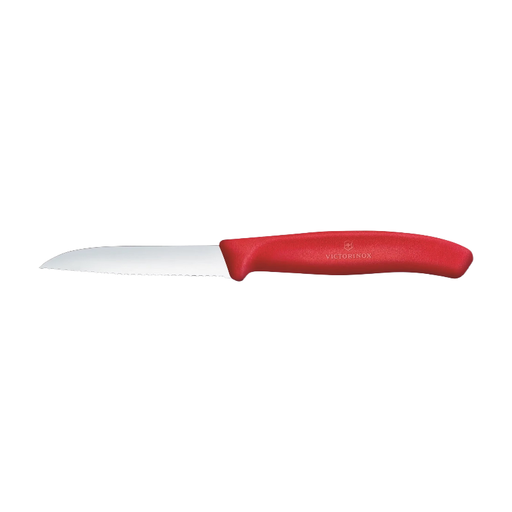
Why this model is a match: For anyone who regularly cuts tomatoes, kiwis, peaches, or other fruits and vegetables with firm skin and soft flesh. The serrated edge glides through the skin without crushing the interior, delivering clean slices.
This knife specifically solves the problem of using the wrong blade type (Pitfall 1). It's the right tool for a specific yet common task and perfectly complements a plain-edge knife.
The serrated edge maintains its cutting performance over a long period because the tips of the serrations do the main work while the valleys remain protected. Ideal for continuous use on soft foods.
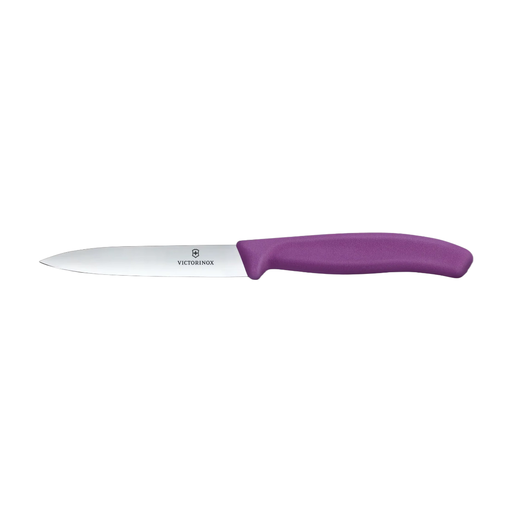
Why this model is a match: For home cooks who regularly process larger quantities of vegetables. The 10 cm blade offers more cutting surface, which speeds up chopping leeks, zucchini, or large bunches of herbs. More material can be processed in a single stroke.
This model addresses the pitfall of an unsuitable blade length (Pitfall 3). It offers an efficient solution for users who find an 8 cm knife too short for their typical tasks, without sacrificing maneuverability.
The longer blade allows for more efficient work on larger vegetables. Despite its larger blade, the knife remains very light and well-balanced at 27g.
We have compiled a complete, up-to-date list of products that meet these strict selection criteria.
1. Are Victorinox paring knives dishwasher-safe? Yes, according to the manufacturer, the knives in the Swiss Classic series with polypropylene handles are suitable for cleaning in the dishwasher. However, to maintain the blade's sharpness optimally in the long term, the gentler method of hand washing is recommended.
2. What is the exact difference between a plain-edge knife and a serrated-edge knife? A plain edge is designed for push or pull cuts and creates a very clean cutting surface. It is ideal for peeling and precise dicing. A serrated edge works more like a saw and is optimal for foods with a tough skin and soft interior (e.g., tomatoes), as it cuts through the skin without squashing the flesh.
3. How long does a Victorinox knife stay sharp? Edge retention depends heavily on the frequency of use, care, and the cutting surface used. Cutting boards made of wood or plastic are gentle on the blade, whereas surfaces made of glass, stone, or ceramic will dull it quickly. The stainless steel used by Victorinox is known for good edge retention. However, like any quality knife, it must be resharpened when its sharpness diminishes to maintain full performance.