
Lieferung heute & morgen

Qualitätsgarantie

Willkommens-Angebote freischalten: KOSTENLOSE Lieferung | Bis zu 80 % RABATT | Kostenlose 30-Tage-JoyPlus-Testphase
App herunterladen
A serrated Victorinox vegetable knife is suitable for a wide range of small cutting tasks: tomatoes, soft fruit, vegetables with firm skins and decorative cuts. However, the wide selection of similar models can quickly lead to the wrong purchase. The term “vegetable knife” alone reveals little about the blade length, blade tip or intended use.
This buying guide from the Joybuy Product Recommendation Officer helps you assess product details objectively and choose a suitable serrated vegetable knife for the home, hobby kitchen or frequent use.
A vegetable knife 8 cm has a noticeably more compact cutting surface than a 10 cm model. However, the overall length may be around 19 to 22 cm, as this also includes the handle and the transition to the blade. If you only look at the overall size, you may end up with a knife that is smaller or larger than expected.
A tomato knife with a short, pointed blade is designed for small foods and precise preparation work. An 11 cm steak and pizza knife also has a serrated edge, but its construction is more suited to use at the table. According to the product description, a 13 cm model from the Swiss Classic series may be designed for butter and soft cheese. The blade shape must therefore match the intended use.
According to the product details, many Victorinox Swiss Classic vegetable knives are dishwasher-safe. This makes cleaning easier, but heat, detergents and contact with other cutlery can put greater strain on the surface and cutting performance. For a longer service life, hand-washing serrated blades and drying them afterwards is recommended.
The choice between a vegetable knife 8 cm and a vegetable knife 10 cm depends on the type of work:
A pointed blade can be useful for piercing, removing cores or scoring skins. For even slices, guide the serrated edge cleanly through the food without applying sideways pressure.
The models listed use stainless steel or rust-resistant stainless steel, according to the respective product details. A serrated edge is particularly effective on foods with a firm outer skin and soft interior. For example, it can cut through a tomato’s skin without unnecessarily pressing the flesh.
It is important to distinguish between:
A serrated vegetable knife is not designed for levering, chopping bones or cutting frozen food.
An ergonomic polypropylene handle is lightweight, resistant to moisture and designed for everyday use on the Swiss Classic models mentioned. In addition to the colour, look for:
The product descriptions state that several models are suitable for dishwashers. Nevertheless, hand-washing remains a gentler option for the materials. Chopping boards made from stone, glass or ceramic can put more strain on the blade; wood or suitable plastic boards are generally more practical for kitchen knives.
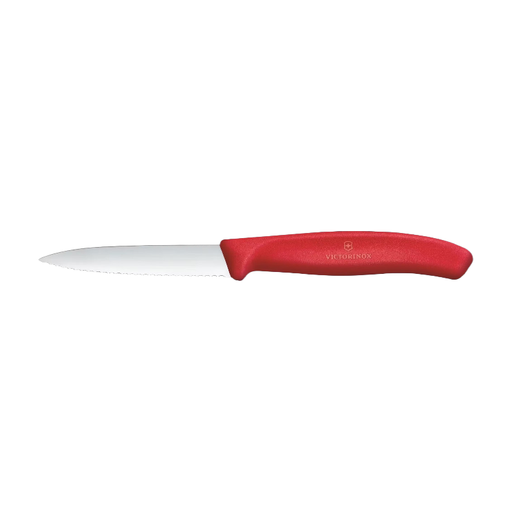
Why this product suits the profile: The 8 cm blade and stated weight of 20 g provide a compact option for everyday cutting tasks involving fruit, vegetables and garnishes.
The specified blade length prevents you from buying a table knife or a longer specialist knife as a vegetable knife.
8 cm serrated edge, pointed blade, polypropylene handle and dishwasher suitability according to the product description.
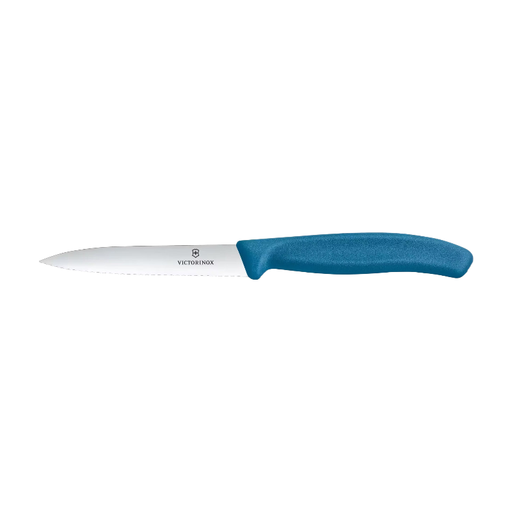
Why this product suits the profile: As stated in the product description, this Swiss-Made model combines a 10 cm serrated blade with a lightweight ergonomic handle.
The blade length, material, origin and cleaning suitability are clearly specified, making it easier to compare with poorly described products.
10 cm blade, pointed blade, stainless steel according to the product details and Swiss-Made origin.
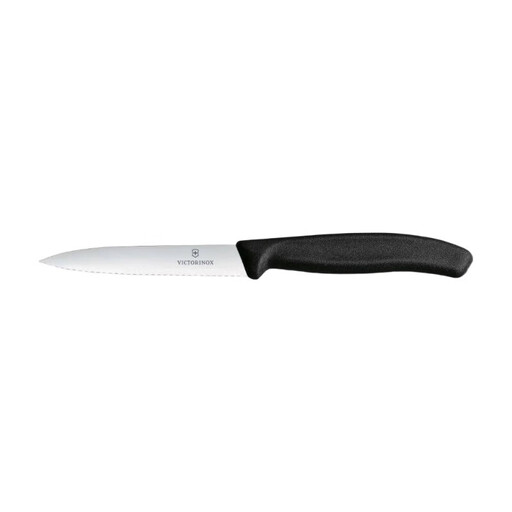
Why this product suits the profile: The black 10 cm model is suitable for households and kitchen users looking for a clearly identifiable, compact Swiss kitchen knife for regular preparation work.
The model name explicitly states vegetable knife, serrated edge and 10 cm blade, distinguishing it from steak, pizza and bread knives.
Stainless steel blade with central point, ergonomic plastic handle, 27 g weight and dishwasher suitability according to the product data.
We have compiled a complete, regularly updated list of products that fully meet these strict selection criteria and the safety regulations applicable in the EU.
To maintain consistent cutting performance, you should:
The dishwasher can be used for the models mentioned, provided that the product description explicitly states this. With frequent use, hand-washing can help protect the blade and handle. Special requirements apply to the private transport of knives in Germany; a kitchen knife should therefore not be carried in public unnecessarily.
The serrated edge can grip the firm tomato skin while putting less pressure on the soft interior. A suitable blade length, pointed design and controlled cutting pressure remain important. A tomato knife with an 8 or 10 cm blade is generally easier to handle for this purpose than a long bread knife.
For small fruit, garnishes and precise tasks, 8 cm is often sufficient. A 10 cm vegetable knife offers more cutting surface and is better suited to larger tomatoes, avocados or vegetables. If you are unsure, use your main intended use and the level of handle control you want as your guide.
It is not possible to give a reliable fixed service life. This depends on the chopping board, cleaning method, storage and usage. Stainless steel is low-maintenance, but not immune to incorrect handling. Hand-washing, drying and avoiding hard surfaces can help preserve its performance for longer.