
Lieferung heute & morgen

Qualitätsgarantie

Willkommens-Angebote freischalten: KOSTENLOSE Lieferung | Bis zu 80 % RABATT | Kostenlose 30-Tage-JoyPlus-Testphase
App herunterladen
A Victorinox vegetable knife is designed for many kitchen tasks that can be awkward with a large chef’s knife: peeling fruit, removing tomato cores, chopping garlic or precisely dicing vegetables. However, the brand name is not the only factor to consider. Blade length, edge, tip and handle all determine whether the knife suits the way you work.
Many models are sold as dishwasher-safe vegetable knives. This means that cleaning them in the dishwasher is generally possible. However, frequent temperature changes, strong detergents and contact with other cutlery can put more strain on the edge than gentle hand washing.
If you want to preserve the blade’s sharpness for as long as possible, clean the knife immediately after use with warm water and mild washing-up liquid, then dry it thoroughly. The dishwasher is a convenient option, but it is not automatically the gentlest way to care for the knife.
A serrated vegetable knife is particularly effective with soft foods that have a firm skin, such as tomatoes, figs or avocados. It can also be used to make controlled cuts into thicker skins. For even dicing, peeling and fine cutting movements, a vegetable knife with a straight blade is often easier to control.
A serrated edge is therefore not a general mark of quality, but a choice suited to particular foods and cutting tasks.
An 8 cm vegetable knife is compact, lightweight and suitable for precise tasks close to the hand. A 10 cm vegetable knife offers a little more reach and can be more comfortable when cutting larger fruit or vegetables. For very small ingredients, however, a 10 cm knife may feel less nimble.
A vegetable knife with a pointed tip should also be chosen deliberately. A central or pronounced tip helps with removing stalks, taking out stones and making decorative cuts. However, it does not replace a separate boning or peeling tool.
The Victorinox Swiss Classic vegetable knives include compact versions with 6, 8 and 10 cm blade lengths. Some of the 8 cm models in this selection weigh around 20 g, while the 10 cm models weigh around 27 g. The low weight can be comfortable during longer preparation tasks, provided the handle feels secure in your hand.
For everyday tasks such as peeling, removing stones and garnishing, 8 cm is a well-balanced size. If you often cut larger tomatoes, apples or other fruit, you may benefit from a 10 cm blade.
A straight blade is suitable for:
A serrated edge is useful for:
Your choice should be guided by the ingredients you use most often. If you need both precise and slip-resistant cutting, you can combine two different blade styles.
The models listed feature a blade made from stainless steel and a handle made from polypropylene (PP). Stainless steel is suitable for everyday kitchen use and is easy to clean. The PP handle is lightweight and, thanks to its ergonomic shape, generally provides a controlled grip.
Also check the product details for dimensions, tip, colour and origin. The Victorinox Swiss Classic models in this selection are described as made in Switzerland. Terms such as “forged” should not be assumed: several models are explicitly stated to be non-forged.
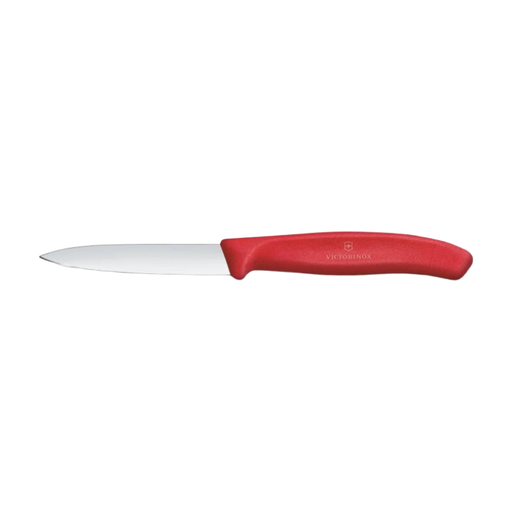
Why this product suits this profile: The 8 cm blade and weight of around 20 g are suitable for basic cutting and peeling tasks at home.
The straight stainless-steel blade is described more clearly than a vague “all-purpose edge”, allowing you to choose it specifically for precise tasks.
8 cm blade length, stainless-steel blade, PP handle and dishwasher-safe design.
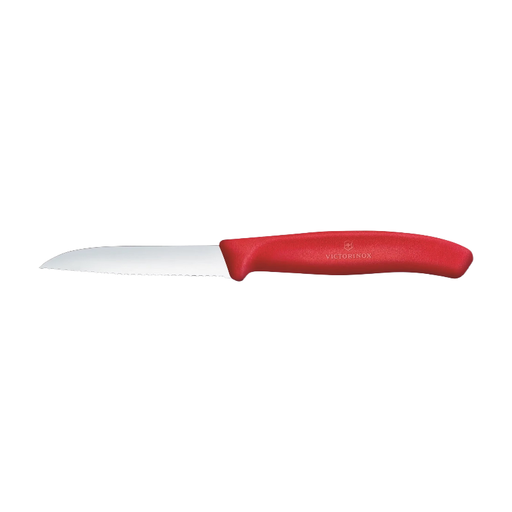
Why this product suits this profile: The serrated edge is designed for soft fruit and firmer skins, making it a useful addition to kitchens where tomatoes and fruit are prepared frequently.
The edge is clearly identified as serrated, so you can check before buying whether it suits your intended use.
8 cm stainless-steel blade, pointed blade shape, lightweight PP handle and dishwasher-safe design.
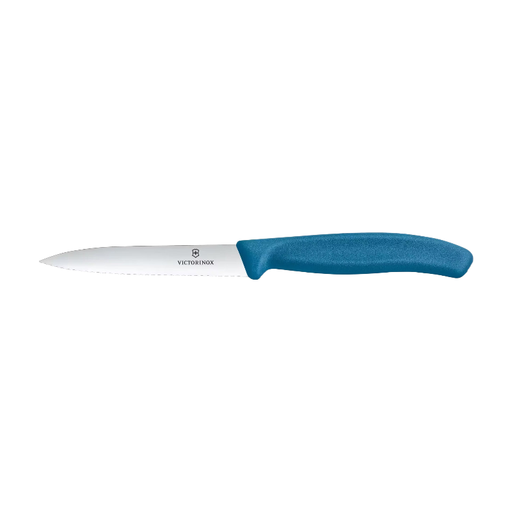
Why this product suits this profile: The 10 cm blade offers greater reach, while the serrated edge and pointed tip are suited to a variety of fruit and vegetable tasks.
The blade length, edge and tip shape are clearly specified. This prevents you from choosing a knife based solely on its colour or a marketing phrase.
10 cm blade, stainless steel, ergonomic PP handle, Swiss manufacture and dishwasher-safe design.
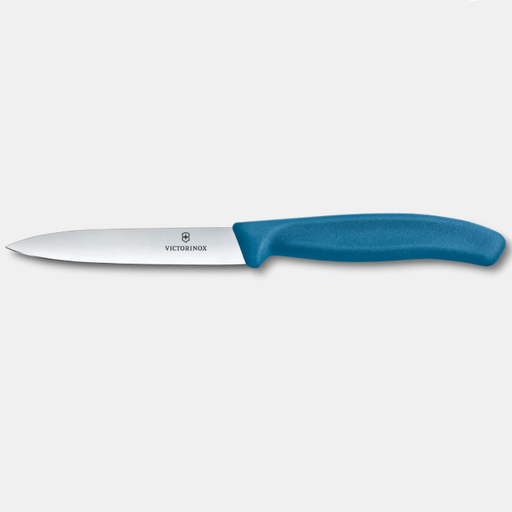
Why this product suits this profile: The straight 10 cm blade supports controlled slicing, dicing and peeling during regular food preparation.
The straight edge is clearly identified for precise tasks and is not presented as an edge suitable for every type of food.
10 cm stainless-steel blade with pointed tip, 27 g weight, PP handle and dishwasher-safe design.
We have put together a complete, regularly updated list of products that fully meet these strict selection criteria and the safety regulations applicable in the EU.
The models listed are described as dishwasher-safe. However, the product details often recommend hand washing for the gentlest possible cleaning and to help preserve the blade’s sharpness. The knife should be dried thoroughly after washing.
An 8 cm vegetable knife is lightweight and nimble, making it suitable for peeling, removing stones and making fine cuts. A 10 cm vegetable knife offers greater reach and can be more practical when preparing larger fruit or several ingredients regularly.
It depends on how you intend to use it. A straight blade supports controlled peeling, dicing and slicing. A serrated edge often grips soft fruit and firm skins more effectively. If you prepare a variety of foods, both versions can be useful additions to your kitchen.