
Lieferung heute & morgen

Qualitätsgarantie

Willkommens-Angebote freischalten: KOSTENLOSE Lieferung | Bis zu 80 % RABATT | Kostenlose 30-Tage-JoyPlus-Testphase
App herunterladen
A Victorinox 2-piece vegetable knife set can handle many everyday kitchen tasks: slicing tomatoes, peeling fruit, dicing vegetables and preparing small ingredients with precision. However, similar sets can differ considerably in blade length, edge type, handle material and what’s included.
If you focus only on the brand name or eye-catching packaging, it’s easy to overlook important details. This buying guide explains which features matter in a fruit and vegetable knife set and which option might suit your kitchen best.
Many dishwasher-safe vegetable knives can be cleaned in the dishwasher. However, frequent exposure to heat and moisture, as well as contact with other cutlery, can put more strain on the blade edge than careful hand washing. To help your knives last as long as possible:
According to the product details, the Victorinox Swiss Classic Vegetable Knife Set is dishwasher-safe. However, hand washing is still recommended to help maintain the blades’ sharpness.
A serrated vegetable knife is particularly useful for soft foods with firm skins. Its serrated edge can come in handy for tomatoes, figs and certain other fruits. A straight-edge vegetable knife, on the other hand, is more versatile for peeling, dicing neatly and making controlled cuts.
A two-piece set with both types of blade therefore offers a clear practical advantage: you can choose the right knife for the food, rather than relying on a single compromise knife.
For smaller kitchen tasks, shorter blades are often easier to control. The Victorinox sets featured here have blades measuring 8 cm, 10 cm or 11 cm, depending on the version. The 11 cm option gives you a little more cutting surface for larger fruit and vegetables. Shorter blades may feel more comfortable for peeling and delicate tasks.
The key is to choose a blade length that suits the way you work, the size of your hands and the storage space available.
A classic paring knife or straight-edged paring knife is suitable for:
A serrated edge is useful as a tomato knife when you need to cut through soft skin without unnecessarily squashing the flesh. However, it isn’t designed for bones, frozen foods or hard shells.
The Victorinox models listed here have stainless steel blades. This makes them easy to clean and suitable for everyday kitchen use. “Stainless” doesn’t mean they need no care: avoid leaving food residue on the blades, exposing them to moisture for long periods or using harsh cleaning methods.
Don’t cut on glass, stone or ceramic. These surfaces can damage the blade edge more quickly. A sturdy wooden or suitable plastic chopping board is a more practical choice.
The handles on the Victorinox Swiss Classic vegetable knives described here are made from polypropylene (PP). This material is lightweight and resistant to moisture. An ergonomic shape can help you stay in control during short, precise movements.
When comparing knives, also consider how you’ll store them safely. A knife block, a magnetic strip with enough space between the knives or a suitable blade guard will stop the blade from lying loose in a drawer. The blades are sharp, so keep them out of children’s reach.
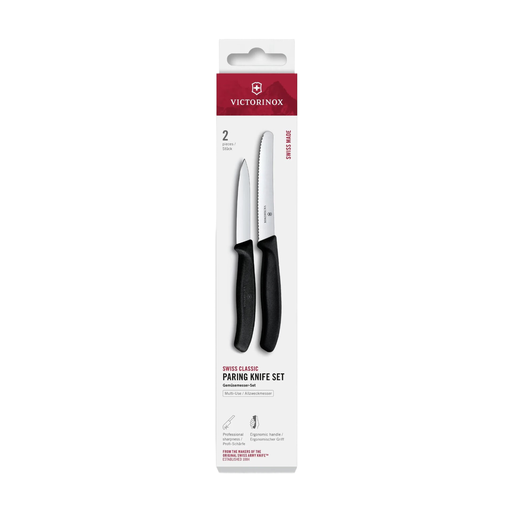
Why it suits this profile: The 11 cm version combines a straight and a serrated blade. Beginners get two clearly distinct tools for everyday fruit and vegetable preparation.
The product contents clearly specify both blade types. So you’re not simply being sold a single knife on the basis of vague claims about versatility.
11 cm stainless steel blades, PP handles, made in Switzerland according to the product details, and dishwasher-safe.
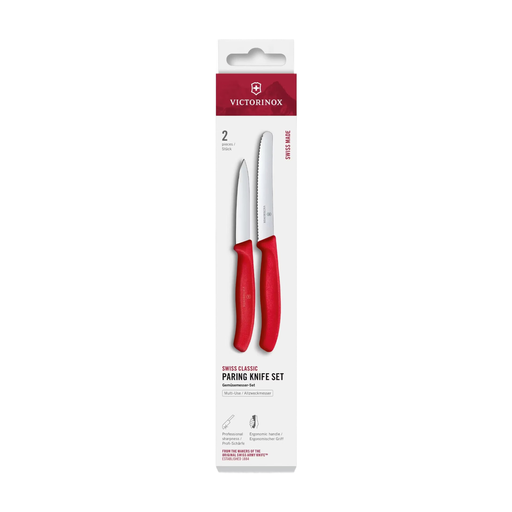
Why it suits this profile: The red version also comes with straight and serrated 11 cm blades and is supplied in a box. It’s a good choice for households looking for a clearly defined set for everyday use or as a kitchen gift.
The specifications list the blade length, edge types, handle material and country of origin. You can check what’s included against similar products before buying.
Straight and serrated stainless steel blades, ergonomic PP handles, listed product weight of 48 g and dishwasher-safe.
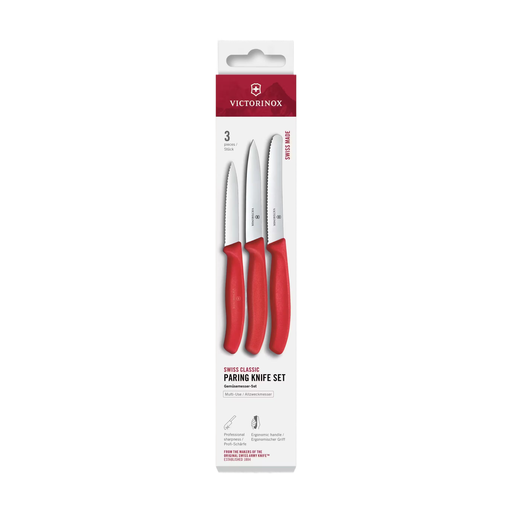
Why it suits this profile: For households that do a lot of food preparation, this version adds another knife to the straight and serrated blades. It can be useful when you’re preparing several dishes one after another.
The additional items are listed clearly: one serrated blade, one straight blade and another versatile blade. That’s more informative than a vague description such as “multi-purpose set”.
Three 11 cm blades, stainless steel, ergonomic PP handles, made in Switzerland according to the listing, and dishwasher-safe.
Even a sturdy Swiss kitchen knife is only practical when used correctly. Always cut on a non-slip surface and move the blade away from your body. Don’t use vegetable knives for levering, cutting through bones or opening hard shells.
Dry the knives thoroughly after cleaning. A knife block, magnetic strip or blade guards are all suitable storage options. Leaving knives loose in a kitchen drawer increases the risk of damaging the blades and accidentally injuring yourself.
We’ve put together a complete, regularly updated list of products that meet these strict selection criteria and fully comply with the safety regulations in force in the EU.
According to the product details, the Swiss Classic sets mentioned are dishwasher-safe. For gentler cleaning and to help the blades stay sharp for longer, hand washing and thorough drying are recommended.
A serrated vegetable knife, or tomato knife, is suitable for soft fruit with firm skin. A straight blade is more versatile for peeling, dicing and making precise cuts.
It depends on how you use it, the surface you cut on and how well you care for it. Glass, stone and ceramic put a lot of strain on the blade edge. Using a suitable cutting surface, washing by hand and storing the knife safely can help it stay in good condition for longer.