
Lieferung heute & morgen

Qualitätsgarantie

Willkommens-Angebote freischalten: KOSTENLOSE Lieferung | Bis zu 80 % RABATT | Kostenlose 30-Tage-JoyPlus-Testphase
App herunterladen
Knowing who is at your door without having to open it—for many homeowners, this is the main reason for getting a video doorbell. Whether it's for accepting packages when you're not home or for an enhanced sense of security, a doorbell with a camera offers practical advantages. However, the market is diverse, and the selection can quickly become overwhelming with terms like PoE, cloud subscription, or 2K resolution.
This article serves as your guide. We'll explain the most important distinguishing features and present a selection of models for various needs to provide you with a solid basis for making an informed decision.
To find the right smart doorbell for your living situation, three criteria are crucial: the power supply, the type of connectivity and data storage, and the range of features.
The type of power supply significantly determines the installation effort and operational reliability.
The question of how the doorbell connects to your network and where videos are stored directly impacts recurring costs and your control over data.
Modern video doorbells are more than just cameras.
Based on the criteria mentioned, we have compiled a selection of models that cover different requirements.
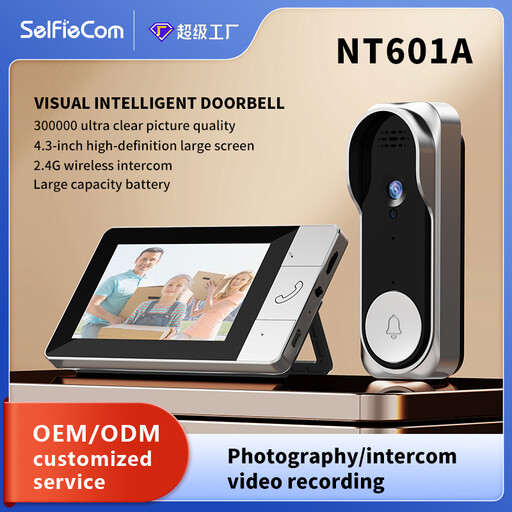
Why it stands out: This model operates completely without Wi-Fi or app integration. It consists of an outdoor unit and a portable 4.3-inch indoor screen, making setup incredibly simple.
Advantages:
Who is it for? For users looking for a straightforward, ready-to-use video doorbell without Wi-Fi who value a solution that isn't tied to a smartphone. Ideal for seniors or holiday homes without a stable internet connection.
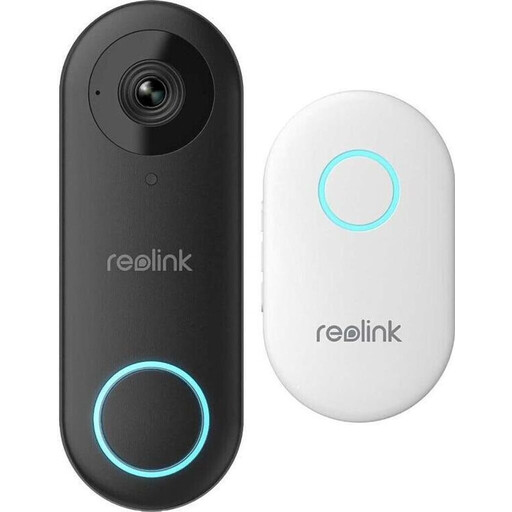
Why it stands out: The Reolink D340P uses Power over Ethernet (PoE) for a highly stable connection and power supply over a single network cable. It's an excellent option for users who demand maximum reliability.
Advantages:
Who is it for? For homeowners with existing network cabling or tech enthusiasts seeking a highly reliable, wired PoE doorbell with advanced storage options and integration into an NVR system.

Why it stands out: This model combines a high 2K resolution with flexible battery operation and no monthly fees. Data is stored locally on the base station placed inside your home.
Advantages:
Who is it for? For renters and homeowners who want an easy-to-install battery-powered video doorbell with high image quality and wish to avoid the recurring costs of a subscription model.
The selection of smart doorbells is vast, and everyone's needs are different. If the models presented here don't perfectly match your requirements, you can find more options in our broader category. Discover additional models with different specifications and designs.
As a general rule, the camera should only film your own private property and entrance area. Public paths, sidewalks, or your neighbour's property should not be in the frame. Continuous recording is typically not permissible; recording should be event-based (e.g., when the bell is rung or motion is detected). It is also advisable to post a visible sign indicating video surveillance to comply with local disclosure requirements.
Yes, especially battery-powered video doorbells are designed for DIY installation and usually do not require extensive work. Wired models can also be self-installed if you are replacing an existing doorbell system and have some basic knowledge. For a new installation of wiring or for PoE systems without prior experience, hiring a professional may be a good idea.
Most smart doorbells require an internet connection (Wi-Fi or LAN) to send notifications to your smartphone and stream live video. However, there are models like the featured Verbex NT601A that function as a closed system with their own monitor, thus representing a video doorbell without Wi-Fi connectivity. These models, however, do not send notifications to a mobile phone.