Photographers working by a window
If you’re using the available window light and mainly want to brighten the darker side of a costume, try a white card first. Canon Europe describes this technique for bouncing light back into the shadows.


You don’t automatically need a video light to capture costume details by a window. If only the side facing away from the window is too dark, try using a white card as a reflector first – Canon Europe explains how it can bounce window light back into the shadows. If you need extra light or want more control over reflections and shadows, look for suitable light modifiers, adjustable colour temperature and a power supply that suits your needs. Manufacturers’ specifications describe individual models, but they don’t prove how they perform in practice on costume fabrics.
If you’re using the available window light and mainly want to brighten the darker side of a costume, try a white card first. Canon Europe describes this technique for bouncing light back into the shadows.
If you want fabric and thread colours to look consistent across several shots, pay attention to the white balance and compare colours under the lighting you’ll actually use. Canon Europe highlights the importance of colour reproduction in product photography.
When photographing embroidery, beads or shiny embellishments, light shaping and available space can be important. Consider whether a directional setup or extra diffusion would suit your subject. If you’re shooting somewhere without a mains socket, the power supply matters too.
Start with the window light you already have. First, see whether a reflector is enough. Only look at a light, light modifiers and power options together if you need extra light or more control over shadows and reflections.
| What you need | What to check when buying | Who would find this most useful? |
|---|---|---|
| Brightening shadows | Try a white card first; if you need extra light, check the dimming options and positioning. | If I only want to brighten the side facing away from the window, I want to keep the setup as simple as possible. Around 40% of consumers put filling in shadows first. |
| Capturing fabric colours | Check the colour temperature range for the specific model; test it with a neutral reference under the lighting you’ll actually use. | If I want to compare fabric and thread colours across several pictures, I pay particular attention to getting a consistent white balance. Around 30% of consumers prioritise colour reproduction. |
| Shaping shine and texture | Check the connection and what’s included for a diffuser or softbox; assess the effect on your own material. | When photographing sequins, beads or embroidery, I want to control reflections and texture rather than relying on the light’s specifications alone. Around 20% of consumers prioritise light shaping for small details. |
| Setup and power supply | Check that the power source and runtime suit your planned use; allow space for the light, tripod and modifier. | If I’m working by a window without a mains socket or with limited space, the power supply and setup need to suit the location. Around 10% of consumers prioritise a portable setup. |
An adjustable colour temperature can help you match the light to your surroundings, but it doesn’t guarantee identical colours on both sides of your subject. Nikon USA notes that white balance and mixed lighting can affect the result. It’s still worth using a neutral reference and taking test shots under your actual lighting conditions.
A lux figure applies under specific measurement conditions and can change with distance, colour temperature and light modifier. A figure measured with a narrow-beam reflector doesn’t automatically tell you how bright or soft the light will look on a costume when used with a softbox.
Only compare measurements taken under similar conditions, then assess the light on the fabric itself. For example, Amaran gives a figure for the COB 60x S with a specific reflector at 1 m and 5,600 K; Zhiyun notes that the MOLUS X100 has different measurements with and without its mini reflector.
Adjustable colour temperature gives you another setting to work with, but it doesn’t automatically counteract the effects of window light, additional room lighting or white balance.
Use a neutral reference and take test shots under the lighting you’ll actually use when photographing.
A connection for a light modifier doesn’t necessarily mean that a softbox, diffuser or required adapter is included in the set you choose. Godox says an adapter is needed to use Bowens light modifiers with the ML60II Bi; SmallRig lists softboxes for the RC 60B Lite Edition as optional accessories.
Before buying, check the exact model version, connection, package contents and power supply you need.
Depending on your setup, you may also need a suitable adapter or diffuser. Remember to allow space for the light, tripod and modifier.
The COB 60x S is a bi-colour COB light with a Bowens mount, designed for setups using compatible light modifiers.
The RC 60B Lite Edition, EU version 4518B, is a bi-colour option for setups where a mains socket isn’t readily available.
The ML60II Bi and SL60IID cater for different needs: adjustable colour temperature or fixed daylight, and different accessory mounts.
The MOLUS X100 is a compact bi-colour COB light for carefully positioned lighting setups.
This selection includes compact lights for photography and video, suitable for adding light to close-ups. For each model, check that the colour, light shaping and power supply suit your setup by the window.
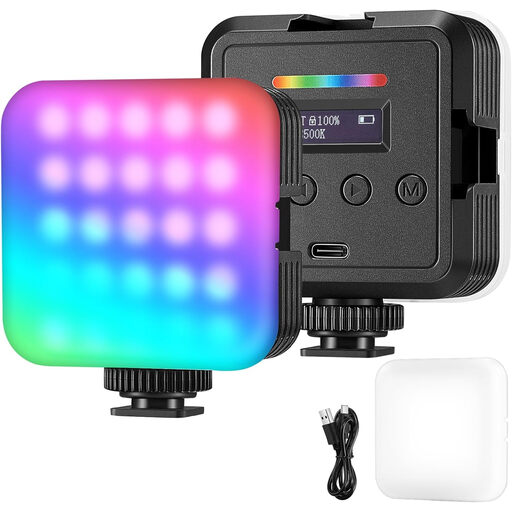 No image available
For adding light to photos or video; the product name lists RGB modes and adjustable lighting modes.
Check that the available lighting modes suit your subject and the window light you already have.
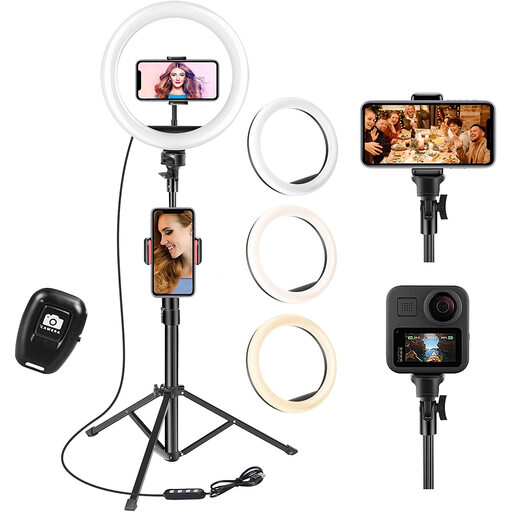 No image available
For a tripod setup; the product name lists a 10-inch light, a remote control and a 63-inch tripod.
The product name lists three light colours and ten brightness levels. Check whether the ring shape suits your costume details and the framing you want.
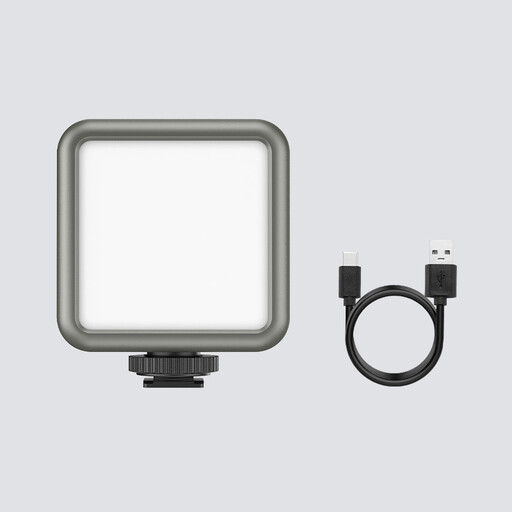 No image available
For macro and product photography; the product name lists RGB, dimming and an adjustable colour temperature of 2500K–9500K.
The model is also listed with a 2000-mAh battery and a magnet on the back. The magnetic attachment requires a suitable metal surface.
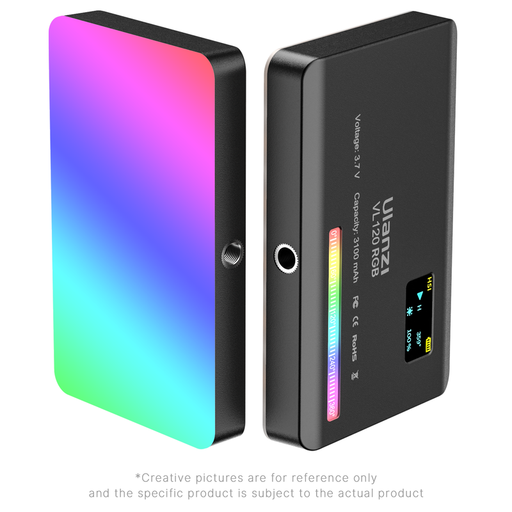 No image available
For close-ups where you want to adjust the lighting before taking a picture.
Check whether the specific package includes a diffuser and the attachment you need for your setup.
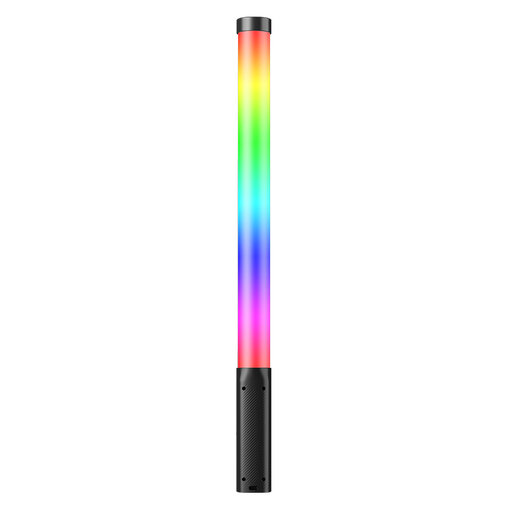 No image available
For product photography; the product name lists a 3300-mAh battery and RGB light.
It also lists 360° Full Color, an adjustable colour temperature of 2500K–9000K and 360 Lux at 0,5 m. Assess the lighting on your subject under the conditions you’ll actually be shooting in.
If it’s mainly the side facing away from the window that looks too dark, try using a white card as a reflector first. Take a test shot to see whether the available light is enough for the picture you want.
Set an adjustable light as close as possible to the existing light and check the white balance using a neutral reference. Nikon USA notes that measuring with a white card in mixed lighting can produce a different result from automatic white balance; a Kelvin setting alone doesn’t guarantee identical colours.
Check that the light modifier and attachment are compatible with the specific model, and position the tripod securely. Also check what’s included in the package and how the light is powered. SmallRig notes, among other things, that its RC-60B silicone diffuser has limitations when used underwater or in extreme temperatures.
According to the Verbraucherzentrale, online consumer purchases generally come with a 14-day right to cancel. Exceptions and the specific contract should be checked. The statutory warranty for faulty goods is separate and isn’t the same as a voluntary guarantee. The Verbraucherzentrale explains these points in information published on 13 August and 28 September 2026.
No. According to EU information, the manufacturer uses the CE mark to declare that the product meets the applicable requirements; it isn’t a general, independent assessment of image quality. The CE mark is only required for product groups covered by relevant EU rules. Check the information for the specific device rather than assuming it’s suitable for costume fabrics.