Who needs which type of light?

Knitters whose hands cast shadows over their stitches

If you’re filming your hands and needles by a window, lighting the areas that are hidden matters more than making everything as bright as possible. Canon Europe recommends placing a weaker fill light opposite the main light to soften its shadows.

Knitters working with colour-sensitive yarns

If you’re showing several yarn colours or filming at different times of day, it’s worth adjusting your lighting and camera’s white balance together. Adobe explains that the right white balance depends on the colour temperature of the light; a Kelvin rating alone doesn’t guarantee accurate colour reproduction.

Knitters with limited or changing space

If you’re filming at a small table or often moving your light, its mounting, footprint and power supply need to suit your setup. Make sure the stand or cable won’t get in the way of your knitting or the camera’s view.

What should you look for when buying?

Compact bicolour panel

A good choice if: You want to soften shadows on a small work surface and direct the light without using a large modifier. NEEWER lists dimming, adjustable colour temperature and a diffuser as features of the NL660.

The trade-off: NEEWER states that the NL660 is less bright than its own single-colour LED version. Whether a stand is included depends on the package option.

Bicolour COB light with a modifier

A good choice if: You want to position the light more precisely or soften it with a larger modifier. According to the manufacturer, the amaran COB 60x S has a Bowens mount for compatible modifiers.

The trade-off: You’ll need to account for the modifier, mount and space required; a narrow-beam reflector isn’t the same as a large softbox.

Small, portable light

A good choice if: You mainly film close-ups or move your light between workspaces. Godox also describes the LC30Bi as suitable for close-ups of small objects.

The trade-off: To get soft light, you’ll need to shape a small light source appropriately. According to the manufacturer, battery life for the SmallRig RC 60B depends on the power setting.

What matters when buying What should you check? Who is it important to?
Seeing stitches clearly, even in shadow Dimming and positioning from your planned camera angle; check the diffuser and make a test recording using your actual hand movements. If your hands or needles cast shadows over key stitches, targeted fill light matters more than maximum brightness. Around 40 % of consumers rank this as their top priority.
Judging yarn colours Check the adjustable colour temperature and documented colour-rendering figures for the exact model; set the white balance and make a test recording with the yarns you’ll use. If you’re showing several colours or filming in changing daylight, you’ll want to be able to judge the yarn accurately in your video. Around 30 % of consumers prioritise yarn colours.
Keeping the lighting consistent during longer recordings Check that the power supply and package contents for the specific version suit your planned recording time; also check for fan noise and visible flicker in a test recording. For a longer demonstration, the lighting should stay consistent without a nearby power socket or a necessary power-supply change disrupting the session. Around 20 % of consumers prioritise recording time.
Fitting a light on a small table Check that the mounting, footprint, package contents and cable routing suit the space available. If your filming space is small or you often move the light, its mount and power supply should suit the table without getting in the way of your knitting. Around 10 % of consumers prioritise space and portability.

Avoiding buying and setup mistakes

  • Comparing lux figures without checking the test conditions

    The lux figure quoted by amaran for the COB 60x S was measured with a narrow-beam reflector at 1 m and 5,600 K. It doesn’t show how bright the light is with a large softbox, and you can’t compare it with a panel’s figure unless the measurement conditions are the same.

    Compare the distance, colour temperature and modifier, and decide based on a recording of your knitting area.

    Depending on the type of light you want, you may also need a compatible diffuser or modifier. Check what’s included in your chosen package.

  • Assuming bicolour means guaranteed colour accuracy

    Adjustable colour temperature makes it easier to match the light from your window, but it doesn’t guarantee that yarn colours will look true to life in your video. Both the light source and the camera’s white balance affect how colours appear.

    Set the light and white balance to suit the actual scene, and test the yarns you plan to show.

  • Assuming the stand, modifier and power supply are included

    Packages can vary: NEEWER offers the NL660 with or without a stand, Godox describes the battery option for the LC30Bi as optional, and SmallRig says the PD charger for the RC 60B is sold separately.

    Check the contents of the specific package against your filming setup.

    Depending on the model and package, you may need to buy a stand, batteries, charger or modifier separately.

Key brands for video lighting

NEEWER

The NL660 is an example of a dimmable bicolour panel with a diffuser, suited to a compact fill-light setup.

  • NEEWER lists 3,200–5,600 K, a CRI of at least 96 and a mains adapter for the NL660.
  • The stated standard package doesn’t include an NP-F battery. NEEWER says the panel is less bright than its own single-colour LED version; whether a stand is included depends on the package option.

Godox

Godox also describes the compact LC30Bi as suitable for close-ups of small objects.

  • According to Godox, you can set the LC30Bi to 3,200–6,500 K and power it using DC.
  • Using two NP-F970 batteries requires optional accessories. The daylight-balanced LC30D is a different version and shouldn’t be confused with the LC30Bi.

amaran

The COB 60x S is an example of a COB light with a Bowens mount for compatible modifiers.

  • amaran lists 2,700–6,500 K and CRI 96+ for this model.
  • The lux figure quoted by amaran was measured with a narrow-beam reflector at 1 m and 5,600 K, not with a large softbox. Check the modifiers and package contents separately.

SmallRig

The RC 60B, in the documented 4376B version, is a compact bicolour COB light with a built-in battery.

  • SmallRig lists 2,700–6,500 K for this version, with a 45-minute runtime at full power and 75 minutes in ECO mode.
  • These runtime figures are manufacturer specifications for version 4376B. SmallRig says the compatible PD charger is sold separately.

Joybuy products for video recording

The Joybuy products below include smartphone ring lights and compact camera or video lights. For knitting videos by a window, make sure the mounting, positioning and power supply suit your filming space. Also check the EU requirements that apply to the specific electrical product version.
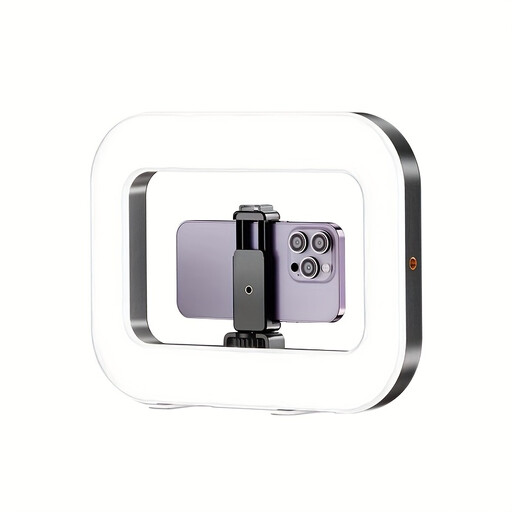
Yoever smartphone ring light with stabiliser

Yoever smartphone ring light with stabiliser

For short smartphone videos; the product description lists a built-in battery, 1/4-inch tripod thread, adjustable colour temperature and brightness.

View at Joybuy
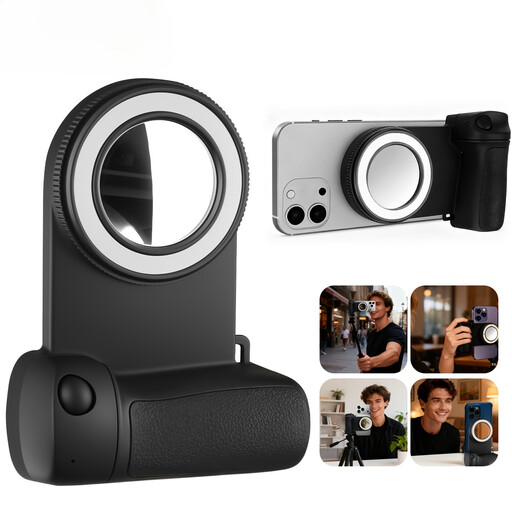
Yoever magnetic phone fill light with camera grip

Yoever magnetic phone fill light with camera grip

For filming on the go with your smartphone; the product description lists a grip, Bluetooth shutter button, rechargeable Type-C battery and adjustable lighting with three colour temperatures.

For a secure hold, the product description says your smartphone or case must support magnetic attachment.

View at Joybuy
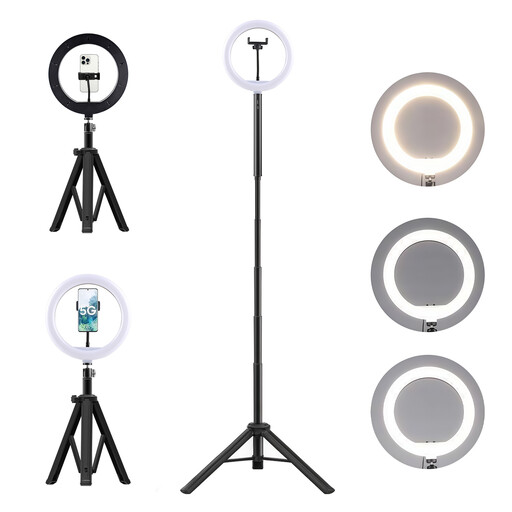
LED ring light kit with stand

LED ring light kit with stand

For video recording with a freestanding ring light; the product description lists a 10-inch ring light, a 70-inch stand, ten brightness levels, three colour temperature modes and a 10,000-mAh power bank stick.

View at Joybuy
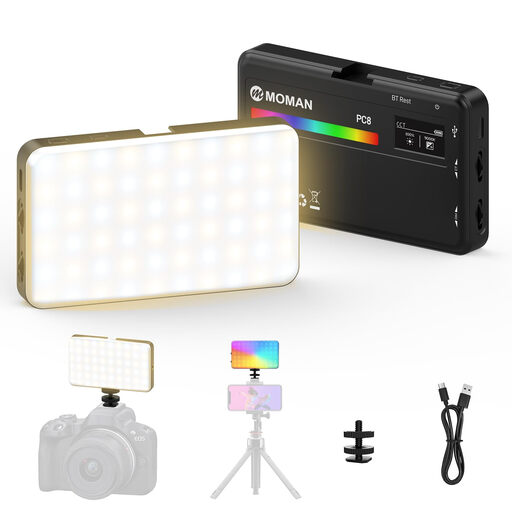
MOMAN PC8 RGB camera light

MOMAN PC8 RGB Camera Light

For camera recording with a compact mount; the product description lists RGB control, an OLED display, a built-in battery, adjustable colour temperature and brightness, and 1/4-inch and cold shoe mounts.

View at Joybuy
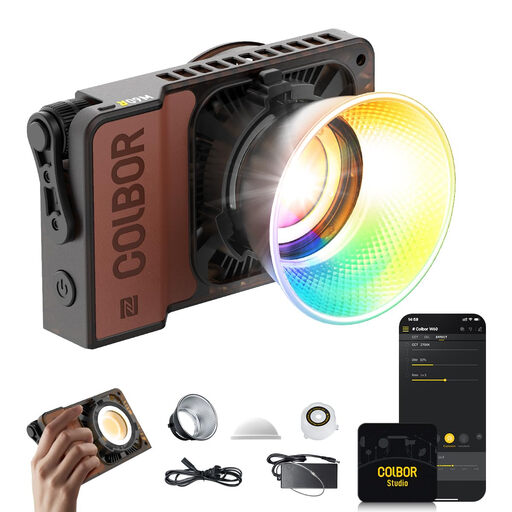
COLBOR W60R video light

COLBOR W60R Video Light

For video recording with adjustable light colour; the product title lists 60 W, RGB and 345 g. The description mentions a COB light source, adjustable colour temperature, and app and manual controls.

View at Joybuy

Frequently asked questions

Does the light need to be right next to the camera?

No. If the window is your main light source, you can point a weaker fill light at your knitting from the other side. Make a test recording to check whether your hands are casting shadows over key stitches.

Is 5,600 K enough for natural-looking yarn colours?

Not necessarily. Adobe describes 5,600 K as a possible starting point for daylight, but the right setting depends on the actual lighting conditions. Adjust your light and camera’s white balance to suit the scene, then check the yarn colours in a test shot.

What can I do about stripes or flicker in my video?

Make a test recording before your demonstration. If you see stripes, adjust the shutter speed or use a suitable anti-flicker setting on your camera. Sony lists 1/50 s or 1/100 s as possible shutter speeds in regions with a 50-Hz mains frequency; results depend on the camera and light source.

What should I know about returns and statutory guarantees on video lights bought online?

For a standard online purchase from a trader, you generally have a 14-day right to cancel from the day you receive the goods; statutory exceptions may apply. Your Europe explains this right for consumers in the EU. Your statutory rights against the seller are separate from any voluntary guarantee.

What should I consider when buying electric video lights in Germany?

Check which EU product rules apply to the specific product version and whether it must carry the CE marking. Your Europe and the European Commission explain that the marking is only required for products covered by relevant EU rules; it doesn’t confirm image quality. As the German Environment Agency explains, end-of-life electrical equipment in Germany must be collected separately from unsorted household waste.