For individual carvings, a small, directional light or macro light that can be positioned close to the subject is likely to work best. For a full view, consider a panel or spotlight with a suitable light shaper, provided there’s enough room to set it up. When working with window light and artificial light, adjustable colour temperature and careful white balance can help. Diffusion can soften harsh shadows, though it may also make the relief look flatter.
Who this lighting choice is for
Photographers capturing natural wood tones
When the light from your window changes, you’ll want to keep the wood tones in your images under control and adjust the white balance accordingly. Nikon explains white balance under mixed lighting, while Godox lists an adjustable colour temperature of 3200–6500 K for the LC30Bi.
Photographers capturing fine carving details
For close-ups, the light should reveal indentations and edges without removing every shadow. Nikon explains how shadows can shape texture and a sense of depth, while SmallRig describes the RM 03 as having a flexible arm for macro scenes.
Photographers capturing the whole arch
For a full view, you’ll need to balance broader fill lighting with preserving visible relief details. Adobe explains that diffusion softens light, while NEEWER lists a diffuser for the NL660.
What to prioritise when photographing Christmas arches
The percentages refer to consumers choosing a video light for this subject, and the most important purchase priority for each.
| What matters when buying |
What to look for |
Who is this most important to? |
| Matching the colour of window light |
Check the model’s bi-colour range. Nikon recommends using a white card as a guide to white balance under mixed lighting. |
When photographing in changing window light, I want to control the wood tones in my images; around 36 % of consumers rank colour temperature as their top priority. |
| Fine carving details |
Check whether the light can be positioned from the side and aimed precisely, and whether a diffuser or light modifier is included with the specific version. |
For individual indentations, I need directional light that preserves texture rather than filling in every shadow; around 29 % of consumers prioritise relief details above all else. |
| Full view of the Christmas arch |
Decide on the area you need to cover and where you’ll set up; check the diffuser, compatible light modifier and any stand you may need. |
When photographing the whole arch, the fill light should cover the area without flattening the relief; around 21 % of consumers make a full view their top priority. |
| Flexible set-up |
Check the power source, battery capacity, runtime at the brightness you need and the mount for the specific light. |
If the arch is somewhere without an easily accessible socket, a flexible set-up is important to me; around 14 % of consumers rank portability as their top priority. |
Common pitfalls when buying video lights
-
Comparing wattage or lux figures as if they were a league table
Wattage refers to the stated electrical power, while lux figures relate to a particular measuring distance. Without comparable measuring conditions, you can’t directly use figures from different lights to compare the light falling on the wood.
Only compare light output figures alongside the relevant distances and light modifiers. First decide whether you want to photograph details or the whole arch.
-
Assuming softer light is always better
Diffusion can soften harsh shadows, but shadows also help reveal the shape and texture of a carving.
Compare shots with and without a diffuser, and change the direction of the light if needed.
-
Assuming a stand, battery or light modifier is included
With the NEEWER NL660, whether a stand is included depends on the version; the manufacturer says NP-F batteries aren’t included. The Nanlite FS-60B manual specifies that an additional adapter is needed for Bowens accessories.
Check what’s included and the connection type for the exact version before planning to buy any extra accessories.
-
Assuming similarly named lights are identical without checking
Ulanzi lists the VL119 as having an output of 7.5 W, while a Joybuy Germany product description gives 10 W. Don’t treat these differing figures as identical product specifications.
Compare the full model and listing names before matching specifications to a particular product version.
Brands to consider
Godox
The LC30Bi is a compact bi-colour desk light for focused lighting on small subjects.
- Godox lists a colour temperature range of 3200–6500 K and directional light for the LC30Bi.
- For portable use, Godox lists optional accessories and NP-F970 batteries; this doesn’t mean it will evenly light an entire Christmas arch.
NEEWER
The NL660 is a bi-colour panel for set-ups with room for a larger light source beside the subject.
- NEEWER lists 3200–5600 K, a diffuser and mains or optional battery power.
- Whether a stand is included depends on the version; the manufacturer says NP-F batteries aren’t included.
Nanlite
The FS-60B is a bi-colour spotlight for photographers who want to choose the direction of the light and their light modifiers.
- The FS-60B manual lists 2700–6500 K, mains power with AC 100–240 V and an FM mount.
- The manual states that an adapter is needed for Bowens accessories. The rated power of 70 W doesn’t prove how its brightness compares with other models.
SmallRig
The RM 03 is a bendable macro light for individual details and small tabletop subjects.
- SmallRig describes a flexible arm and accessories for shaping the light.
- The product page lists different pack and kit options; what’s included may vary between RM 03 listings.
Ulanzi
The VL119 is a battery-powered RGB light stick for flexible positioning or deliberately colourful accents.
- Ulanzi lists 2500–9000 K, 105 Lux at a distance of 1 m and 70 minutes of runtime at full power.
- These figures don’t prove that the light stick alone is enough for a full view. Ulanzi lists 7.5 W, while a Joybuy Germany product description gives 10 W.
Joybuy products for photography and video
The following Joybuy listings range from ring lights and smartphone fill lights to COB and compact RGB video lights. Choose according to your framing and where you’ll set up; the product name alone doesn’t guarantee even lighting across the whole arch or the lighting effect you’re after.
 No image available
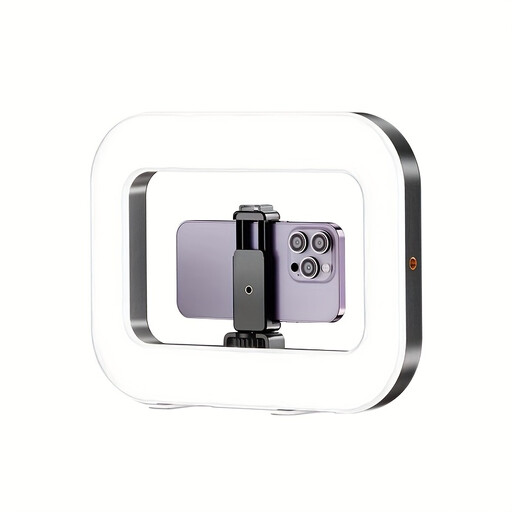
Yoever smartphone ring light with built-in battery
A ring light could be an option for a fixed filming spot; check whether it covers the area you want to photograph on your Christmas arch.
The product name lists a built-in battery, with smartphone livestreams and make-up as suggested uses.
View at Joybuy
 No image available
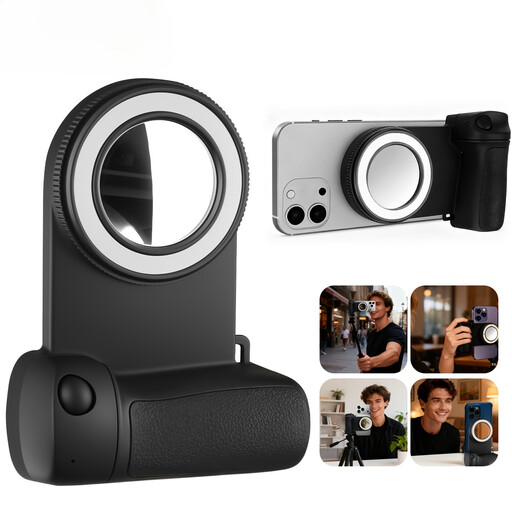
Yoever magnetic smartphone fill light with camera grip
This light is described as an add-on for smartphone photography. Check whether you can position your phone where you need it.
The product name lists a Bluetooth shutter release, a rechargeable Type-C battery and adjustable light. According to the description, your phone or case must support magnetic attachment.
View at Joybuy
 No image available
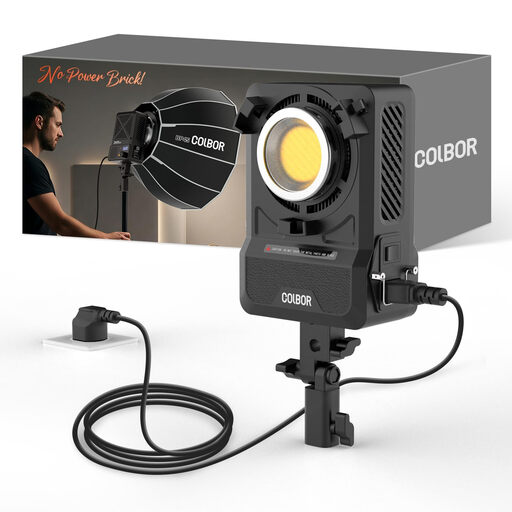
COLBOR 200W bi-colour COB video light
The Bowens mount may be useful for a studio set-up where you want to choose a specific light modifier; check which accessories are included in the listing first.
The product name lists 200 W, bi-colour from 2700K–7000K, a Bowens mount and a built-in power supply.
View at Joybuy
 No image available
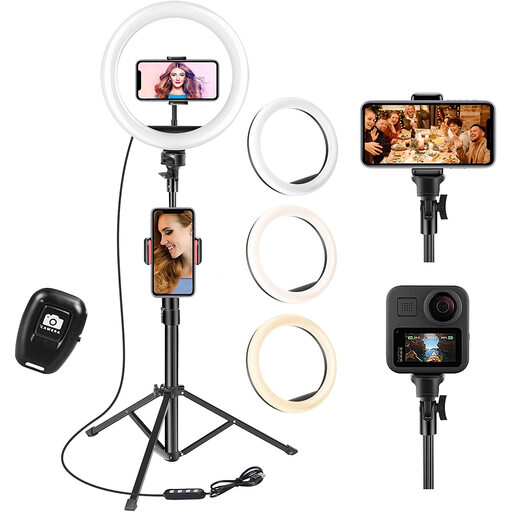
10-inch ring light with 63-inch tripod
The tripod may be useful for a fixed set-up. Check that there’s enough room to position it at your chosen shooting spot.
The product name lists a remote control, three colour temperatures and 10 brightness levels.
View at Joybuy
 No image available
ULANZI VL49 RGB LED video light
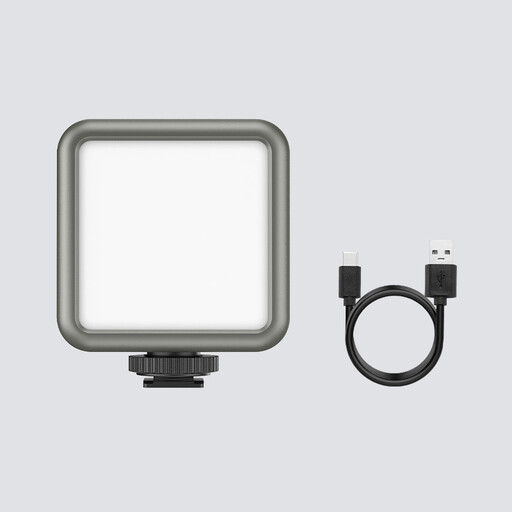
The product name lists macro and product photography as suggested uses, making it a good fit for close-ups of carved details. If you want to photograph the whole arch, check the light coverage with your specific set-up.
Features listed include a 2000mAh battery, adjustable 2500K–9500K and magnets on the back.
View at Joybuy
Frequently asked questions
How should I start lighting a subject by the window?
Start with a shot using window light alone, then add a little light from the shadow side. Adobe describes diffusion as a way to soften light, while Nikon explains how shadows can shape texture and a sense of depth. So compare shots with and without a diffuser.
Is setting the same Kelvin value on the light and camera enough?
No. Matching Kelvin values alone won’t guarantee accurate wood tones when you’re using multiple light sources. Nikon shows that automatic and preset white balance can produce different results under mixed lighting. Check your shot in the actual set-up, using a white card if needed.
What should I check before setting up a softbox or tripod?
Check the connection and what’s included with the specific version. The Nanlite FS-60B manual lists FM accessories; you’ll need an adapter for Bowens accessories. With the NEEWER NL660, whether a stand is included depends on the version, and the manufacturer says NP-F batteries aren’t included.
What should I bear in mind when setting up near wood, fabrics or naked flames?
Check the labelling and instructions for the specific model, and follow the stated clearances from wood, fabrics and naked flames. Don’t apply safety information for a different model to the light you’re using.
When is CE marking relevant for a video light?
CE marking is required when the specific product falls under EU rules that require it. The European Union explains that the marking is the manufacturer’s declaration that the product meets the applicable requirements, not a general independent quality mark.


