Tutors using an overhead camera
If you film a book, your hands and your tools from above, you need a clearly lit work surface without the tripod or light getting in the way.


For bookbinding tutorials, a diffused light positioned to one side is a good starting point if you want hands and book pages to remain clear in shot. Match the colour temperature to the other lighting in the room, then check colours and flicker in a test recording. A COB light with a light modifier gives you more ways to shape the light, but it needs extra space and a suitable setup.
If you film a book, your hands and your tools from above, you need a clearly lit work surface without the tripod or light getting in the way.
If you show paper, cover materials or thread, check the light colour and white balance so that different light sources in the room don’t unnecessarily alter how the colours appear.
If you need to fit a camera, light and power supply around a table that’s already in use, mounting options, cable routing and the space required become important factors in your choice.
| Buying factor | What to look for | Who it matters most to |
|---|---|---|
| Clearly visible hand movements | Check the diffuser or softbox, the angle of the light and how well it illuminates the book right to the edges from your actual camera angle. | If your hands cast shadows over a key step while folding or creasing, a clearly visible work surface is essential. For around 33% of consumers, clear visibility of hand movements comes first. |
| Material colours | Match the light colour as closely as possible to the other lighting, then check the paper and material samples in a test video. | If you want to show subtle differences between paper and cover materials, check the light colour and white balance together. Around 27% of consumers prioritise accurate material colours. |
| Flicker in video | Test the intended brightness with your planned camera and frame rate; adjust the camera settings where appropriate. | If you want your tutorial video to appear free of visible bands under artificial light, testing your own setup is essential. Around 20% of consumers prioritise flicker-free continuous lighting. |
| Space and power supply | Check the mounting options, space required, cable routing, what’s included and the power supply against your table and planned filming time. | If you need to fit a camera and tools on a table that’s already in use, you need a practical setup with a suitable power supply. Around 20% of consumers prioritise a space-saving setup. |
Adobe explains that direct, harsh light can create pronounced shadows and bright contrasts. A softbox or diffuser can soften the light, but you should test it at your own table to see whether it makes hand movements easier to see in your particular shot.
Adjustable colour temperature makes it easier to match a light to other lights that are switched on. On its own, however, it doesn’t guarantee accurate colour reproduction. Check the paper and cover materials in the final camera image.
For 50 Hz mains supplies, Sony Support lists 1/50 s or 1/100 s as possible shutter speeds to reduce flicker on compatible cameras. This isn’t a guarantee for every light or camera, so test your planned settings before filming.
Figures for a bare light or reflector don’t automatically describe the light output with a different modifier. SmallRig explains that COB lights are often used with softboxes to create softer light.
Only compare light output figures when the distance and modifier are the same, and check what’s included.
A suitable light modifier and its mount may need extra space and additional accessories.
The ring, tripod, camera, book and your hands all affect which shadows and reflections appear in the shot. The diameter alone doesn’t tell you how well the table will be lit.
Film a complete hand movement from your final camera position and check for reflections on the material you’ll actually be using.
For the Elgato Key Light Neo, the maximum lumen figures given by the manufacturer depend on the USB power supply.
Check that your planned power source and mounting method are compatible with the details for the specific version.
You may need a different power supply or mount, so check in advance which parts are included.
A page published by Joybuy Germany and labelled Ulanzi VL49 also included model details for PrimeTrip VB1. This could affect how you identify the model and its features when choosing.
Before buying, check the exact model name, features and documentation for the version on offer.
The P260C Pro is a slim, bi-colour panel that could work as side lighting for a table.
The amaran 100x S is a bi-colour COB light for a setup where you’ll need to check the light modifier separately.
The RL-18 is a ring light kit for setups where the ring, tripod and smartphone holder can all be accommodated.
The compact Key Light Neo is designed for a monitor mount and USB power.
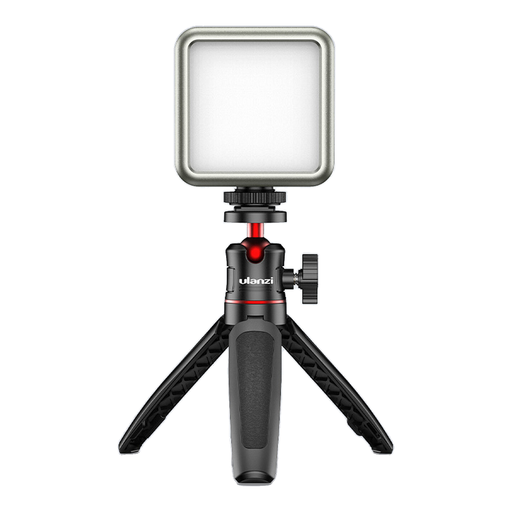
The VL49 RGB is a compact battery-powered light, better suited as a targeted extra than as a proven way to light the whole table.
This selection includes mobile and camera-mounted video lights. For each version, check that the illuminated area, mounting and power supply suit your bookbinding table; a compact setup doesn’t automatically light the whole work surface.
 No image available
The battery and compact design suit a mobile setup or as a targeted extra light for your table.
The listing describes the light as dimmable, with an adjustable colour temperature range of 2500–9500 K. Joybuy Germany also included details for PrimeTrip VB1 on a page labelled Ulanzi VL49, so carefully check the model and features of the specific version.
 No image available
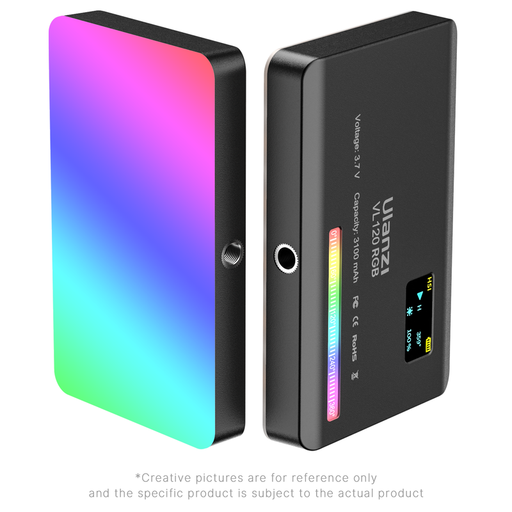
This battery-powered light could suit a mobile camera or table setup if its mounting works with your camera position.
The product description lists 120 LEDs, a built-in battery, a cold shoe mount, RGB colours and an adjustable colour temperature of 2500–9000 K.
 No image available
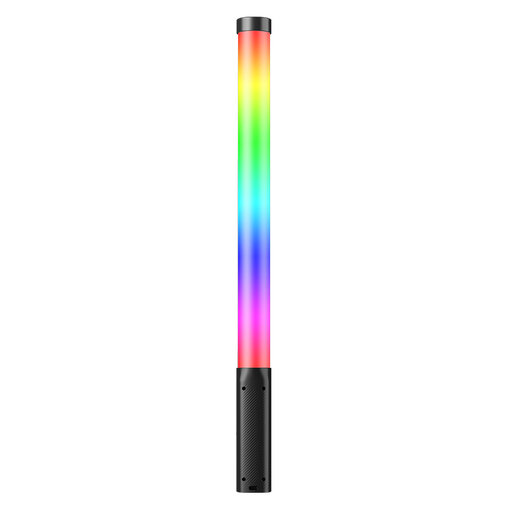
The handheld design and built-in battery suit a mobile setup, provided you can position the light securely.
The product title lists 10 W, 360 lux at 0.5 m, a 3300 mAh battery, RGB and an adjustable colour temperature of 2500–9000 K. The stated illuminance is measured at 0.5 m.
 No image available
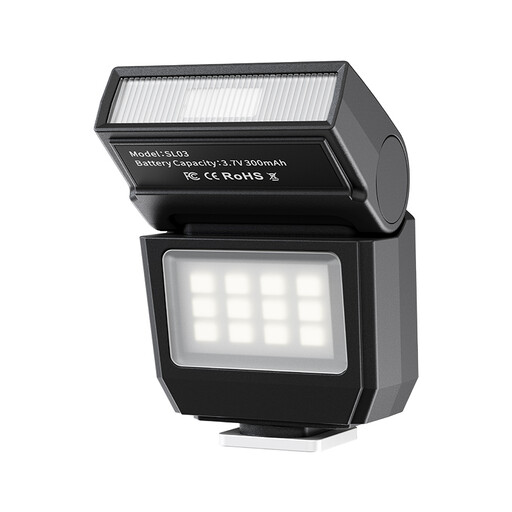
The continuous video light mode could work for camera-mounted lighting if positioning the light directly on the camera suits your work surface.
The product description lists a single-contact hot shoe mount, a head that tilts by 90°, four power levels and USB-C charging. The stated colour temperature is 6500 K; adjustable colour temperature isn’t mentioned.
Start with a diffused light positioned to one side, then film a complete hand movement from your final camera position. Move the light if a shadow falls on the step you’re demonstrating. Diffusion softens shadows, but it doesn’t replace testing your setup.
Match the adjustable light colour to the room lighting that’s switched on, then check the white balance using paper and material samples in the shot. The Kelvin range describes the colour of the light; it doesn’t, on its own, tell you how accurately colours will be reproduced.
First, check a clip using your planned dimming level and camera. With compatible cameras, changing the shutter speed may help; Sony Support lists 1/50 s or 1/100 s as possible settings for a 50 Hz mains frequency. Whether this works depends on the light and camera.
Check whether a tripod, light modifier, mount and the required power supply are included. If a product is faulty, statutory consumer rights against the seller are separate from a voluntary manufacturer’s guarantee. Distance contracts with consumers generally come with a right to cancel, usually within 14 days of receiving the goods, as explained by the Verbraucherzentrale (German consumer advice centre).
The applicable EU conformity requirements depend on the product. For lighting products, the Bundesnetzagentur (German Federal Network Agency) lists requirements including correct CE marking, manufacturer details, a declaration of conformity where required, and a German-language instruction manual with any necessary warnings. CE is a declaration for which the manufacturer is responsible, not an independent quality mark. The published Godox declaration specifically relates to model P260C Pro and doesn’t confirm the features of other models or a particular version on offer.