Instructors working with a large card-making area
If you film both hands and each step from above, your lighting needs to cover the whole work surface. ARRI describes larger, more heavily diffused light sources as one way to create softer light.


For a card-making class at a table, a diffused continuous light that you can position to one side is a sensible starting point when filming the cards and your hands together from above. Then decide whether a free-standing panel, a table clamp or a COB light with a separately chosen modifier best suits your space. Test the colour of the light, shadows and any possible banding with your camera settings.
If you film both hands and each step from above, your lighting needs to cover the whole work surface. ARRI describes larger, more heavily diffused light sources as one way to create softer light.
If paper, stamps and colour combinations are important to your class, check the white balance under the artificial lighting you’ll actually use. Canon Europe explains that challenging lighting conditions may require you to adjust the white balance.
If your camera and craft materials leave little room, the mount and lighting angle need to suit the edge of your table and your filming position. Elgato lists a clamp range of up to 60 mm for the Key Light MK.2; Nanlite notes that its panel needs space for the full setup.
First, check that the light reaches your cards and hands across the whole work surface. Then consider colour, mounting and a test clip free from distractions.
| What to consider | What to check before buying | Who it matters most to |
|---|---|---|
| Visible steps | Film the entire card-making area with both hands in shot; consider the size and positioning of the light source, as well as any diffusion. | When I show cards and hand movements together from above, I want to keep distracting shadows from my hands to a minimum. Around 33% of consumers give top priority to seeing the work surface and steps clearly. |
| Paper and stamp colours | Check the colour temperature and colour-rendering details for the exact model; film a white sheet of paper and your materials in your actual setup. | When I demonstrate colour combinations, I want them to look clear and true to life in the video. Around 27% of consumers prioritise accurate material colours. |
| Space and mounting | Check the table edge, mount and filming angle against your planned camera position; confirm what’s included with the exact variant. | When there’s barely any room for my camera and craft materials, I need a mount that suits my table. Around 20% of consumers prioritise a space-saving setup. |
| Picture and sound | Record a test clip with your intended camera, frame rate, shutter speed, dimming level and microphone position. | When I talk while crafting, I want my clip to have clear sound and no distracting bands. Around 20% of consumers prioritise recording picture and sound with as few distractions as possible. |
Lux ratings depend on the measuring distance and light modifier. A figure quoted with a standard reflector doesn’t tell you exactly how a surface will look with a different softbox and your camera position.
Only compare figures measured under the same conditions. Then use a test clip to check whether the whole area is sufficiently lit and how your hands cast shadows.
The NEEWER NL660 comes in variants with and without a stand; the manufacturer says that NP-F batteries aren’t included. A COB light with a Bowens mount also isn’t a complete softbox setup on its own.
Plan the light head, modifier, mount and power supply as a complete setup for your table. Depending on the variant, you may need to buy a stand, battery, mount or modifier separately.
Setting the white balance correctly affects colour reproduction; flickering light can cause bands in the picture independently of this.
Film a white sheet of paper and the colours you’ll be using with your intended camera settings and at several dimming levels. Also check whether the operating noise is picked up by your microphone.
The NL660 is a bi-colour panel for a setup you can position freely.
The Key Light MK.2 is a panel with a table clamp, suited to a fixed workspace with a compatible table edge.
The PavoSlim 60B is a slim bi-colour panel supplied with light modifiers, according to the manual.
The 100x S is a bi-colour COB light with a Bowens mount, for a lighting setup you put together yourself.
The SL60IIBi is a bi-colour COB light with a Bowens mount, for a suitably equipped setup.
This selection of Joybuy products includes table, ring, photography and camera lights for different setups. For each model, check that it reaches your hands and the card-making area from your planned camera angle.
 No image available
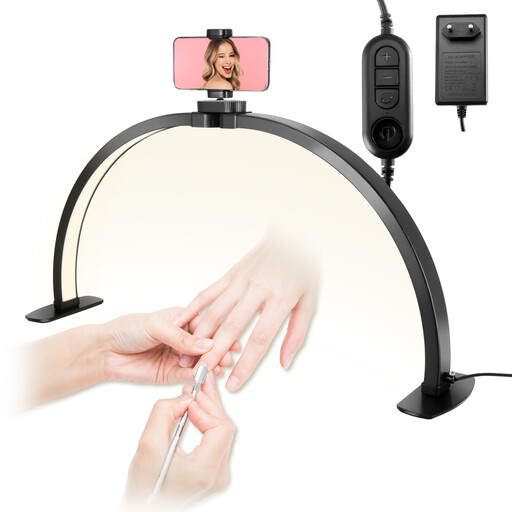
For filming at a table with your smartphone, the phone holder mentioned in the product name may help you frame your shot. Check that the light reaches the entire card-making area.
Listed in the product name: three colour temperatures (3000K–6000K), phone holder and foldable design.
 No image available
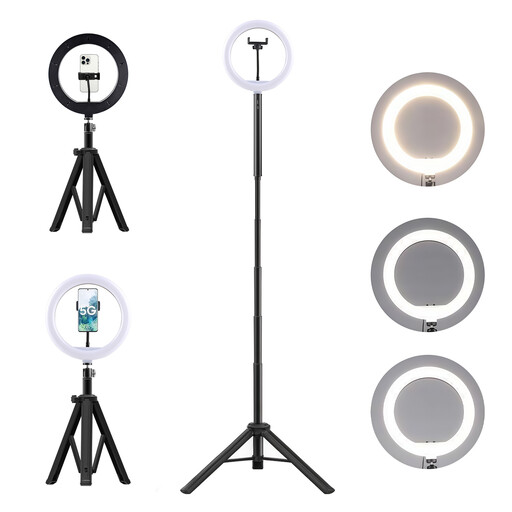
A floor stand may be an option if you have space beside your craft table. Check whether you can position the light and phone to film from above.
Listed in the product name: 10000 mAh power bank, floor stand and LED ring light.
 No image available
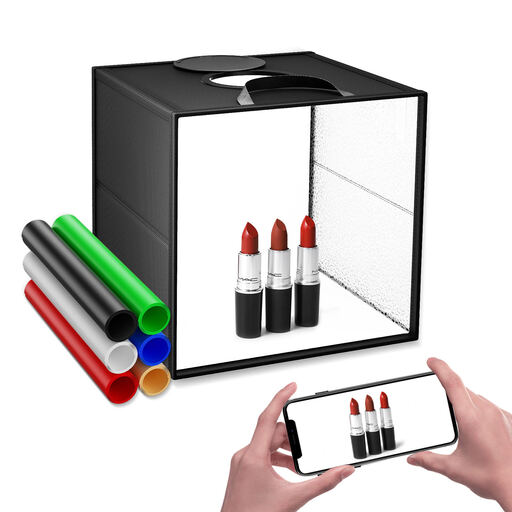
A compact photo box could work for a limited filming area. Before buying, check that your hands and tools will fit in the frame during the steps you plan to film.
Listed in the product name: 40cm, 5600K, 120 dimmable LEDs, six coloured backgrounds and soft light cloths.
 No image available
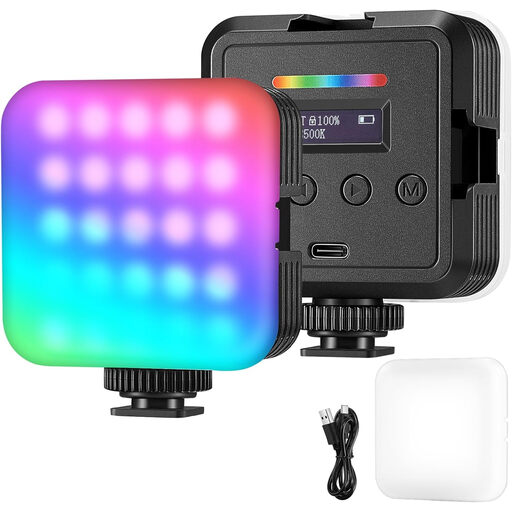
This could work as an extra light for video recording if you can position it to suit your camera. Test the colour and coverage with your paper materials.
Listed in the product name: RGB, portable design and adjustable lighting modes.
Position a diffused light to one side of the camera and film the whole work surface with both hands in shot as a test. According to ARRI, larger, more heavily diffused light sources create softer light; the best position depends on your setup.
The light source and your camera’s white balance affect how colours appear in the video. Check both using a white sheet of paper in your actual setup before explaining material colours in your class.
Record a test clip with your intended lighting and dimming level. For flicker caused by a 50-Hz power supply, Sony lists 1/50 s or 1/100 s as possible shutter speeds; the setting that works depends on your camera and light source.
No, it depends on the specific variant. The NEEWER NL660’s EU manufacturer page lists a power supply and diffuser, but no included NP-F battery; a stand is listed only for the “NL660 with Stand” variant. So check what’s included with the model you’ve chosen.
Depending on the product category, EU regulations may require CE marking. This is a declaration of conformity by the manufacturer, not an independent quality mark. If a purchase is faulty, you have statutory consumer rights against the seller, separate from any voluntary guarantee. According to the German Environment Agency, electrical equipment that has reached the end of its life must not be put in household waste.