What should you consider when buying?
Compact bi-colour panel
A better fit if: table space is limited and you want to supplement the window light.
Consider: Check that the position and diffuser provide suitable light across the mixing area.
Bi-colour COB light with softbox
A better fit if: you film regularly and have room for a stand and light modifier.
Consider: The mount, softbox compatibility and what’s included must all suit your set-up.
Existing window light
A better fit if: the mixing area is already lit sufficiently and evenly while you’re recording.
Consider: Without an additional light, you can’t compensate for changes in daylight. Check the look of the image and white balance before filming.
First decide whether the window light is enough on its own or needs supplementing. Then compare the space required, light modifier and power supply for your specific table set-up.
| Consideration |
What to check before buying |
Who is it important to? |
| Consistent, true-to-life colours |
The colour temperature range and colour-rendering specifications for the exact model; test the white balance in your own set-up. |
If you want to compare colour stages in a lesson, consistent reproduction matters more than a figure on a spec sheet. Around 40% of consumers who film colour mixes prioritise consistent, true-to-life colours. |
| Light on the mixing area and hands |
Check the light modifier and its position; compare brightness figures only at a similar distance and with the same equipment. |
If shadows could obscure your hands or mixing area, you need a light that covers your work space appropriately. Around 30% of consumers who film a colour-mixing lesson prioritise even lighting. |
| Space and set-up |
Measure the space needed for the light, mount and cables; check whether a diffuser and stand are included. |
If the camera, containers and mixing area already take up table space, a compact set-up becomes important. Around 20% of consumers who film at a small work table prioritise a small footprint and easy set-up. |
| Sound and power supply |
Check the model’s cooling method and power supply; listen for any noise in your own recording set-up. |
If you speak while explaining, you’ll want to avoid distracting noise and awkward cable routes. Around 10% of consumers recording lessons like these prioritise quiet operation. |
Joybuy products for your video set-up
This selection includes compact fill lights and bi-colour lights for a flexible window-side or table-top set-up, as well as set-ups using a separate light modifier.
 No image available
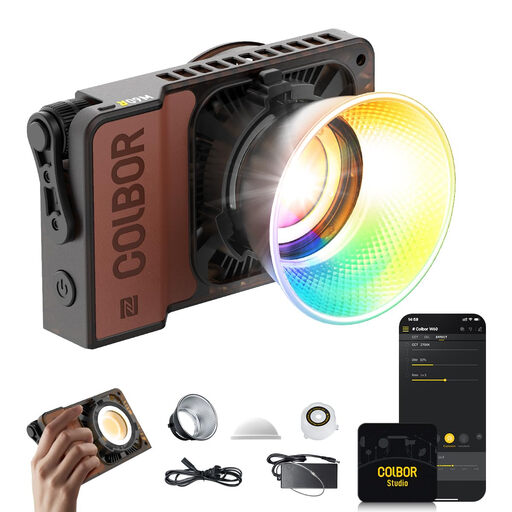
COLBOR W60R RGB video light, 60 W
Described as a portable fill light for a flexible set-up.
Manufacturer specifications: 2700–6500 K and CRI 97+; the product name specifies RGB and 60 W.
View at Joybuy
 No image available
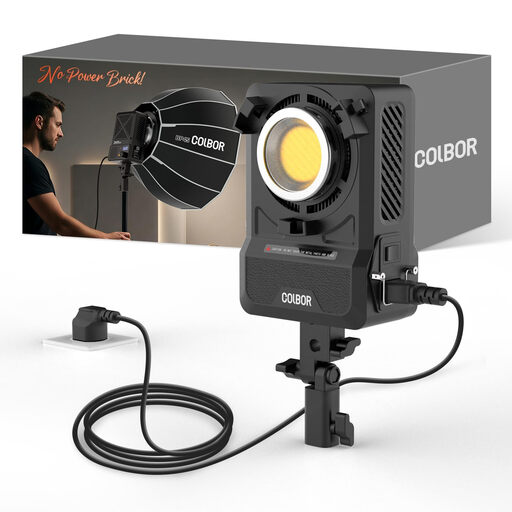
COLBOR 200W bi-colour COB video light
The COB design and Bowens mount are useful for a set-up with a compatible separate light modifier.
The product name specifies 200 W and 2700–7000 K. Make sure the light modifier is compatible if you plan to use a softbox.
View at Joybuy
 No image available
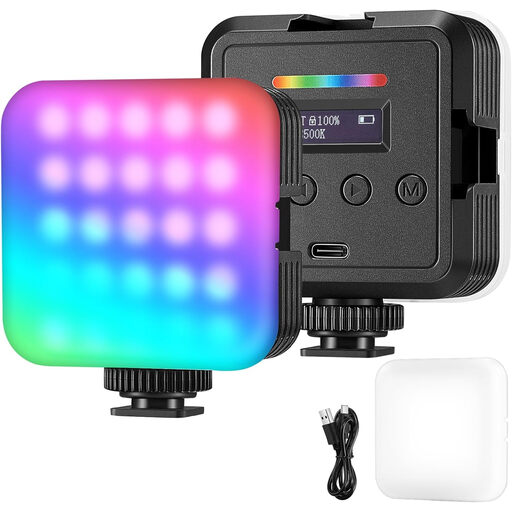
RGB LED video light for camera
The product description presents it as a portable light for photography, video and streaming.
Features listed include RGB, white and warm-light modes, adjustable colour temperature and brightness, and battery or USB power.
View at Joybuy
 No image available
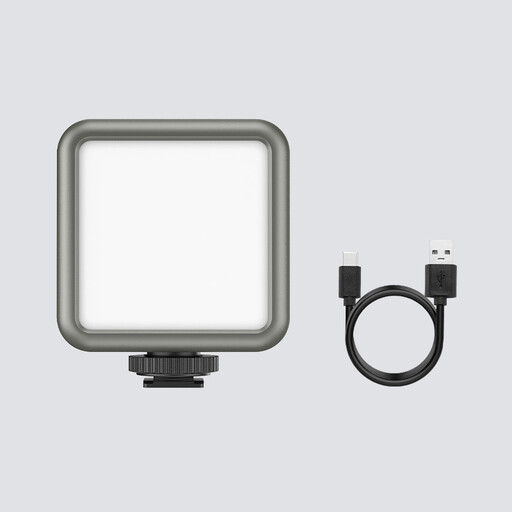
ULANZI VL49 RGB LED video light
This compact light is worth considering as a fill light for a flexible camera or table-top set-up.
The product name specifies a 2000-mAh battery, dimming and 2500–9500 K.
View at Joybuy
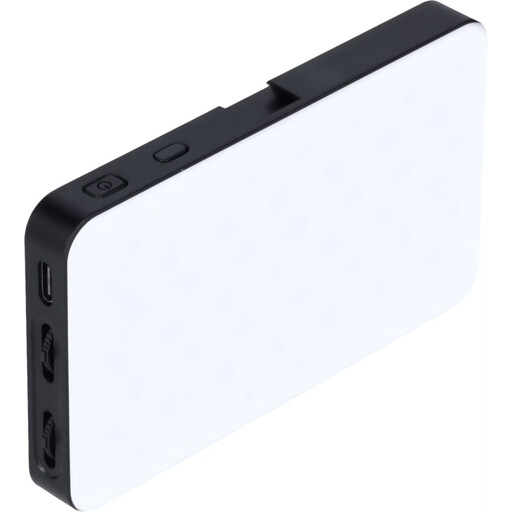 No image available
Rollei LUX Compact RGB LED Light, 8 W
The compact design and mounts described are useful for a mobile camera or table-top set-up.
The product description lists 2500–9000 K, 125 g, and Cold Shoe and 1/4-inch mounts. The product name specifies 360 colours and app control.
View at Joybuy
Frequently asked questions
How do I set up my camera for consistent colour reproduction?
Check the white balance under the combination of lighting you’ll actually be using before you record. A white or grey reference can help when setting a custom white balance; check how to do this on your camera.
Does a higher lux figure automatically make shadows softer?
No. According to the ARRI Lighting Handbook, shadow hardness depends on the size or diffusion of the effective light source, not just its intensity. So compare lux figures with the distance and reflector or light modifier used in mind.
What should I check before setting up a mains-powered light?
Check the instructions for the exact model, that you have the right power connection, and that the light can be placed securely in a dry spot. The Godox manual includes guidance for the SL60IIBi on glare, hot parts, moisture and safely routed cables. These model-specific instructions don’t necessarily apply in exactly the same way to other lights.
What legal requirements apply to electric video lights sold in Germany?
For certain electrical and electronic products, the German Federal Network Agency checks matters including CE marking, manufacturer details and required German-language warnings. CE marking is the manufacturer’s declaration that the relevant requirements have been met; it is not independent proof of colour accuracy.
Is a manufacturer’s warranty the same as the statutory warranty?
No. The Verbraucherzentrale distinguishes the statutory warranty you have against the seller from a voluntary manufacturer’s warranty with its own terms and conditions. If you need to make a warranty claim, check the specific warranty terms; for statutory warranty claims, contact the seller.


