Restorers who care about colour
If you want the wood tones and surface texture of your restored cabinets to remain visible, controllable light is more useful than simply adding brightness.


If the window already brings out the wood grain well, start with a white reflector. An additional dimmable continuous light is most useful for dark sides of the cabinet or for repeatable shots when daylight changes. When lighting an entire radio cabinet, controllable, sufficiently large, soft light and a suitable modifier matter more than a high lux reading from a narrow reflector. Also consider the space you have, the power supply and the colour of the light in relation to your setup.
If you want the wood tones and surface texture of your restored cabinets to remain visible, controllable light is more useful than simply adding brightness.
If you photograph several views or cabinets, a consistent setup helps keep the lighting similar even as daylight changes.
If you set up your lighting in different places, plan for space, power and suitable light modifiers together.
Best when: the window already provides enough light and you mainly want to brighten the side facing away from it.
The trade-off: A white reflector requires little extra equipment, but window light depends on the weather and time of day. The Adobe Lightroom Academy notes that studio lighting is easier to reproduce than changing natural light conditions.
Best when: you want to control the light and colour, or photograph several cabinets under similar conditions.
The trade-off: A softbox needs space and a compatible mount. Lux readings taken with a standard or Hyper reflector do not tell you how brightly a softbox will light your subject.
Best when: you often change your shooting location or a power socket is inconveniently placed.
The trade-off: Check that any battery adapter and light modifier are compatible with the specific light and included in the box.
| What you need | What to check when buying | Who is this especially important for? |
|---|---|---|
| Lighting the entire cabinet | The size and mount of a suitable softbox; compare lux readings only at the same distance and with the same modifier. | If I want to brighten an entire cabinet beside a side window, I look for a sufficiently large modifier rather than focusing only on the light’s output. Around 40% of consumers would put lighting the whole cabinet first. |
| Controlling wood colour and reflections | Adjustable colour temperature and the ability to check the light position and reflections on the subject. | If I want the wood tone and glossy surfaces to remain clear, I check the colour of the light and adjust its position if needed. Around 30% of consumers would prioritise controlling colour and reflections first. |
| Repeating similar shots | Repeatable dimming and colour temperature settings, as well as a suitable power supply. | If I’m photographing several views in changing window light, I want to be able to repeat the lighting with a consistent setup and similar settings. Around 20% of consumers would put repeatability first. |
| Setup and power supply | Mains or battery power, and accessories suited to your planned setup. | If I move the light around the room or don’t always work near a power socket, I check in advance which power supply and accessories are compatible. Around 10% of consumers would prioritise portability first. |
Measurement distances and reflectors vary between manufacturers’ specifications. A reading like this does not automatically show how evenly a softbox will light the entire front of a cabinet.
Compare figures only at the same distance and with the same setup, and plan for the required modifier separately.
Mounts and what’s included in the box vary between models and ranges. You may also need a suitable modifier, a stand or a battery adapter.
Before ordering, check the exact model name, mount, power supply and included accessories.
Window light changes throughout the day. An adjustable colour temperature alone won’t automatically give you a consistent series of images.
Keep your setup and camera settings as consistent as possible for comparison shots, and check the colour and reflections directly on your subject.
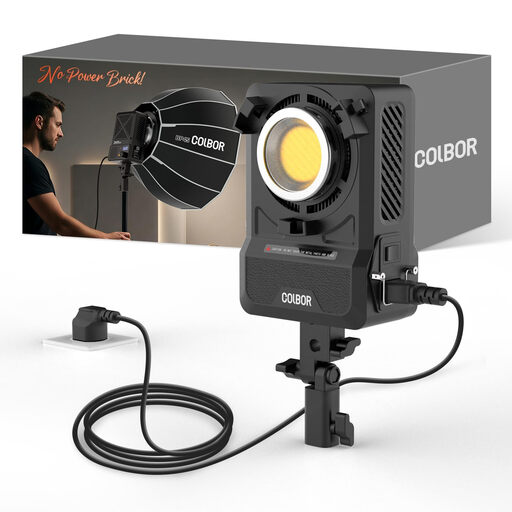
The SL60IIBi is an adjustable bi-colour COB light designed for setups using Bowens modifiers.
The 100x S is a bi-colour COB light with a Bowens mount, suited to a fixed setup with your choice of modifier.
The FS-150B offers bi-colour light and a Bowens mount for mains-powered photo and video setups.
The Candela 100 Bi-Color is a compact option if you’re considering a portable setup as well as mains power.
The Joybuy options below range from a COB light with a Bowens mount to compact camera and video lights. For your radio cabinet, check that the modifier, positioning and power supply suit your setup.
 No image available
For a fixed setup with adjustable brightness and bi-colour light.
Colour temperature: 2,700–7,000 K.
Bowens mount and built-in power supply.
 No image available
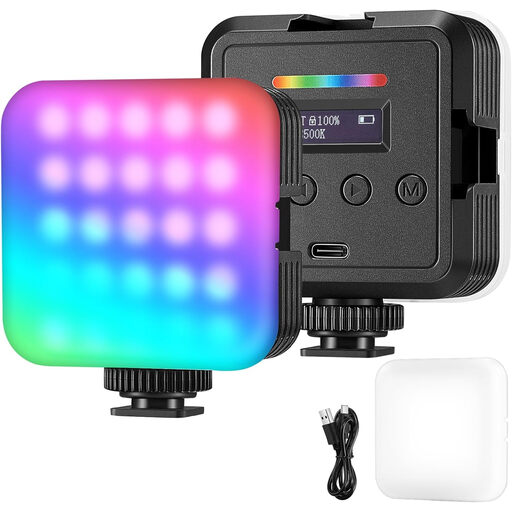
A compact option if you want to position lighting flexibly for photography and video.
RGB, white light and warm light modes; adjustable brightness and colour temperature.
Battery and USB power.
 No image available
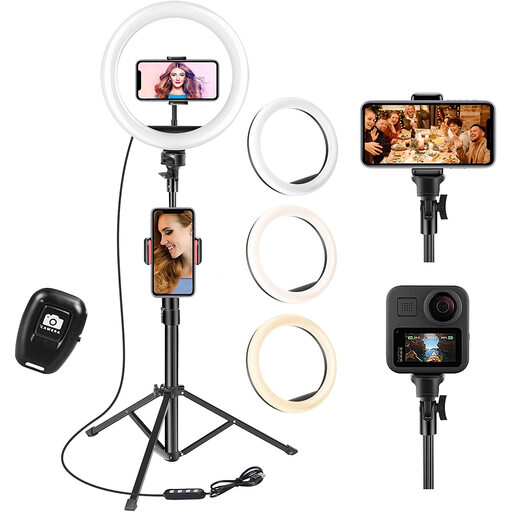
For a raised lighting setup if you want a stand to be part of your chosen solution.
Three colour temperatures and ten brightness levels.
The product description lists a stand that extends up to 63 inches.
 No image available
A compact light for product photography if you want to add portable lighting to your setup.
RGB and dimmable light; colour temperature: 2,500–9,500 K.
2000 mAh battery and magnets on the back.
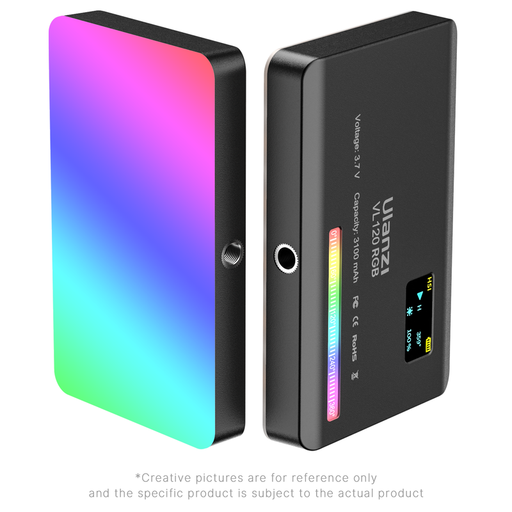 No image available
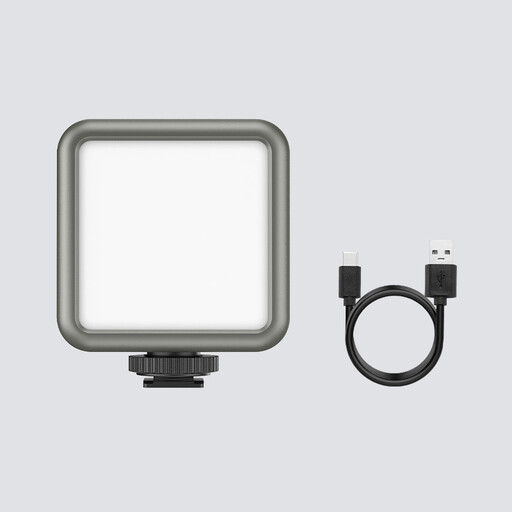
For a flexible camera or tripod setup, with a built-in battery.
CCT and RGB modes, plus adjustable brightness.
A silicone diffuser and cold shoe adapter are listed.
If you only need to brighten the shadow side a little, try placing a white reflector opposite the window first. If that side is still too dark, or you need controllable light across several shots, consider a dimmable light. The result depends on the window, the distance and the cabinet.
Check reflections through the viewfinder and first try changing the position of the light or camera; a larger modifier changes the shape of the reflection you see. Nikon explains that a polarising filter can reduce certain reflections, but it cannot replace positioning the light correctly.
Check the specific listing to see whether it includes a suitable modifier, a compatible stand and the power supply you need. A Bowens mount or confirmed adapter gives you a wider choice of modifiers, but does not guarantee that everything you need is included.
The Verbraucherzentrale states that online orders generally come with a 14-day withdrawal period from the date the goods are received; exceptions and specific return conditions apply. As part of market surveillance, the Bundesnetzagentur checks products that require the relevant markings, including product identity, manufacturer details and required German safety information. A CE mark does not confirm photographic performance.