Photographing fabric texture
If you want to show weave, embroidery or relief in detail, you should be able to change the direction of the light on the costume. Adobe also describes texture as an important aspect of macro photography.


To show fine fabric texture, you need to be able to change the direction of the light. With sequins and beads, it’s also important to control harsh reflections. A compact battery-powered light is better suited to short shoots in changing locations, while a COB light with a compatible modifier is a better fit for a permanent set-up – but you’ll need more space and should plan for power and accessories.
If you want to show weave, embroidery or relief in detail, you should be able to change the direction of the light on the costume. Adobe also describes texture as an important aspect of macro photography.
With beads, sequins or metal details, you need to balance showing their shape against avoiding distracting hotspots. Adobe notes that harsh, direct light can create strong shadows and bright highlights.
If you’re changing locations, consider size, mounting and power together. A built-in battery can make setting up easier, but battery life depends on the model and operating mode.
Start by deciding whether you mainly want to control texture, reflections, colour reproduction or a mobile set-up. Then check that the light and accessories will work in your shooting space.
A good fit if: you often change locations and light small sections of a costume from close range.
Keep in mind: Ulanzi quotes 800 lux at 0.5 m for the VL49 RGB. Check that the light’s coverage and mounting options suit your particular set-up.
A good fit if: you want to stay mobile while still using a compatible light modifier.
Keep in mind: SmallRig quotes a maximum run time of 45 minutes at full power for the RC 60B Lite Edition; softboxes are optional.
A good fit if: you regularly photograph costume details in one place and want to shape the light’s angle and character.
Keep in mind: Mounts and power options vary. Allow for a compatible modifier, mounting equipment and enough space to set everything up.
| What you want to achieve | What to check when buying | Who it matters most to |
|---|---|---|
| Show fabric texture | Adjustable light position and brightness; check texture and shadows in a test shot. | If I want to bring out the texture of a weave or embroidery, I need to change the angle and assess the shadows directly in the camera image. Around 36% of consumers put visible texture first. |
| Control highlights | Room for a suitable diffuser; adjustable light angle and distance. | With sequins, beads or metal details, I want to reduce distracting hotspots without losing the shape of the embellishment. Around 29% of consumers prioritise controlling reflections. |
| Reproduce colours consistently | Check the colour temperature of the exact model variant; test costume colours with a fixed white balance. | When several fabric colours appear in the image, I want to judge them under the lighting I’ll actually use. Around 21% of consumers focus mainly on colour reproduction. |
| Stay mobile | Run time at the required power level; check the power source, mounting and accessories included. | If I change locations during a shoot, the light and power supply need to suit the new set-up. Around 14% of consumers put portability first. |
Lux figures refer to a specific distance and set-up. They don’t automatically show how evenly your costume detail will be lit with an additional diffuser.
Only compare figures measured at the same distance and with the same modifier. Also check the usable area of light directly on your subject.
Ulanzi gives different specifications for the VL49 RGB, the VL49 Pro and the VL49 white-light version, including differences in light colour and battery.
Check the full model name and compare the key specifications you need with the details for the specific product.
A mount for accessories doesn’t mean that a softbox, stand or batteries are included in the package you choose.
Check the mount, what’s in the box and how much space you have. The manufacturer says batteries for the amaran COB 60x S are sold separately; SmallRig describes softboxes for the RC 60B Lite Edition as optional.
Compact lights for short, mobile detail shoots; the VL49 RGB is an adjustable mini panel.
The RC 60B Lite Edition is a battery-powered COB option for mobile set-ups, with optional light-shaping accessories.
The ML60II Bi is a compact bi-colour COB light for set-ups with interchangeable power options and compatible modifiers.
The COB 60x S has a Bowens mount for compatible modifiers, making it a good option for a permanent shooting space.
The CB60B is a bi-colour COB option with a Bowens mount for a permanent set-up.
The models below include compact, portable video lights as well as COB lights for a permanent set-up. There’s also a foldable 30-cm light box designed for small still-life subjects such as accessories.
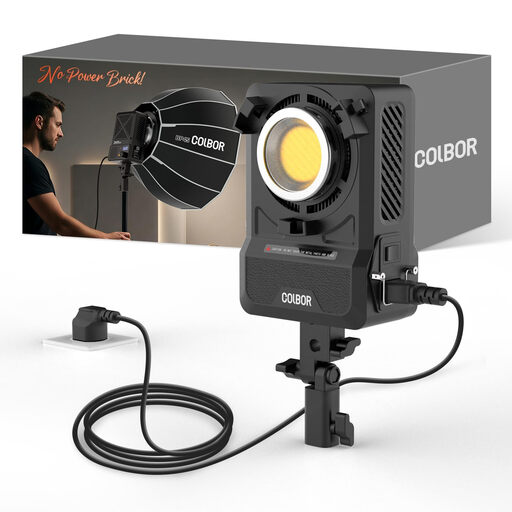 No image available
For a permanent set-up with a compatible Bowens modifier.
200 W; bi-colour 2,700–7,000 K; Bowens mount; built-in power supply design.
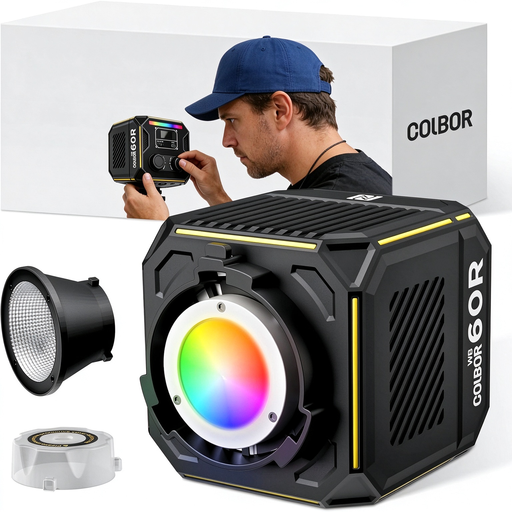 No image available
For mobile shoots if you’re looking for a portable COB light with a built-in battery.
59-Wh battery; bi-colour 2,700–6,500 K; RGBCW; product description states one hour of use at maximum brightness.
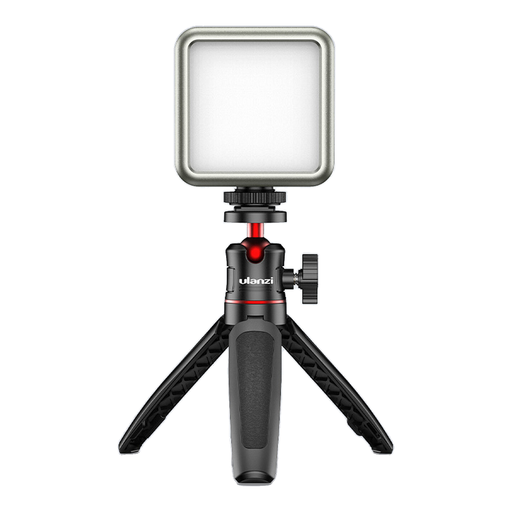 No image available
For short detail shoots on the go when you need a compact light with adjustable brightness.
2,000-mAh battery; dimmable; rear magnets require a suitable metal surface.
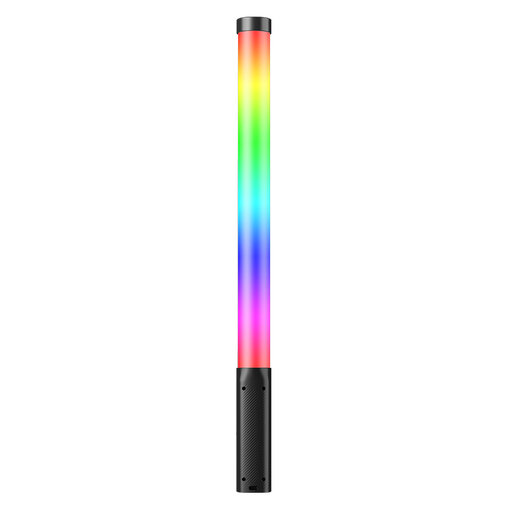 No image available
For mobile photo and video shoots when you want a handheld light with adjustable colour temperature.
10 W; 3,300-mAh battery; RGB; adjustable colour temperature from 2,500–9,000 K.
 No image available
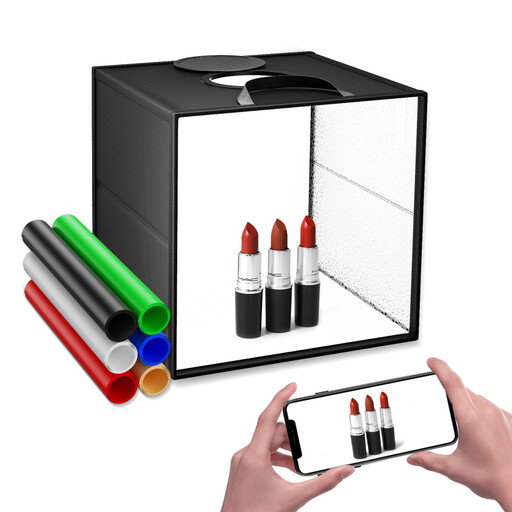
For small costume accessories or jewellery photographed as still-life subjects; the light box is designed for small items.
30 cm; 120 LEDs; three colour temperatures; nine brightness settings; six coloured background sheets.
Start by positioning an adjustable continuous light at an angle to the detail, then check the texture and shadows in the camera image. Adjust the angle and brightness next; the continuous-light preview makes it easier to compare.
First, try changing the angle of the light. A suitable diffuser can soften harsh highlights and shadows. Then check that the surface texture you want is still visible. Adobe describes harsh, direct light as a possible cause of sharp highlights and shadows.
No, it depends on the model and package. SmallRig describes softboxes for the RC 60B Lite Edition as optional; amaran lists batteries for the COB 60x S as sold separately. Check the contents, mount, attachment and power supply for the exact version.
According to the European Union’s guidance, CE marking is only required for products covered by relevant harmonised legislation that requires it. The German Environment Agency notes that waste electrical and electronic equipment must not go in household rubbish and should be collected separately.