Craft projects where colour matters
You want to show painted colours as accurately as possible in documentation or product photos, and you can control the lighting and white balance.


When photographing hand-painted Easter eggs under artificial light, look for clear information about colour rendering and set the white balance to suit your actual lighting for consistent results. Light diffusion and positioning also matter when photographing shiny, curved eggs. A panel with a diffuser can make a tabletop setup simpler, while a COB light with a suitable modifier gives you more ways to shape the light, but may need more space or accessories.
You want to show painted colours as accurately as possible in documentation or product photos, and you can control the lighting and white balance.
You’re looking for a light that you can position around a single egg without harsh shadows or distracting reflections obscuring the design.
You take photos in different places and are weighing up wireless use against battery life, power supply and the accessories you’ll need.
A good fit if: You take photos at a fixed table and want a light with a diffuser that you can position directly.
Consider: Whether a stand is included with the NEEWER NL660 depends on the package variant. Also check that the panel will fit alongside your camera and subject.
A good fit if: You have room for the light and modifier, and want to vary the shape and direction of the light.
Consider: A Bowens mount and an umbrella holder are different ways to attach accessories. A suitable modifier isn’t necessarily included in the package.
A good fit if: You often change your shooting location or don’t always have access to a mains socket.
Consider: For the SmallRig RC 60B, version 4376B, the manufacturer quotes different run times depending on the operating mode. Battery-powered convenience doesn’t replace the need for suitable light diffusion.
When photographing hand-painted Easter eggs under artificial light, colour rendering, reflection control, space and power supply all play different roles. The percentages refer to each shopper’s main priority when buying a light for this type of photography.
| Priority | What to check when buying | Who is this important to? |
|---|---|---|
| Colour rendering | Colour reproduction and adjustable colour temperature; test the white balance against a neutral reference under the actual lighting conditions. | If I want my painted colours to look true to life, I’d check the light alongside the camera’s white balance. Around 36% of consumers put colour rendering first. |
| Reflections and shadows | Check whether a diffuser or suitable modifier is available, and whether you can move the light and egg around for test shots. | If reflections show up on the curved egg and obscure details, controlling diffusion and positioning is what matters most. Around 29% of consumers make this their top priority. |
| Space and positioning | Compare the dimensions, mounting options and stand requirements for the specific variant. | At a small table, I want to arrange the camera, egg and light so the subject is easy to reach. Available setup space is the main concern for around 21% of consumers. |
| Power supply and run time | Check the power options for the exact version, the quoted run time in the mode you plan to use, and whether charging accessories are included. | If I’m shooting in different places without continuous access to a mains socket, I want to choose a run time and charging option that suit the planned shoot. Around 14% of consumers prioritise portable power. |
The manufacturer’s figures for the amaran 60x S distinguish between the bare light and the reflector. A diffuser or softbox changes the setup, so these figures aren’t automatically comparable.
Compare brightness readings only at the same distance and with similar light shaping, and check what’s included in the specific package.
An additional modifier or stand may take up extra space and require further accessories.
The colour of the light and the camera’s white balance both affect how painted colours appear in a photo. A CRI or TLCI rating alone doesn’t guarantee colour accuracy.
Before taking a series of photos, shoot a neutral reference under the actual lighting conditions and check the result.
For the SmallRig RC 60B version 4376B covered here, the manufacturer quotes different run times depending on the operating mode.
Plan for your longest shoot and check the power options and charging accessories for the exact version you want.
The PD charger specified by SmallRig for the RC 60B is sold separately.
The NL660 is a bi-colour panel for a tabletop setup you can position as needed.
The 60x S is a compact bi-colour COB light, and you’ll need to allow for modifiers separately.
The SL60IIBi is a mains-powered option with a Bowens mount; according to Godox, the ML60II Bi offers additional power options.
The RC 60B is a compact COB option for shooting in different locations.
The FS-60B is a mains-powered bi-colour light and an option for a fixed shooting location.
This Joybuy selection includes compact photo and ring lights for small product subjects. With curved, potentially shiny eggs, check beforehand that you can position the light appropriately and control it sufficiently.
 No image available
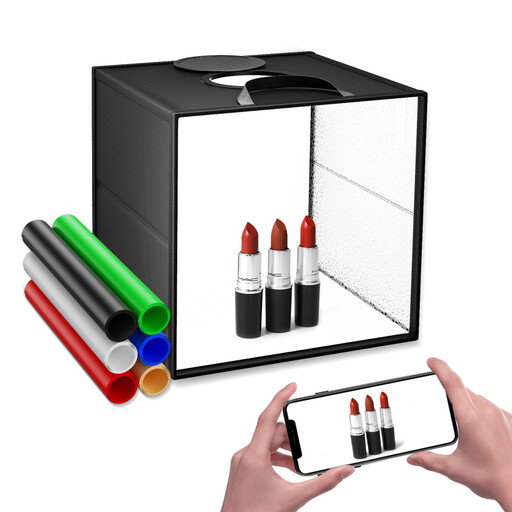
The product title describes this light as suitable for product photography; check that the setup will fit on your table.
The title lists 120 LEDs, three colour temperatures, nine brightness levels and backdrop paper in six colours.
 No image available
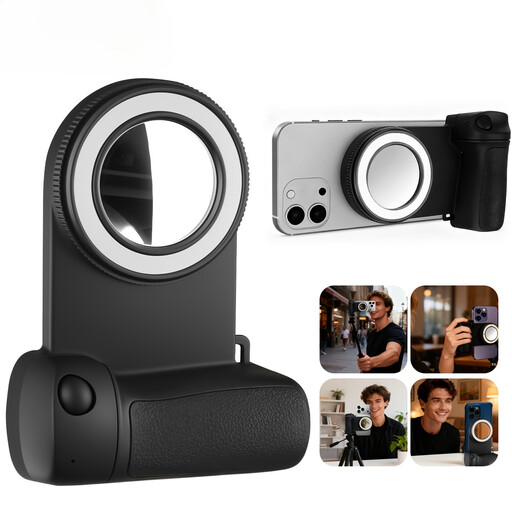
If you’re taking photos with a smartphone, you could consider a camera grip with an integrated fill light. Check how your phone attaches first.
The title lists a Bluetooth shutter, a selfie mirror, adjustable light and a rechargeable Type-C battery. According to the product information, your phone or case must support magnetic attachment.
 No image available
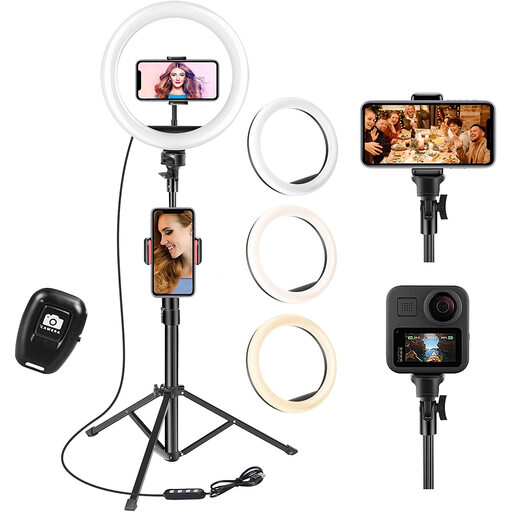
If a ring light suits your tabletop setup, check whether you can position it so that reflections don’t obscure important details on the egg.
The title lists a remote control, three colour temperatures and ten brightness levels.
 No image available
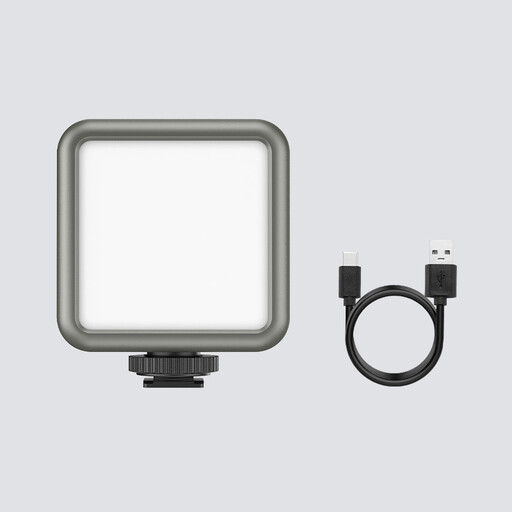
The product title lists macro and product photography as uses; check whether you can position the compact light as needed for your subject.
Specifications include RGB, a 2000-mAh battery, 2500–9500 K and magnets on the back.
 No image available
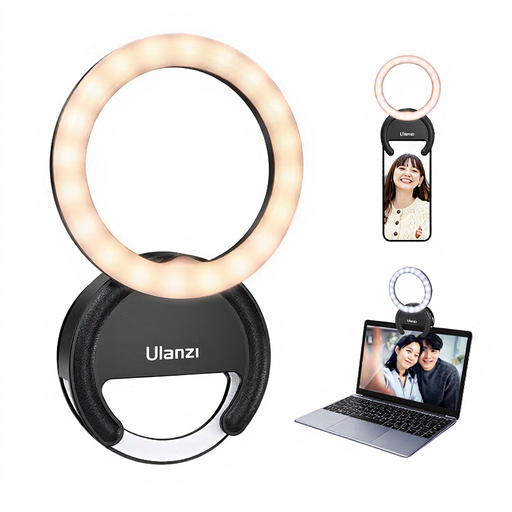
If you’re looking for a small ring light for photos or video, check that its mounting method suits your shooting location.
The title lists three colour temperatures from 3000–7000 K, five brightness levels and use with a phone or laptop.
No. Set the white balance under the actual lighting conditions and check the result against a neutral reference. A Kelvin setting or high CRI rating alone doesn’t prove that the finished photo will be colour-accurate.
Start with diffused light, then adjust the position of the light and egg until reflections no longer obscure important details. Canon Europe describes diffusion as a way to soften harsh shadows; check the result directly on the egg.
It depends on the model and variant. The NEEWER NL660 is available in packages with or without a stand. The SmallRig RC 60B described here has a built-in battery, while SmallRig lists a particular PD charger as sold separately. Before buying, check the contents of the exact variant.
It depends on the model and operating mode. For the SmallRig RC 60B, version 4376B, the manufacturer quotes 45 minutes at full power and 75 minutes in ECO mode. Check that the run time suits your planned shoot.
Follow the instructions for the specific model. For the SL60IIBi, Godox warns against looking directly into the light source or touching hot parts, among other things, and requires dry operation and caution when children are nearby. These instructions apply to the model mentioned.