What to look for when buying
Bi-colour panel with diffuser
A good fit if: you want to light an entire façade or several small houses and position a panel without a separate softbox attachment.
Consider: Positioning and avoiding shadows are still important. NEEWER says its bi-colour model is less bright than its own single-colour alternative.
Bi-colour COB light with light shaper
A good fit if: you want to choose the light shaper and direction of the light separately, and have enough room for a secure set-up.
Consider: A reflector rating doesn’t tell you how the light will perform with a softbox; the connection type and what’s included with the specific combination are key. The amaran 60x S has active cooling.
Small battery-powered fill light
A good fit if: you want to highlight individual parts of a building or often move between shooting locations.
Consider: A small accent light won’t necessarily replace your main lighting; allow for its run time and any additional mounting parts you may need.
This table compares the options according to the different priorities involved in photographing miniature wooden houses under artificial light.
| What to consider |
What to look for when buying |
Who it matters most to |
| Shadows and overall lighting |
Check that the light is dimmable and can be positioned as needed, and see whether a diffuser is included or compatible. |
If I want to show the façade and roof together, overhangs shouldn’t obscure important areas. Around 36% of consumers prioritise even lighting across the model. |
| Wood tones under artificial light |
Check the colour temperature range of the exact model and take a shot of a neutral reference on set. |
If I want different wood surfaces to look true to life in the photo, I match the light and white balance to the existing lighting. Around 29% of consumers put natural wood tones first. |
| Accentuating small features |
Check the positioning, mounting options and light shaper; use accent lighting alongside the main lighting if needed. |
If I want windows, doors or roof edges to stand out, I need a light that can be directed precisely at these details. Around 21% of consumers prioritise lighting individual parts of a building. |
| Power supply and set-up |
Check the run time at your intended power setting, the power supply and what’s included with the exact variant. |
If I move between shooting locations or work somewhere without a readily available power socket, I pay particular attention to the battery and mounting options. Around 14% of consumers put portability first. |
Joybuy products for portable fill lighting
The following Joybuy products are compact options for portable fill lighting. For camera flash and action camera models, compatibility with your camera is key. If you’re lighting a whole miniature house, check that the light’s size and positioning will be suitable.
 No image available
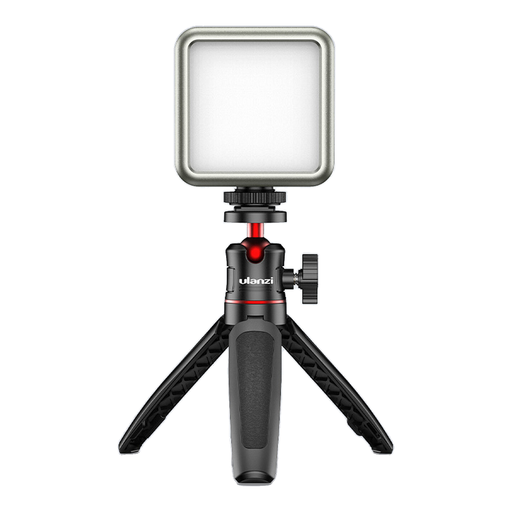
ULANZI VL49 LED video light
A compact portable fill light for close-up shots; the product name specifies a magnetic back.
Battery: 2000 mAh. Colour temperature: 2500–9500 K. The product name specifies that it’s dimmable.
View at Joybuy
 No image available
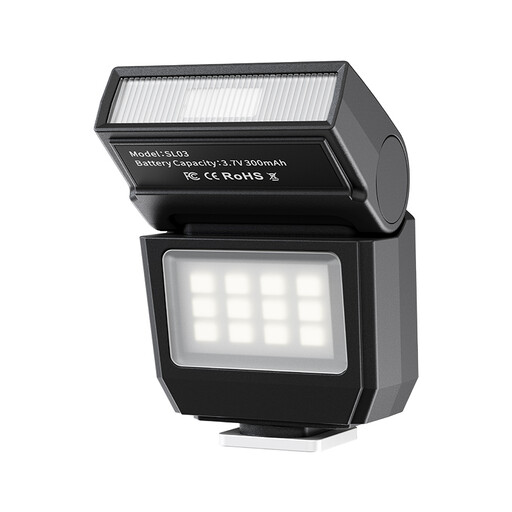
Ulanzi SL03 mini camera flash with video light
This model combines a mini camera flash with a continuous video light function. Before buying, check that the single-contact hot shoe is compatible with your camera.
Video light: four power levels. Flash head: tilts by 90°. Other specifications: GN8, 6500 K and power levels from 1/8 to 1/1. The product name states that it’s designed for Sony, Canon and Fuji DSLR cameras.
View at Joybuy
 No image available
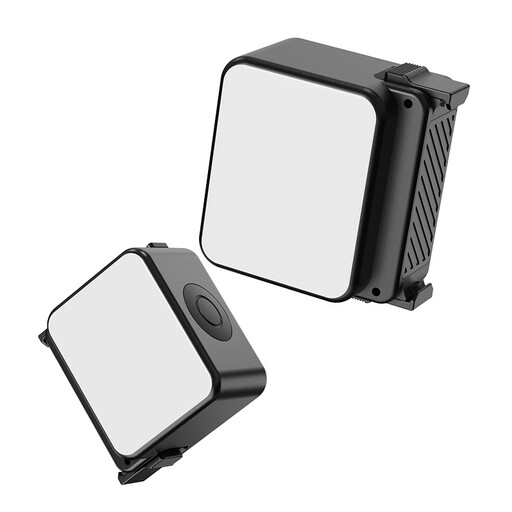
Ulanzi LM18 mini video light
A compact fill light for a compatible DJI action camera; the product name specifies a magnetic quick-release mount.
Battery: 500 mAh. The product name specifies compatibility with DJI Osmo Action 3/4/5/5 Pro.
View at Joybuy
Frequently asked questions
Is a high wattage or lux rating enough to choose a light?
No. A single figure doesn’t tell you how the light will look on the model with your set-up. Aputure lists different lux ratings for the amaran 60x S with and without a reflector; Godox gives its maximum rating with the standard reflector at a distance of 1 m. Only compare figures measured under similar conditions, and assess shadows based on the light’s position and the light shaper used.
How can I check wood tones under existing artificial lighting?
Where possible, match the additional light to your existing lighting and take a shot of a neutral reference on set. Nikon shows that automatic white balance and white balance set using a white card can produce different results.
What else will I need besides the light?
It depends on the exact variant and your set-up. A tripod is an optional package configuration for the NEEWER NL660, and NP-F batteries aren’t included. The Nanlite PavoTube II 6C manual doesn’t list a tripod or clamp as included; SmallRig describes softboxes for the RC 60B Lite Edition as optional.
What should I check for electrical product safety?
Look for clear manufacturer information and the details required for the specific product. The Federal Network Agency lists CE marking, manufacturer information, German-language instructions and a declaration of conformity among the points it checks during market surveillance. According to the European Union, the CE mark is the manufacturer’s declaration that the product meets the relevant EU product rules; it isn’t an independent EU quality mark.
What are my rights if an online purchase in Germany is faulty?
Your statutory rights relating to faulty goods apply against the seller and are separate from a voluntary guarantee. The consumer advice centre also explains that many online purchases come with a right to cancel, usually within 14 days of receiving the goods; the conditions and exceptions depend on the specific contract.


