Which approach is right for you?

Collectors documenting details

If you want to record the front and back, as well as small embossed details or damage, check how large the smallest detail appears in the image. Nikon Deutschland and Sony Deutschland each list a compatible macro lens with a 1:1 magnification ratio.

Sellers taking regular product shots

When photographing several badges against the same white background, a consistent camera position, controlled lighting and a correctly set white balance all matter. Adobe highlights controlled lighting and white balance as important aspects of product photography.

Beginners with limited space

If you want to get close without changing lenses, check not only for a close-up mode but also whether there’s enough room between the camera, badge and light. OM Digital Solutions says the TG-7 can shoot from as close as 1 cm in the relevant mode.

What should you look for when buying?

Compact camera with close-up mode

A good fit if: You want to photograph individual badges without changing lenses and keep your setup simple.

Bear in mind: It can be harder to position the light when shooting from very close up; the focusing distance is not the same as a 1:1 magnification ratio.

Interchangeable-lens camera with standard zoom

A good fit if: You mainly need overall shots to begin with and may want to add a suitable lens later.

Bear in mind: A standard zoom is not automatically a 1:1 macro lens; check the magnification ratio of the lens actually included.

Interchangeable-lens camera with macro lens

A good fit if: You regularly want to capture small embossed details or damage at a larger size and in fine detail.

Bear in mind: The lens must fit the camera mount, and you’ll need room around the subject for lighting and a steady setup.

Existing smartphone or camera device

A good fit if: You want to start with overall shots and your existing device can capture the smallest relevant detail sharply and at a sufficient size.

Bear in mind: Test close-up shots with the actual subject; a white background alone won’t provide suitable lighting or the right white balance.

What you need What to check when buying Who it matters most to
Small embossed details and damage Magnification ratio of the specific lens and the size of the smallest detail; a stable support or tripod if needed. If I want to capture tiny marks or damage so they fill the frame, the size of the detail matters more than a stated focusing distance alone. Around 36% of consumers prioritise capturing fine detail.
Consistent whites and metal colours White balance and exposure options, as well as enough space for controlled lighting. If I want to photograph several badges consistently, I need the same perspectives and lighting conditions. Around 29% of consumers prioritise consistent product shots.
Easy close-up photography Close-up mode on the specific camera model, suitable framing and enough room to position the light. If I want to switch between overview and detail shots without changing lenses, a built-in close-up mode is useful. Around 21% of consumers prioritise a simple setup.
Total cost of a suitable setup What’s included, the lens mount and the magnification ratio of the supplied lens; also factor in any additional lighting or stable support you may need. If I want to reuse equipment I already own or get the most out of a kit, I first check whether the supplied lens can capture the smallest details. Around 14% of consumers prioritise the total cost.

Common misconceptions

  • A very short minimum focusing distance automatically means 1:1 macro

    Focusing distance and magnification ratio describe different things. If you only look at the distance, you may find that small embossed details don’t appear large enough in the finished image. Shooting from very close up can also leave less room for lighting.

    Check the stated magnification ratio of the specific lens and compare the framing with the smallest detail you want to document.

  • An interchangeable-lens camera kit is already a complete macro setup

    A standard zoom supplied with a camera isn’t necessarily a macro lens with a 1:1 magnification ratio. For the Canon RF-S 18–45 mm, Canon specifies a maximum magnification of 0.16x at 45 mm with autofocus, or 0.26x with manual focusing.

    Check the exact kit name, the lens included and its specifications. If you want to add a macro lens, it must fit the camera mount.

    Adding a macro lens later means buying another lens and may involve more work to set up your shooting space.

  • You can get a white background simply by increasing the exposure

    Lighting and white balance affect how the background, metal surface and details appear in the photo.

    Set up the background and lighting carefully, then check them together in a test shot. Adjust the white balance to suit the light source you’re using.

Key camera brands at a glance

OM SYSTEM

The Tough TG-7 is a compact camera with a built-in close-up mode.

  • OM Digital Solutions says the relevant mode supports shooting from as close as 1 cm; OM SYSTEM also describes in-camera focus stacking.
  • The short focusing distance can make it harder to position the light. Focus stacking requires a stable setup, and 1 cm does not automatically correspond to a 1:1 magnification ratio.

Canon

The EOS R system lets you take overall shots with a standard zoom or detailed shots with a suitable macro lens.

  • Canon specifies an RF mount for the EOS R50. For the RF-S 18–45 mm, Canon lists a maximum magnification of 0.16x at 45 mm with autofocus and 0.26x with manual focusing.
  • The macro capabilities of a separately sold lens don’t automatically apply to a kit supplied with a standard zoom.

Nikon

The Z system can be paired with a compatible macro lens for close-up photography.

  • According to Nikon, the NIKKOR Z MC 50 mm 1:2.8 achieves a 1:1 magnification ratio.
  • Macro capability comes from the lens and isn’t automatically included with every Z camera kit. Nikon gives an approximate 5 cm distance between the lens and subject at 1:1.

Sony

A compatible E-mount macro lens is one way to capture detailed shots with the Sony system.

  • Sony specifies a maximum magnification of 1x and a minimum focusing distance of 0.16 m for the FE 50 mm F2.8 Macro.
  • These specifications apply to this lens, not to every Sony kit. Check compatibility with the specific camera model.

PENTAX

The WG-8 is a compact camera with a built-in macro mode.

  • PENTAX lists a 1 cm macro mode and a Digital Microscope mode.
  • A focusing distance of 1 cm alone doesn’t prove a 1:1 magnification ratio. Its rugged design for outdoor use isn’t necessarily needed for a fixed tabletop setup.

Joybuy products

The Joybuy products below are compact action cameras. For photographing badges, you should also check whether each model can focus on the subject at the distance you need and is suitable for your planned lighting setup.
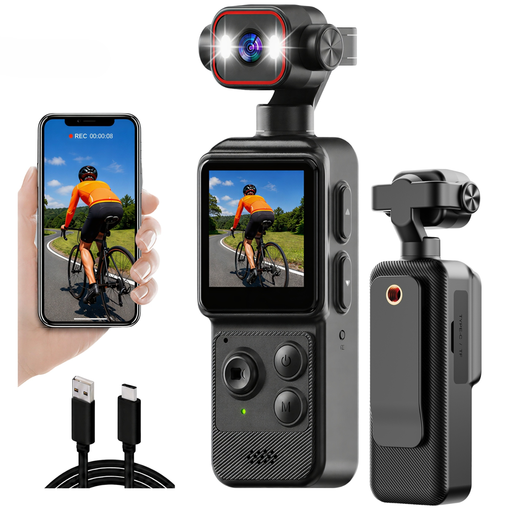
Mini Action Camera 4K with clip, display and app control

Mini Action Camera 4K with Clip

Could be worth considering if you want to trigger photos via an app; the product description mentions an iOS and Android app.

4K; 1.54-inch display; 140° wide-angle lens; LED light; 1200-mAh battery.

View at Joybuy
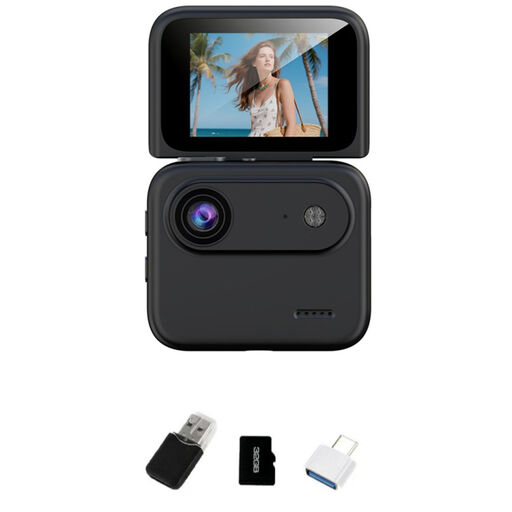
NAXSIR 4K Mini Action Camera with 32-GB TF card and flip-up screen

NAXSIR 4K Mini Action Camera

Before choosing, check whether the camera can focus on your badge from the distance you plan to shoot at.

4K; 32-GB TF card; 2.0-inch flip-up screen; 143° wide-angle lens; electronic image stabilisation.

View at Joybuy
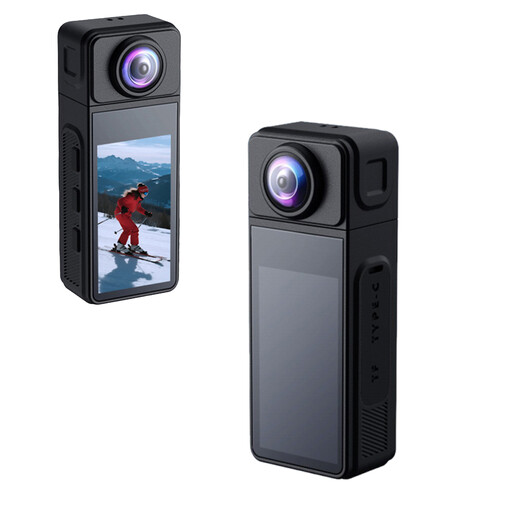
NAXSIR 2K Mini Action Camera with 270° rotating wide-angle lens

NAXSIR 2K Mini Action Camera

Could be suitable for simple photo capture; the product description mentions a one-click photo function. Also check that it can focus at the distance you need from the subject.

2K; 270° rotating wide-angle lens; magnetic housing; electronic image stabilisation.

View at Joybuy

Frequently asked questions

Is a kit zoom enough to capture a small maker’s mark on the back?

Not necessarily. Canon lists a maximum magnification of 0.16x at 45 mm for the RF-S 18–45 mm with autofocus, or 0.26x with manual focusing. Compare the framing with the size of the mark; a compatible macro lens may be worth considering if you want to show it in greater detail.

How do I set up my camera for repeatable shots?

Use a stable camera position, controlled lighting and a clean white background. If you’re documenting both sides, keep the perspective as consistent as possible and adjust the white balance to suit the light source. Focus bracketing requires the badge to remain still and the camera to be as steady as possible.

What are my rights when buying a camera from a retailer?

For consumer purchases in the EU, there is generally a minimum legal guarantee of two years from the date you receive the goods. This is separate from any voluntary manufacturer’s warranty. For a standard online distance purchase, you generally have 14 days from delivery to cancel, subject to legal exceptions. Check whether you’re buying as a consumer and which terms apply to your specific contract.

Can I show any historical badge unchanged in a public sales listing?

You shouldn’t assume that this is always permitted. If a badge displays the insignia of an unconstitutional or terrorist organisation, § 86a StGB may be relevant to images shared publicly; according to guidance from the Police Crime Prevention agency and the Research Services of the German Bundestag, the assessment depends on the specific content and context of use. If you’re dealing with a particular item or listing, the circumstances should be assessed individually.