
Lieferung heute & morgen

Qualitätsgarantie

Willkommens-Angebote freischalten: KOSTENLOSE Lieferung | Bis zu 80 % RABATT | Kostenlose 30-Tage-JoyPlus-Testphase
App herunterladen
A vintage-style portafilter espresso machine is more than just a kitchen appliance; it's a statement piece. It promises the ritual of traditional coffee preparation and adds a touch of nostalgia to your kitchen. But behind the charming facade, pitfalls often hide that can sour the coffee experience. Before you make a decision, it's crucial to understand the most common flaws found in these types of machines.
To make an informed decision, you should focus on objective, technical parameters that directly impact the quality of your espresso and the machine's handling.
Sufficient and consistent brew pressure is crucial for preparing an authentic espresso. A value of 15 bars at the pump ensures that the necessary pressure of around 9 bars for extraction can be achieved at the portafilter. This pressure is required to release the oils and aromas from the coffee grounds and create a dense, hazelnut-brown crema. An espresso machine with 15 bar pump pressure is therefore a fundamental feature for a good, entry-level Italian espresso machine.
Modern retro machines often offer more than just preparation with freshly ground coffee. Compatibility with E.S.E. (Easy Serving Espresso) pods is a significant advantage for a quick coffee on the go. A coffee machine for ESE pods combines the ritual of a portafilter machine with the convenience of pre-portioned units. This simplifies dosing and cleaning without sacrificing the option to grind and use coffee beans to your own taste.
For lovers of cappuccino or latte macchiato, an integrated milk frother is essential. On a portafilter machine with a milk frother, this is typically a steam wand connected to the machine's boiler. It heats and textures the milk by introducing hot steam. The quality of the milk foam depends on the power of the steam wand and the correct technique, but with proper use, it can deliver professional results.
Based on the criteria mentioned, we have identified a model that offers a balanced combination of design, functionality, and value for money.
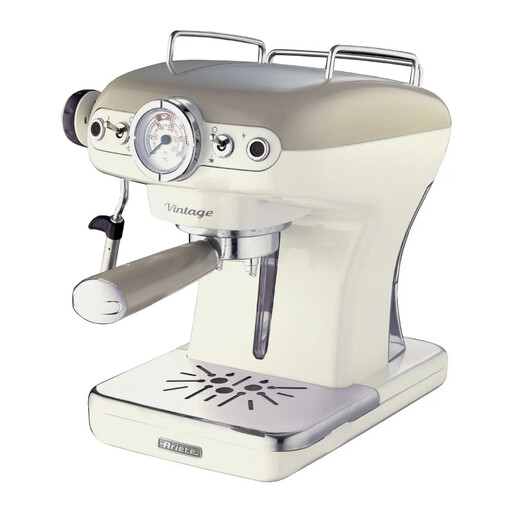
Why It's a Match: This Ariete espresso machine (model Ariete 1389) combines the desired retro coffee machine design with the functional requirements for home use. It's a great choice for users who are new to the world of portafilter machines and value appealing aesthetics without compromising on coffee quality.
The machine features a pump with 15 bars, delivering the necessary pressure for proper extraction and thus bypassing the "pressure bluff." The build quality is solid for this price point, avoiding the feel of a purely decorative object.
Compatible with ground coffee and E.S.E. pods for maximum flexibility. The integrated milk frother allows for the preparation of coffee specialities like cappuccino.
We have compiled a complete, up-to-date list of products that fully meet these strict selection criteria and safety regulations.
Regular maintenance is crucial for longevity and taste. This includes daily backflushing of the group head after use, cleaning the steam wand, and emptying the drip tray. Additionally, the machine should be descaled every two to three months with a suitable agent, depending on water hardness and frequency of use.
Yes, a pump pressure of 15 bars is ideal for home use. This value ensures that the optimal brew pressure of approximately 9 bars is reached at the portafilter, which is necessary for preparing an authentic espresso with a stable crema. Higher pressure ratings offer no additional advantage in practice.
Yes, the integrated steam wand allows for the manual creation of milk foam. This requires some practice at first to learn the correct technique for stretching and rolling the milk. However, with a little patience, you can achieve fine-pored, creamy milk foam for cappuccinos and latte art.