
Lieferung heute & morgen

Qualitätsgarantie

Willkommens-Angebote freischalten: KOSTENLOSE Lieferung | Bis zu 80 % RABATT | Kostenlose 30-Tage-JoyPlus-Testphase
App herunterladen
A vintage-style stand mixer is more than just a practical appliance; it's a statement piece for your kitchen. But behind the nostalgic exterior often lie technical differences that can mean the difference between joy and frustration in your baking and cooking. Many models lure you in with their retro charm but disappoint when it comes to performance. This guide highlights the critical features to look for, ensuring you find a machine that not only looks great but also reliably kneads heavy dough and whips delicate creams.
The market is flooded with retro-looking stand mixers, but not every appliance lives up to its design's promise. Pay close attention to these three points to avoid a costly mistake.
To avoid the pitfalls mentioned above, you should check three core technical features before buying. These factors define the performance and longevity of your future stand mixer.
Raw wattage isn't the whole story. Pay attention to the type of motor (e.g., a DC motor for consistent power) and the quality of the gearbox. An all-metal gearbox is far more robust and durable than one with plastic parts, especially if you plan to regularly process heavy yeast or bread doughs. A solid dough mixer should have enough power reserves to maintain speed even with dense mixtures.
For home bakers who cook for the whole family or enjoy batch baking, a large bowl is essential. A mixer with a 5.5L capacity offers enough space for up to 1.5 kg of heavy bread dough. A stand mixer with a stainless steel bowl is the preferred choice here. Stainless steel is food-grade, durable, rust-proof, odour and flavour-neutral, and easy to clean in the dishwasher.
A planetary mixing action is now standard in high-quality appliances. This means the mixing attachment (dough hook, whisk) not only spins on its own axis but also travels around the edge of the bowl. This dual motion ensures all ingredients are incorporated from the bottom to the sides, resulting in smooth, homogeneous mixtures without the need for manual intervention.
Here are a few models that stand out as excellent options for different user profiles due to their specific features.

Why This Fits Their Persona: Ideal for users who regularly bake large batches, including heavy bread doughs. The appliance combines an authentic retro stand mixer design with the necessary power and capacity for demanding recipes.
With a motor power of up to 2400W (peak power according to the manufacturer) and 7 speed settings, it avoids the weak motor pitfall. The planetary mixing action ensures thorough incorporation of ingredients.
Large 5.5-litre stainless steel bowl for family-sized portions. Non-slip feet and a balancing system ensure stability even under heavy load.
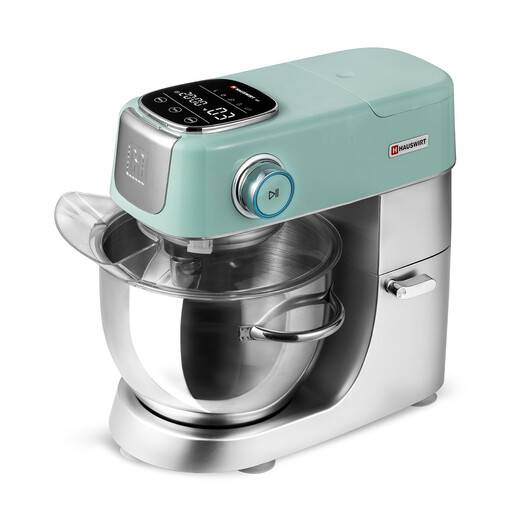
Why This Fits Their Persona: For users who appreciate a modern take on the vintage theme. The combination of retro colouring and a smart LED touchscreen with preset programs merges aesthetics with modern functionality.
This model relies on a solid construction and a powerful motor, precisely controlled via 11 speed settings. The preset menus help prevent motor overload.
The LED touchscreen and 5 automatic programs simplify preparation. The 5.5-litre bowl also offers high capacity for various applications.

Why This Fits Their Persona: A great choice for anyone seeking a functional and stylish machine for everyday use without breaking the bank. The cream-white design fits well in kitchens with a vintage or country-house style.
The 1000-watt copper motor provides solid performance for most tasks. Four silicone suction cups ensure a secure footing, bypassing the problem of instability.
Offers a good functional baseline with 8 speed settings and a 360° planetary mixing action. According to the manufacturer, the dough hook is Teflon-coated and heat-resistant.
We have compiled a complete, up-to-date list of products that fully meet these strict selection criteria and German safety regulations.
1. How much wattage does a good stand mixer need for baking bread? For light batters, 300-500 watts is often sufficient. However, if you plan to regularly knead heavy bread doughs with more than 1 kg of flour, a motor with at least 1000 watts is recommended. More important than the raw wattage, though, is a robust gearbox (preferably all-metal) and a motor that won't overheat under continuous load.
2. What is a planetary mixing action and why is it important? With a planetary mixing action, the attachment (e.g., the dough hook) spins on its own axis while also orbiting the bowl. This compound movement ensures that all ingredients—even at the bottom and sides of the bowl—are evenly incorporated into a homogeneous mixture. This saves you from having to manually scrape down the bowl with a spatula.
3. How do I properly care for my stand mixer's stainless steel bowl? Most stainless steel bowls are dishwasher-safe, which makes cleaning very simple. For manual washing, warm water and a mild dish soap are sufficient. Avoid using steel wool or abrasive scouring agents, as they can scratch the surface. To remove limescale deposits, cleaning with a diluted vinegar solution can help.