What should you look for when choosing?
Two close individual microphones
A good fit if: you want to record each violin separately and balance them individually later, or you hear too much room sound in a test recording.
Trade-off: You’ll need two microphones and suitable inputs for two tracks; very close miking can change the sound of the violins.
External stereo pair
A good fit if: the sound of the duet as a whole matters and you can position both microphones suitably in the room.
Trade-off: Distance and orientation affect how much room sound you hear. You’ll need to plan for two suitable inputs and the required phantom power.
Recorder with a built-in X/Y pair
A good fit if: one shared recording position is enough and you’d like to start without a separate pair of microphones.
Trade-off: You can’t position the built-in microphones individually in front of the two violins.
First decide whether you need separate violin tracks, a shared stereo image or the simplest possible setup. Then check the inputs, power supply and mounting options for the arrangement you have in mind.
| Concern |
What to check before buying |
Who is this important to? |
| Background noise and room sound |
Polar pattern, secure positioning close to the violin and a test recording at the intended recording location. |
If I hear unwanted room sound in my flat, I want to try different positions and orientations without losing sight of how the violin sounds from a normal listening distance. Around 33% of consumers rank reducing unwanted room sound as their main concern. |
| Separate tracks |
Two microphone inputs that can be used at the same time, plus two suitable microphones and connections. |
If I want to adjust the volume of each violin separately later, I need separate tracks rather than a single combined signal. Around 27% of consumers say separate editing is their main concern. |
| Shared stereo image |
Whether the set actually includes two microphones, as well as two inputs and the required power supply. |
If the interplay between the instruments matters to me, I want to capture the positions of both violins as a shared sound and try different placements in the room. This stereo image is the main consideration for around 27% of consumers. |
| Simple setup |
Existing recording equipment, power supply and, for the specific offer, cables, stands, clips and adapters. |
If I want to record with as few separate components as possible, I check whether one shared recorder position will do or whether I need additional microphones. Around 13% of consumers name a simple setup as their main concern. |
Related products on Joybuy
Joybuy product options related to this topic.
 No image available
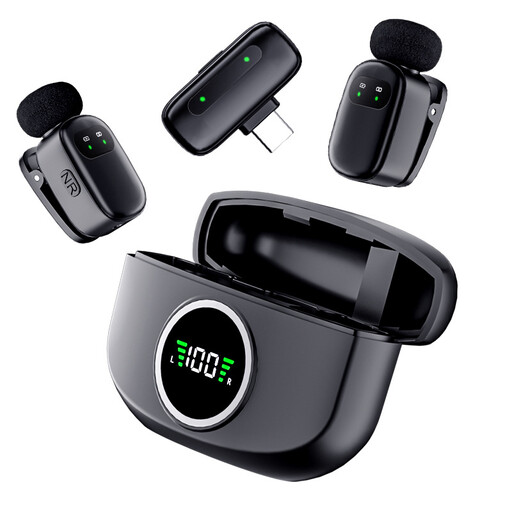
The Verbex K21 Dual Wireless Mini Microphone
The product name describes a wireless dual-microphone system for recording; it doesn’t prove that it’s suitable for a violin duet in a noisy room. Before buying, check that the connection and positioning will work with your recording device and setup.
Type-C is listed as a compatible interface.
Joybuy
Frequently asked questions
How should I start positioning microphones in a noisy room?
Make a test recording of the duet in the intended location and try changing the distance and orientation. If unwanted room sound dominates, moving the microphones closer is worth trying; also check whether this changes the sound of the violins.
Can I connect a stereo pair of condenser microphones to a single microphone input?
For the pairs described here, plan for two suitable microphone inputs and the specified phantom power. RØDE lists P24/P48 for the M5, while LEWITT’s LCT 040 MATCH manual specifies 48 V. Also check the cables and the equipment supplied with your recorder or interface.
How should I store and care for an LCT 040 MATCH?
LEWITT recommends protecting the microphone from moisture, dust and extreme temperatures. When unplugging it, pull the plug rather than the cable. These are the manufacturer’s recommendations for this model.
What happens if a product develops a fault after purchase?
If you buy from a trader, EU consumer rules as explained by Your Europe generally provide at least two years of legal protection against faulty goods; the seller is responsible. Any additional manufacturer’s guarantee offered is separate and subject to its own terms.
Can I record the other violinist without asking?
Discuss the recording and any intended sharing with the other player. Section 77 of the UrhG gives performers the exclusive right to record their performance on audio or video media. Section 201 of the StGB also concerns the unauthorised recording of another person’s private spoken words; this does not amount to a blanket ban on every instrumental recording.


