
Lieferung heute & morgen

Qualitätsgarantie

Willkommens-Angebote freischalten: KOSTENLOSE Lieferung | Bis zu 80 % RABATT | Kostenlose 30-Tage-JoyPlus-Testphase
App herunterladen
As your Joybuy Product Recommendation Officer, my mission is to bring clarity to the often-confusing cosmetics market. A Vitamin C Serum promises a lot—from radiant skin to reducing hyperpigmentation. However, not every product delivers on its promises. Many formulations are unstable, improperly concentrated, or cause skin irritation. Before you make a decision, you should know the most common pitfalls that lead to disappointment and unnecessary expense.
The 2 Most Common Mistakes When Buying Vitamin C Serums:
To ensure you get an effective and stable product, you should check three core parameters. These will help you distinguish marketing hype from actual performance.
Choosing the right form of Vitamin C is fundamental to its effect on your skin.
The concentration must match the form of Vitamin C. For L-ascorbic acid, a range of 10% to 20% has proven effective. Concentrations above this do not necessarily increase efficacy but do increase the potential for irritation. For L-ascorbic acid to penetrate the skin, an acidic pH of under 3.5 is also required. Vitamin C derivatives, on the other hand, are often effective at a more skin-friendly, higher pH.
A good Vitamin C for the face rarely works alone. Certain ingredients can enhance its effects and stabilise the formulation.
Based on the criteria above, we have curated a selection of products suitable for different user profiles and needs.
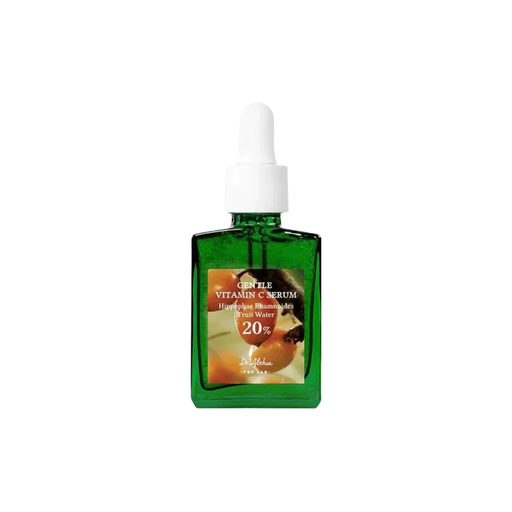
Why it's a great fit: Ideal for those new to Vitamin C or with sensitive skin. The formulation relies on sea buckthorn fruit extract, a natural source of Vitamin C, and a gentle derivative to minimise the risk of irritation.
Instead of relying on highly concentrated, potentially irritating L-ascorbic acid, this serum uses a gentler and more stable form of Vitamin C. This reduces the risk of skin irritation and rapid oxidation.
The oil-capsule system provides intense moisture without leaving a greasy feeling. The formula is designed for high tolerability.
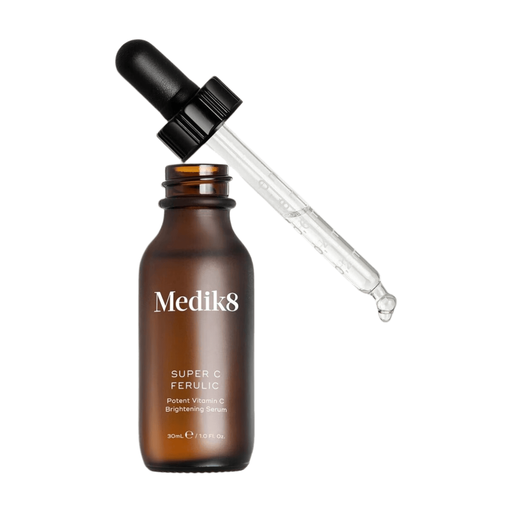
Why it's a great fit: For experienced users seeking high efficacy whose skin is accustomed to potent active ingredients. This serum targets maximum antioxidant protection and visible results in combating fine lines and uneven skin tone.
It uses a high concentration (30%) of a very stable form of Vitamin C (3-O-Ethyl Ascorbic Acid). The combination with Ferulic Acid and Vitamin E ensures a stable and highly potent formula that won't quickly lose performance.
A highly concentrated Vitamin C serum designed for maximum antioxidant capacity. The formula is vegan and free from parabens and artificial fragrances.
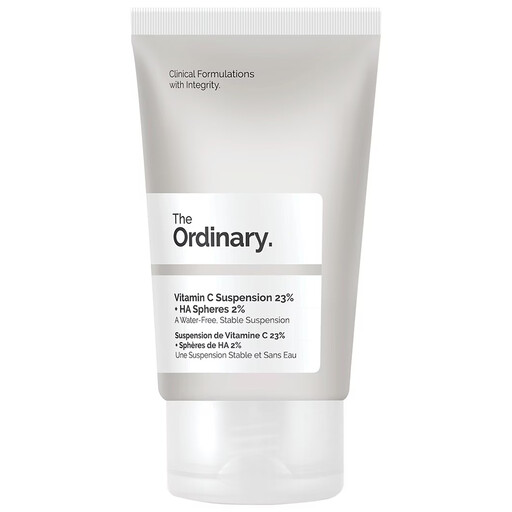
Why it's a great fit: For users who want a high concentration of pure L-ascorbic acid at an accessible price point and are willing to accept a slightly unusual texture to achieve visible results.
The water-free suspension formula solves the stability problem of pure L-ascorbic acid. Without water, the Vitamin C cannot oxidise as easily, preserving the product's efficacy over time.
Offers a high concentration of 23% pure L-ascorbic acid for effective action against uneven skin tone and signs of ageing. The added hyaluronic acid spheres provide additional hydration.
We have compiled a complete, up-to-date list of products that fully meet these strict selection criteria and German safety regulations.
Morning application is widely common and recommended. The reason is Vitamin C's antioxidant properties, which can protect your skin from free radicals and environmental stress (like UV radiation and pollution) during the day. It is crucial to always follow your morning application with a broad-spectrum, high-SPF sunscreen, as Vitamin C can make the skin more sensitive to light.
A yellowish or brownish discolouration is a clear sign of oxidation. The Vitamin C has degraded and lost its effectiveness. In this state, it can not only be ineffective but also potentially cause skin irritation. It is recommended to stop using an oxidised serum and replace it. To prevent this, always store your serum in a cool, dark place and keep it tightly sealed.
Combining active ingredients requires a bit of finesse. The simultaneous application of pure L-ascorbic acid (with a low pH) and niacinamide can cause redness in some people. A common recommendation is to separate the actives by time of day: Vitamin C Serum in the morning and niacinamide or retinol in the evening. This minimises the risk of interactions and irritation, allowing each active ingredient to deliver its full performance.