
Lieferung heute & morgen

Qualitätsgarantie

Willkommens-Angebote freischalten: KOSTENLOSE Lieferung | Bis zu 80 % RABATT | Kostenlose 30-Tage-JoyPlus-Testphase
App herunterladen
As a Joybuy Product Recommendation Officer, I see countless skincare products every day. The Vitamin C serum, in particular, is often promoted as the holy grail for radiant skin. However, the vast selection and complex ingredient lists can quickly become overwhelming. Many products don't deliver on their promises, leading to disappointment instead of results.
Before you make a decision, it's crucial to understand the most common pitfalls that can lead to a bad purchase. This guide will help you separate marketing hype from fact and find a serum that truly fits your skin's needs.
Investing in a high-quality brightening serum can be worthwhile, but only if the product is formulated correctly. Watch out for these three common problems:
To find an effective Vitamin C concentrate that can function as an anti-aging serum or a serum for dark spots, you should check the following technical parameters.
Choosing the right form of Vitamin C is crucial for both tolerability and results.
A good Vitamin C serum often contains other active ingredients that support its function.
The effectiveness of a Vitamin C serum lives and dies by its packaging. Look for the following features to ensure your product remains potent to the last drop:
Based on the criteria above, we have selected a few products for different user profiles.
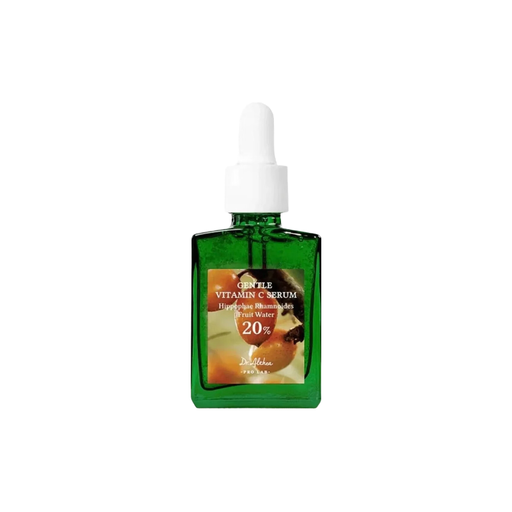
Why This Fits Their Persona: Ideal for individuals who are new to using Vitamin C or have reactive skin. The formula is designed for gentleness and provides a great introduction to the world of brightening actives.
This serum bypasses the aggressive concentration pitfall by using a combination of sea buckthorn extract (a natural source of Vitamin C) and the stable derivative 3-O-Ethyl Ascorbic Acid. This minimises the risk of irritation.
The lightweight, hydrating texture with an oil-capsule system absorbs well without feeling sticky. The formula also contains Niacinamide and Adenosine to support the skin barrier and promote a more even complexion.
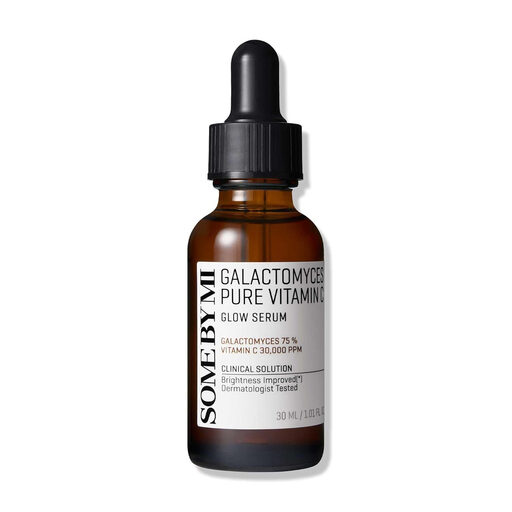
Why This Fits Their Persona: Suitable for experienced users who want to specifically target an uneven skin tone, acne scars, or sun-induced dark spots and are looking for a multifunctional formula.
This product relies on a smart combination rather than just a high concentration. It contains 3% pure Ascorbic Acid, whose effect is synergistically supported by 75% Galactomyces Ferment Filtrate and Niacinamide. This maximises efficacy without unnecessarily stressing the skin.
The formula not only targets brightening but also aims to improve skin texture and refine pores. The watery texture absorbs quickly and leaves no sticky residue.
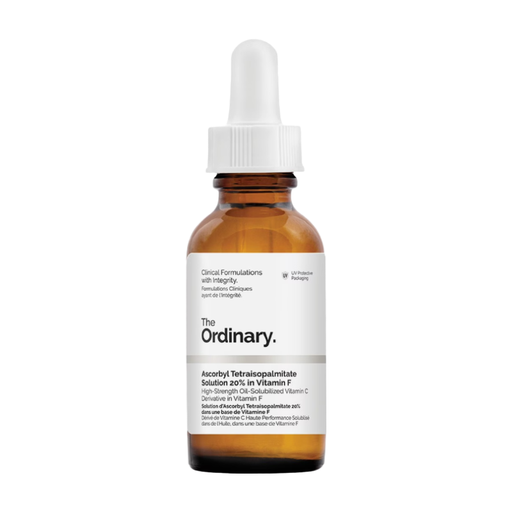
Why This Fits Their Persona: Perfect for users with dry, dehydrated, or mature skin who are looking for an effective anti-aging serum that simultaneously nourishes and conditions without drying out the skin.
This product avoids the problem of instability and irritation by using 20% Ascorbyl Tetraisopalmitate, a very stable, oil-soluble derivative. It doesn't require a low pH and is therefore much gentler on the skin barrier.
The water-free formula, based on Squalane and Jojoba Oil, provides antioxidant protection and intensive nourishment in one step. It leaves the skin feeling supple and supports collagen synthesis.
We've compiled a complete, up-to-date list of products that fully meet these strict selection criteria and current regulations.
1. Can I use a Vitamin C serum every day? Yes, most Vitamin C serums are designed for daily use. It is often recommended to apply them in the morning to protect the skin from free radicals during the day. For sensitive skin or highly concentrated products, it may be wise to start with an application every other day and slowly increase the frequency.
2. Why is my Vitamin C serum turning yellow or brown? A yellow or brownish discolouration is a clear sign of oxidation. This means the Vitamin C has come into contact with air or light and has lost its effectiveness. An oxidized serum should no longer be used. To prevent this, store the product in a cool, dark place and keep it tightly sealed.
3. Do I need to apply sunscreen after my Vitamin C serum? Yes, absolutely. Vitamin C is a powerful antioxidant that can support the protective effect of your sunscreen, but it does not replace it. Daily use of a broad-spectrum sunscreen (SPF 30 or higher) is essential to protect the skin from UV damage and to maintain the results of your skincare routine, especially when using active ingredients like Vitamin C.