
Lieferung heute & morgen

Qualitätsgarantie

Willkommens-Angebote freischalten: KOSTENLOSE Lieferung | Bis zu 80 % RABATT | Kostenlose 30-Tage-JoyPlus-Testphase
App herunterladen
A vitamin C serum for the face can be a useful addition to your daily skincare routine if your complexion looks dull or your skin tone appears uneven. However, products vary considerably in terms of the form of vitamin C, concentration, texture and shelf life. A high percentage alone therefore says little about whether a serum is right for your skin and skincare routine.
As a Joybuy Product Recommendation Officer, I filter market information according to clear, understandable criteria. Rather than focusing on marketing claims, I look at ingredients, application, packaging and skin compatibility.
The market includes products containing 3 to 24 per cent pure vitamin C, as well as formulas containing stabilised derivatives. L-ascorbic acid is a directly used form, but it can be more likely to cause tingling or redness on sensitive skin. A derivative such as Ascorbyl Glucoside, 3-O-Ethyl Ascorbic Acid or Tetrahexyldecyl Ascorbate is often used when greater stability or a milder skin feel is preferred.
A higher concentration is therefore not automatically the right choice. Beginners should initially look for a clearly explained formula and introduce it gradually.
Terms such as “Glow”, “Pure” or “Brightening” initially describe how a product is positioned. What matters is the information on the packaging: the form of vitamin C, additional active ingredients, fragrances, alcohol, oils and preservatives. The current INCI list for the specific product may differ from older online information and should be checked before buying.
If you are looking for a serum for pigmentation or a serum for dark spots, you should also bear in mind that cosmetics can help improve the appearance of the skin, but they do not replace dermatological assessment of new or changing marks on the skin.
Pure vitamin C can change when exposed to air and light. A darker or yellowish colour may indicate oxidation, although this needs to be assessed differently depending on the product. Close the bottle immediately after use and store it in a cool, dark place as instructed by the manufacturer. If the smell changes significantly, the colour changes considerably or irritation occurs, stop using the product.
Check whether the formula contains pure ascorbic acid or a derivative. Pure ascorbic acid is listed at 23 per cent for and 24 per cent for TIRTIR. Some By Mi lists 3 per cent pure ascorbic acid. The Ordinary Ascorbyl Glucoside Solution contains 12 per cent Ascorbyl Glucoside, while the Ascorbyl Tetraisopalmitate Solution uses 20 per cent Tetrahexyldecyl Ascorbate.
These figures are only meaningfully comparable within the same form of vitamin C. Different derivatives cannot simply be ranked according to their percentage.
For a balanced skincare approach, glycerin, hyaluronic acid, squalane, panthenol or niacinamide may be relevant. Niacinamide, for example, is found in several of the formulas listed below. If you are sensitive to fragrances, look specifically for “Parfum” and fragrance ingredients that must be declared, such as Limonene, Linalool or Geraniol.
An illuminating face serum should be chosen not only for its promised glow effect, but also for its texture and how well it can be combined with moisturiser and sun protection.
Apply a vitamin C face serum after cleansing, to dry or slightly toned skin. If you have sensitive skin, start by using it a few times a week and increase frequency only if your skin tolerates it well. If you use it in the morning, a broad-spectrum sunscreen with at least SPF 30 should be part of your skincare routine. Vitamin C is not a substitute for sun protection.
If your skin is severely irritated, damaged or acutely inflamed, stop using the product temporarily. A patch test on a small area of skin may be advisable before applying it over a larger area for the first time.
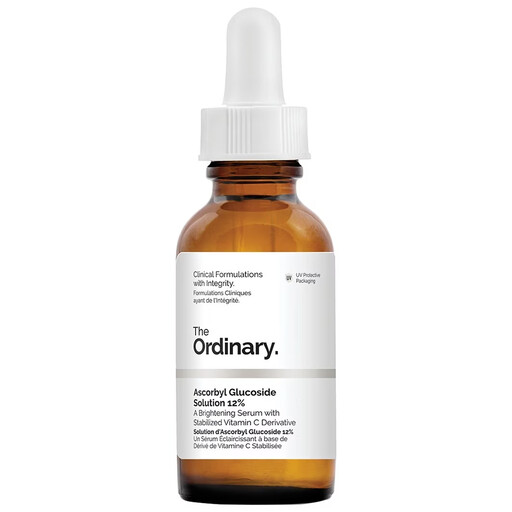
Why this product suits this profile: The water-based formula contains 12% Ascorbyl Glucoside and has a relatively straightforward INCI list. This makes it easier to get started with a vitamin C serum.
The concentration is clearly stated; the formula does not rely on an especially high level of pure ascorbic acid.
30 ml contents, Ascorbyl Glucoside as a vitamin C derivative, and easy application in the morning or evening.
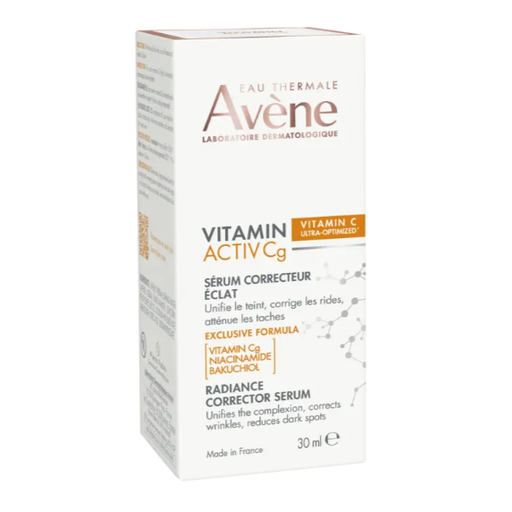
Why this product suits this profile: According to the brand, the formula combines 1.8% Vitamin Cg, 3% Niacinamide and 1.5% Bakuchiol. The brand states that the product has been tested on sensitive skin.
The advertised active ingredient levels and form of vitamin C are specified clearly, rather than simply promising a general glow.
A combination of a vitamin C derivative, Niacinamide and Bakuchiol; 30 ml glass bottle with pipette.
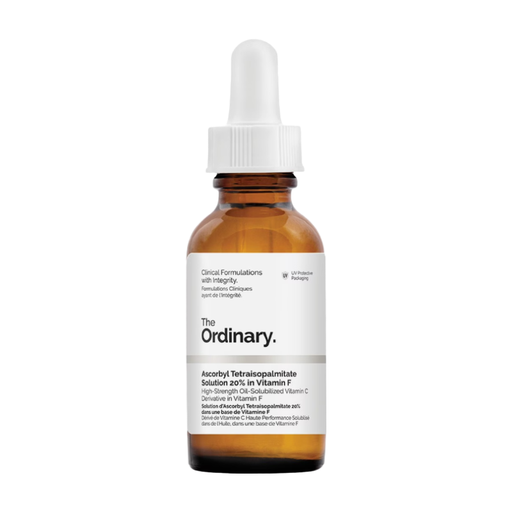
Why this product suits this profile: The oil-based solution with 20% Tetrahexyldecyl Ascorbate is suitable for users who prefer a vitamin C product containing nourishing oils and Squalane.
The name explicitly indicates that it contains a derivative and has an oil-based texture. This makes it easier to assess how well the formula fits into your routine.
30 ml contents, Tetrahexyldecyl Ascorbate, jojoba oil and Squalane; according to the product information, free from alcohol and fragrance.
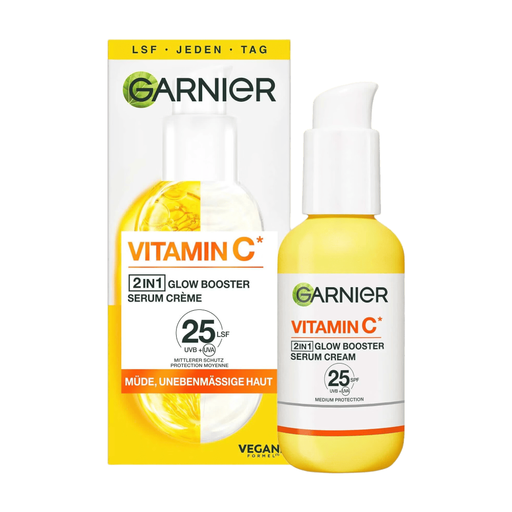
Why this product suits this profile: Combining a serum element with a day cream is practical if you want to reduce the number of steps in your skincare routine.
The product type is clearly identified as a serum cream. However, its stated medium UV protection does not replace a separate, suitable sunscreen.
50 ml contents, glycerin and hyaluronic acid, plus Ascorbyl Glucoside in a creamy day moisturiser.
Beginners can start by using it two to three times a week. If the product is well tolerated, daily use may be possible depending on the manufacturer’s instructions. Pure ascorbic acid at a higher concentration may feel different from a mild-formulated derivative.
Yes. A vitamin C serum can be used in the morning underneath a face cream and broad-spectrum sunscreen. Sun protection remains essential, particularly if your skincare goal is a more even skin tone or a more uniform appearance of pigmentation.
The PAO symbol, best-before date and manufacturer’s instructions are the key points to follow. Keep the product closed, dry and protected from direct light. With sensitive formulas such as pure ascorbic acid, you should pay particularly close attention to changes in colour and smell.