
Lieferung heute & morgen

Qualitätsgarantie

Willkommens-Angebote freischalten: KOSTENLOSE Lieferung | Bis zu 80 % RABATT | Kostenlose 30-Tage-JoyPlus-Testphase
App herunterladen
Vitamin C supplements are available in many forms: tablets, capsules, effervescent tablets, slow-release products or combination products with zinc and other micronutrients. However, the wide range of options makes comparisons difficult. A high milligram figure alone says little about whether a product suits your diet, taking routine and tolerance.
As a Joybuy Product Recommendation Officer, I filter product information according to transparent criteria. What matters is not eye-catching marketing claims, but the actual daily serving, ingredients list, pack duration and usage instructions.
High-dose vitamin C may be of interest to certain types of user. However, more is not necessarily required. In the EU, the Nutrient Reference Value (NRV) for vitamin C is 80 mg per day. Some products contain several times this amount, such as 600 mg, 1,000 mg or 1,300 mg per daily serving.
Before buying, you should therefore check:
A slow-release vitamin C product is designed to release its contents gradually over time. This may suit a regular routine involving just one tablet a day. However, it does not mean that everyone needs a slow-release product.
Liposomal vitamin C combines vitamin C with a lipid structure, often based on sunflower lecithin. The specific formulation, dosage and recommended intake nevertheless remain decisive. Terms such as “advanced” or “optimised absorption” should not replace checking the ingredients list.
Vitamin C with zinc, vitamin D3 with zinc or selenium can combine several nutrients in one product. This is convenient, but may lead to unintentionally taking too much of certain nutrients. It is particularly useful to check your existing supplements when it comes to zinc, vitamin D and selenium.
Your dietary requirements also matter: if you are looking for vegan vitamin C, look for a plant-based capsule shell or an explicitly vegan label. Gelatine, milk ingredients, soya and sweeteners are not excluded from every product.
Do not compare only the number of tablets; look at the actual duration of supply. A product containing 180 tablets with a recommendation of one tablet per day will theoretically last longer than a product containing 180 capsules when two capsules are taken per day.
Examples from the selection:
Tablets are suitable for users who prefer a flavourless product taken with water. Capsules can be an alternative if you want to avoid effervescent products, sweeteners or acidity regulators. Effervescent tablets are practical for people who dislike swallowing tablets, but depending on the formulation they may contain sweeteners and sodium compounds.
Also check the number of capsules or tablets required each day. Two capsules a day are not necessarily inconvenient, but may be less practical when you are out and about.
The ingredients list should be read in full, particularly if you have intolerances or follow a specific diet. Commonly relevant details include:
If you are pregnant, breastfeeding, taking medication regularly, living with kidney disease or under medical supervision, you should discuss taking the supplement with a medical professional beforehand. Food supplements are not a substitute for a varied diet or a balanced lifestyle.
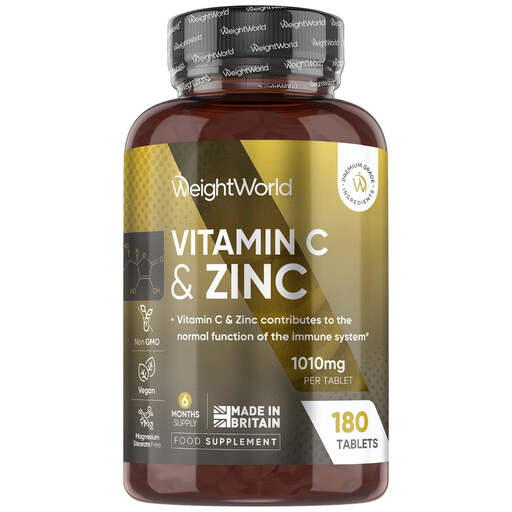
Why this product suits this profile: The combination of vitamin C and zinc is suitable for adults who want to combine two commonly sought-after nutrients in a single daily tablet. According to the product information, the formula is vegan and free from gluten, lactose and soya.
The product page clearly states the daily serving: one tablet a day with 1,000 mg of vitamin C and additional zinc. This makes it easier to compare your intake with other products.
180 tablets; vitamin C as ascorbic acid; zinc citrate; vegan and reduced-allergen product information.
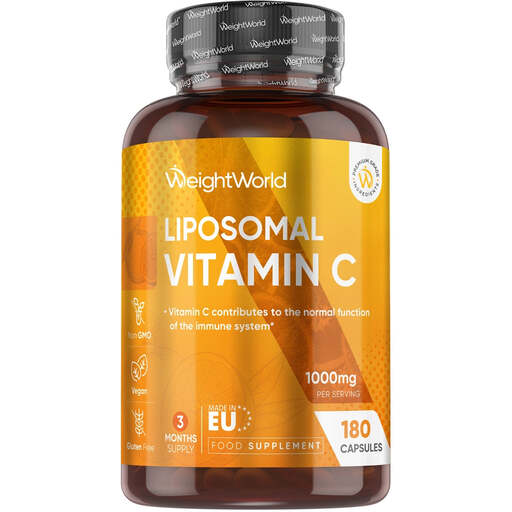
Why this product suits this profile: According to the product description, the capsules use a liposomal vitamin C complex with sunflower lecithin and a plant-based HPMC capsule shell. This appeals to users who prefer a capsule-based formula without gluten, lactose or soya.
The composition lists the ingredients used. The recommended intake of two capsules a day prevents the duration of supply from being overestimated based solely on the number of capsules in the pack.
180 plant-based capsules; 1,000 mg daily serving; sunflower lecithin; vegan product labelling.
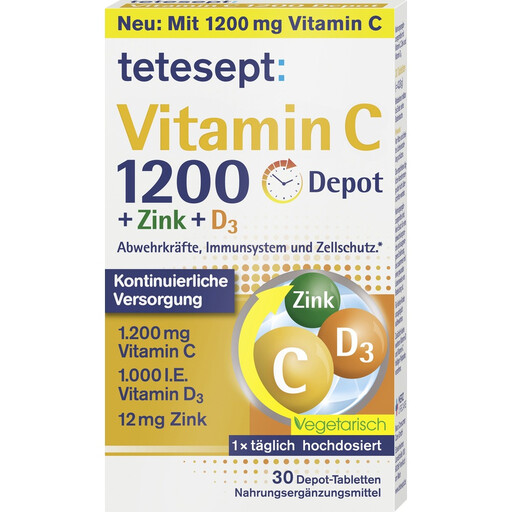
Why this product suits this profile: This combination product is aimed at adults who want to combine vitamin C, zinc and vitamin D3 in one slow-release tablet. The product information recommends using it as a 4-week course.
The three active ingredients and their amounts are stated per tablet. Because of the high dosages, this product should not be combined indiscriminately with other vitamin C or vitamin D supplements.
1,200 mg of vitamin C, 12 mg of zinc and 25 µg of vitamin D3 per tablet; slow-release formula; one tablet daily.
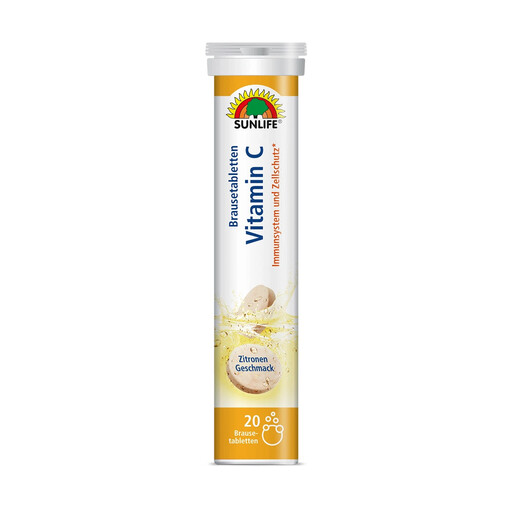
Why this product suits this profile: The effervescent tablets are dissolved in a glass of water, offering a flavourful alternative to vitamin C capsules or flavourless tablets.
The dosage of 180 mg per effervescent tablet is clearly distinct from high-dose versions. Ingredients such as sweeteners and sodium compounds are listed in the product description.
20 effervescent tablets; 180 mg of vitamin C per tablet; lemon flavour; dissolves in 250 ml of water.
We have put together a complete, regularly updated list of products that fully meet these strict selection criteria and the safety regulations applicable in the EU.
The best-before date is shown on the packaging. After opening, tablets and capsules should be stored in a dry, sealed place, protected from heat and direct sunlight. Effervescent tablets are also particularly sensitive to moisture. The exact shelf life always depends on the manufacturer’s instructions.
Both formats can fit into a daily taking routine. Vitamin C tablets usually only require water and often contain just a few ingredients. Effervescent tablets are dissolved and may be more convenient for people who prefer to avoid solid formats. With effervescent products, check the sweeteners, flavourings and sodium content.
Combination products can make taking supplements easier. What matters is the total amount from all the supplements you use. Therefore, check the quantities per daily serving and avoid an unclear overlap in your intake. If you take medication, have an existing health condition or are in a particular stage of life, it is advisable to consult a medical professional.