
Lieferung heute & morgen

Qualitätsgarantie

Willkommens-Angebote freischalten: KOSTENLOSE Lieferung | Bis zu 80 % RABATT | Kostenlose 30-Tage-JoyPlus-Testphase
App herunterladen
When you consider purchasing Vitamin D3, you're met with a vast array of options. Many people seek to supplement their levels, particularly during the less sunny months. Yet, the dietary supplement market can be overwhelming. With different dosages, delivery formats, and combination products, making the right choice is complex. This guide helps you navigate the common pitfalls and select a product tailored to your individual needs.
The 3 Most Common Pitfalls When Buying Vitamin D3
To make an informed decision, it's helpful to understand a few core parameters. These criteria will help you compare products objectively.
The dosage of Vitamin D3 is usually given in International Units (IU) or in micrograms (?g). The conversion is simple: 1 ?g is equivalent to 40 IU.
Choosing the right format is crucial for consistent intake.
A look at the ingredients list is essential. Watch out for unwanted fillers, artificial colours, or allergens.
The combination of Vitamin D3 K2 is particularly relevant for bone health. Vitamin D3 promotes the absorption of calcium from the intestine. Vitamin K2 (especially in the MK-7 form) helps transport this calcium into the bones and prevents it from being deposited in the arteries. Whether this combination is right for you depends on your individual health goals and diet.
Based on the criteria mentioned, we have compiled a few products for different user profiles.
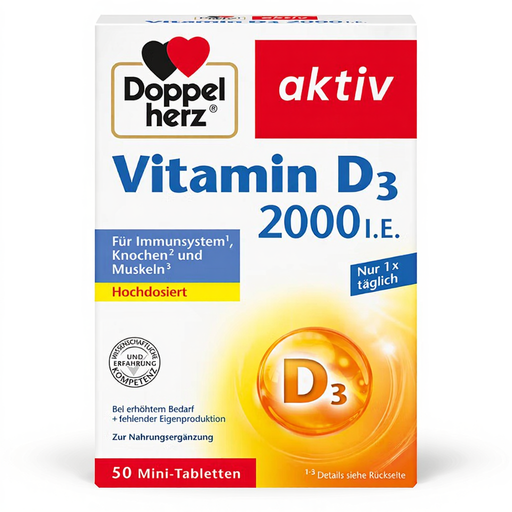
Why This Fits Their Persona: Ideal for individuals seeking a moderate, daily dose to support their immune system and bone health, especially during the autumn and winter months. The mini-tablets are easy to swallow.
It offers a clear, moderate dosage of 2000 IU, which is well-suited for daily supplementation without falling into the extremely high-dose category. The mini-tablet format is practical and straightforward.
Clear dosage (50 ?g / 2000 IU) per tablet. Easy-to-swallow mini-tablets. From an established German brand.
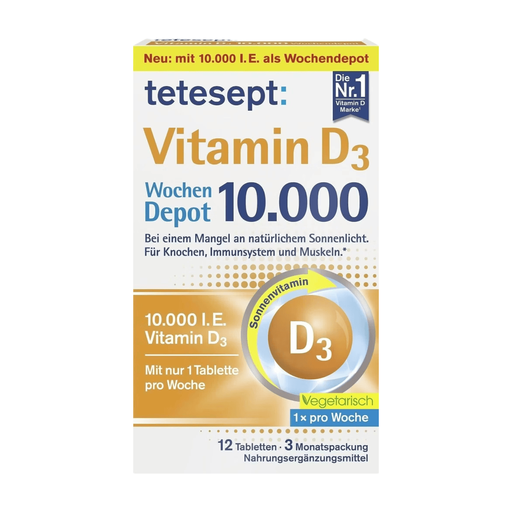
Why This Fits Their Persona: Perfect for busy people who don't want to think about taking a supplement every day. One tablet per week is enough to supply the body with a high dose of Vitamin D3.
This product is clearly labelled as a weekly depot, thus avoiding confusion about the high dosage. It is designed for a specific, practical use case and not for daily intake.
Only one dose per week. High-dose with 10,000 IU (250 ?g) per tablet. Utilises the body's ability to store Vitamin D.
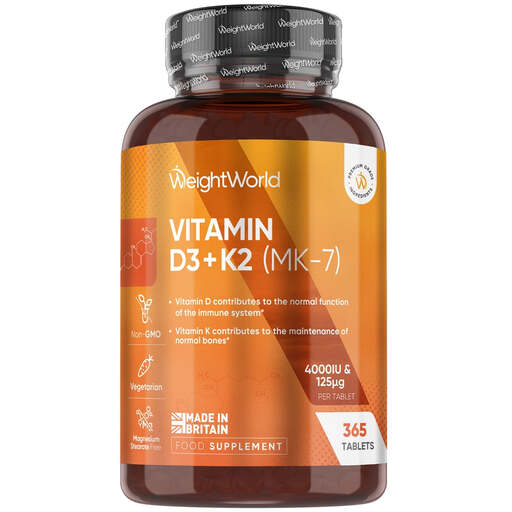
Why This Fits Their Persona: For users who specifically want to leverage the synergistic effect of Vitamin D3 and K2 for maintaining normal bones. The one-year supply offers excellent value for money.
This product avoids the "all-in-one" trap by offering a scientifically recognised and sensible combination for a specific purpose, rather than arbitrarily mixing ingredients.
Combines high-dose D3 (4000 IU) with highly bioavailable Vitamin K2 (MK-7). One-year supply with 365 tablets. Small, easy-to-swallow micro-tablets.
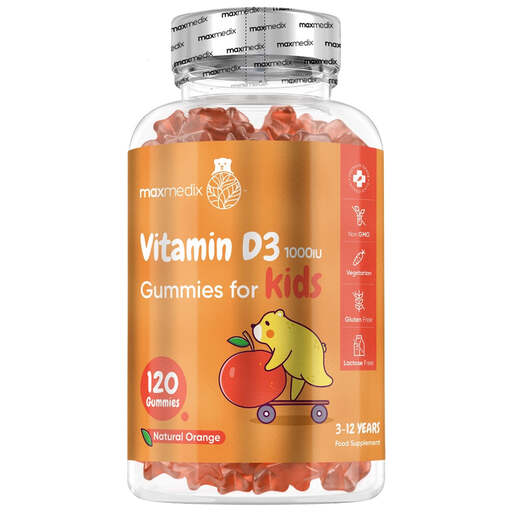
Why This Fits Their Persona: A simple and tasty solution for parents who want to ensure an adequate Vitamin D supply for their children. Also suitable for adults who prefer the taste of gummies over tablets.
This product solves the problem of an impractical delivery format by offering a chewable, pleasant-tasting alternative to tablets. The dosage is specifically tailored to the needs of children.
Child-friendly dosage (1000 IU). Pleasant orange flavour. Pectin-based and therefore vegetarian.
We have compiled a complete, up-to-date list of products that fully meet these strict selection criteria.
1. When is it advisable to take high-dose Vitamin D3? Taking high-dose Vitamin D3 (e.g., over 2000 IU daily) can be considered for a medically diagnosed Vitamin D deficiency or for individuals with very little sun exposure (e.g., during the winter months). It is recommended to discuss taking higher doses with a doctor or pharmacist beforehand to determine individual needs and avoid an overdose.
2. Do I have to take Vitamin D3 together with Vitamin K2? The combination is not mandatory but can be beneficial, especially if the focus is on bone health. Vitamin D3 and K2 work together to regulate calcium utilisation in the body. If your diet is already rich in Vitamin K (found in green leafy vegetables, fermented foods), additional supplementation may not be necessary.
3. Can children take Vitamin D3 formulated for adults? It is not recommended to give adult supplements to children. The dosages in adult products are often too high for children's needs. There are specific Vitamin D for children products whose dosage and delivery format (e.g., gummies or drops) are tailored to the needs and safety of children. Always adhere to the manufacturer's age recommendations.